

Dhaka plans ‘Zero Signal’ traffic system to cut congestion and boost mobility
- Update Time : Monday, April 13, 2026
- 196 Time View
Desk News
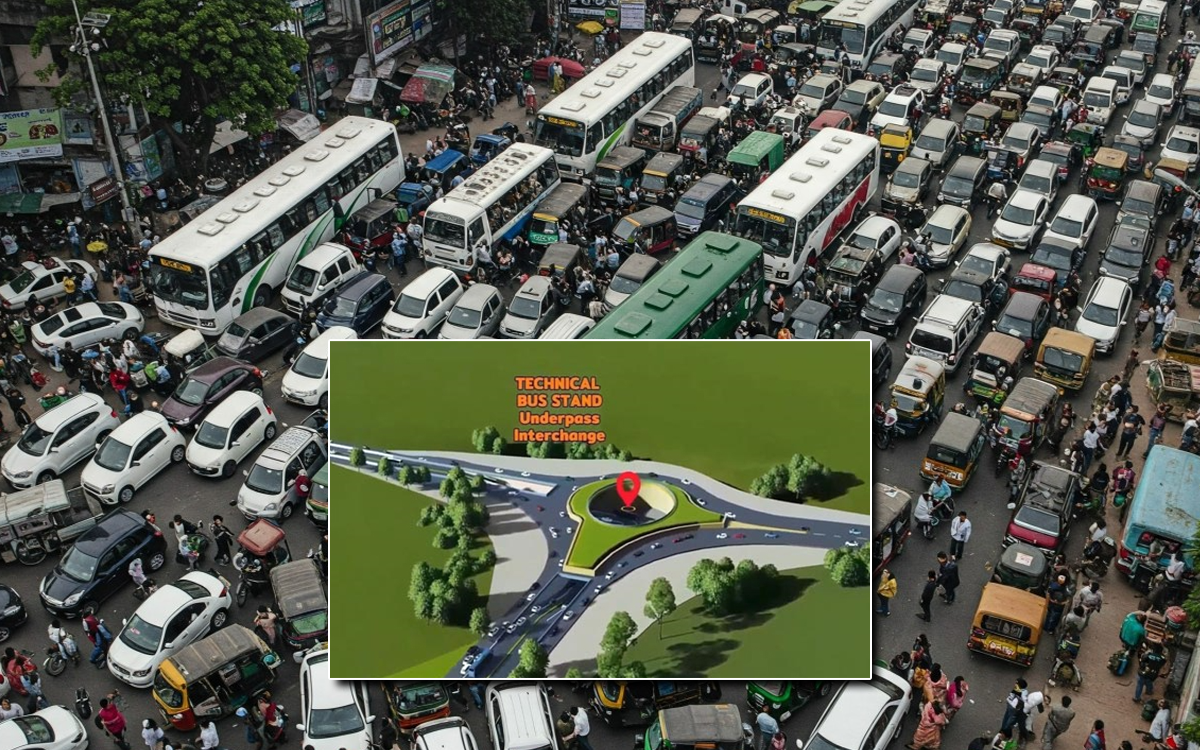
The government has unveiled an ambitious plan to transform traffic management in the capital through a “Zero Signal Management Model,” aiming to drastically reduce congestion and ensure uninterrupted vehicular movement across Dhaka.
Under the proposed system, commuters entering the city through major gateways such as Jatrabari and Gabtoli would be able to travel as far as Diabari without stopping at traditional traffic signals. The initiative envisions a signal-free express connectivity network spanning approximately 105 kilometers, linking key north-south and east-west corridors of the capital.
Officials involved in the project say the model seeks to eliminate conventional red, yellow, and green traffic lights entirely. Instead, it will rely on advanced infrastructure and modern traffic engineering solutions to maintain a continuous flow of vehicles. Separate arrangements will also be made for pedestrian crossings and slow-moving transport to ensure safety and accessibility.
According to the proposal, implementing the system will require around 80 intersection control systems and 43 supporting infrastructures. Of these, six infrastructures are already in place. Authorities believe that the system could initially become operational with the construction of approximately 30 priority infrastructures at key intersections throughout the city.
The planned development covers several critical locations, including Nimtoli Bus Stand, Hazarat Golap Shah Intersection, Kakrail, Shantinagar, Rampura TV Center, Notun Bazar, Azampur, Jamjam Tower, Moylar Mor, Mirpur Cantonment, Mirpur-10, Sony Circle, Bangla College, Technical Mor, Aarong, Science Lab, Nilkhet Mor, Palashi Mor, Shahid Minar, Shikkha Bhaban-High Court intersection, Mothsho Bhaban, Tejgaon South and North, Mohakhali Bus Stand, Gulshan Link Road, Mohakhali Rail Crossing, Banani South and North, Agargaon Bus Stand, Zia Udyan, Bijoy Sarani, Karwan Bazar, Banglamotor, Shahbagh, Abul Hotel, Diabari, and Kazipara.
The infrastructure component of the project is substantial. It includes the construction of 19 overpasses and underpasses, with three already completed. The remaining structures-each approximately 800 feet long and 42 feet wide-are estimated to cost around Tk 860.16 crore.
In addition, 16 U-loop overpasses are planned, three of which already exist. The remaining 13 are expected to cost Tk 624 crore. A combined interchange facility integrating a U-loop and overpass is also part of the plan, with an estimated cost of Tk 153 crore. Altogether, the infrastructure investment is projected to reach Tk 2,372.16 crore.
The plan further includes the construction of 30 foot overbridges and nine flyovers. While the cost of the flyovers will be determined separately, the foot overbridges alone are expected to require an investment of around Tk 300 crore.
A high-level meeting held on April 12 at the Ministry of Home Affairs reviewed the proposal and assessed its feasibility. The meeting was chaired by Senior Secretary Manjur Morshed Chowdhury and attended by key government officials, including representatives from the Road Transport and Highways Division, RAJUK, the Dhaka Transport Coordination Authority (DTCA), Dhaka Metropolitan Police, and both Dhaka city corporations, along with members of the ministry’s innovation team.
During the meeting, all relevant ministries and agencies were instructed to submit their opinions and recommendations in writing within 15 days, indicating that the project is still under evaluation but being treated with urgency.
In parallel with the zero-signal expressway network, authorities are also considering bringing the city’s remaining internal roads under automated traffic light systems. The broader strategy includes short, medium, and long-term measures to tackle Dhaka’s persistent traffic challenges.
In the short term, the government plans to introduce artificial intelligence-based signal automation within three months. Medium-term goals include phased implementation of the zero-signal system within one to two years. Long-term strategies focus on structural changes such as relocating inter-district bus terminals outside the city and constructing bypass roads to divert through-traffic.
Additional measures under consideration include introducing organized city bus services, restricting the entry of inter-district buses into the capital, limiting the movement of heavy vehicles during daytime hours, and launching electronic toll collection (ETC) systems to improve efficiency.
The urgency of the initiative is underscored by alarming statistics on Dhaka’s traffic situation. Studies indicate that the average vehicle speed in the city has dropped to just 4 kilometers per hour due to severe congestion. This results in a daily loss of approximately 9 million working hours.
Fuel wastage is another major concern, with an estimated 18 million liters consumed unnecessarily each day due to traffic jams, costing around Tk 216 crore daily. On an annual basis, these losses amount to nearly Tk 78,000 crore.
Overall, traffic congestion is estimated to cause an annual economic loss of about $7.5 billion, reducing Bangladesh’s GDP by approximately 7 to 11 percent.
Officials believe that if successfully implemented, the Zero Signal Management Model could mark a turning point in Dhaka’s urban mobility, improving travel time, reducing fuel consumption, and enhancing overall economic productivity.







Md.Shahidur Rahman Tepa
Publisher & Editor
Mrs. Naznin Sultana - Associate Editor
Dr. Sariful Hoque Priom - Assistant Editor
Head Office: Tepa Complex 169/A, SS Nazrul Islam Sarani, Purana Paltan, Dhaka-1000, News and Commercial Office: 48 Bijoy Nagar (3rd Floor) Dhaka-1000,
E-mail: monthlytruetone@gmail.com
Leave a Reply