


News Desk
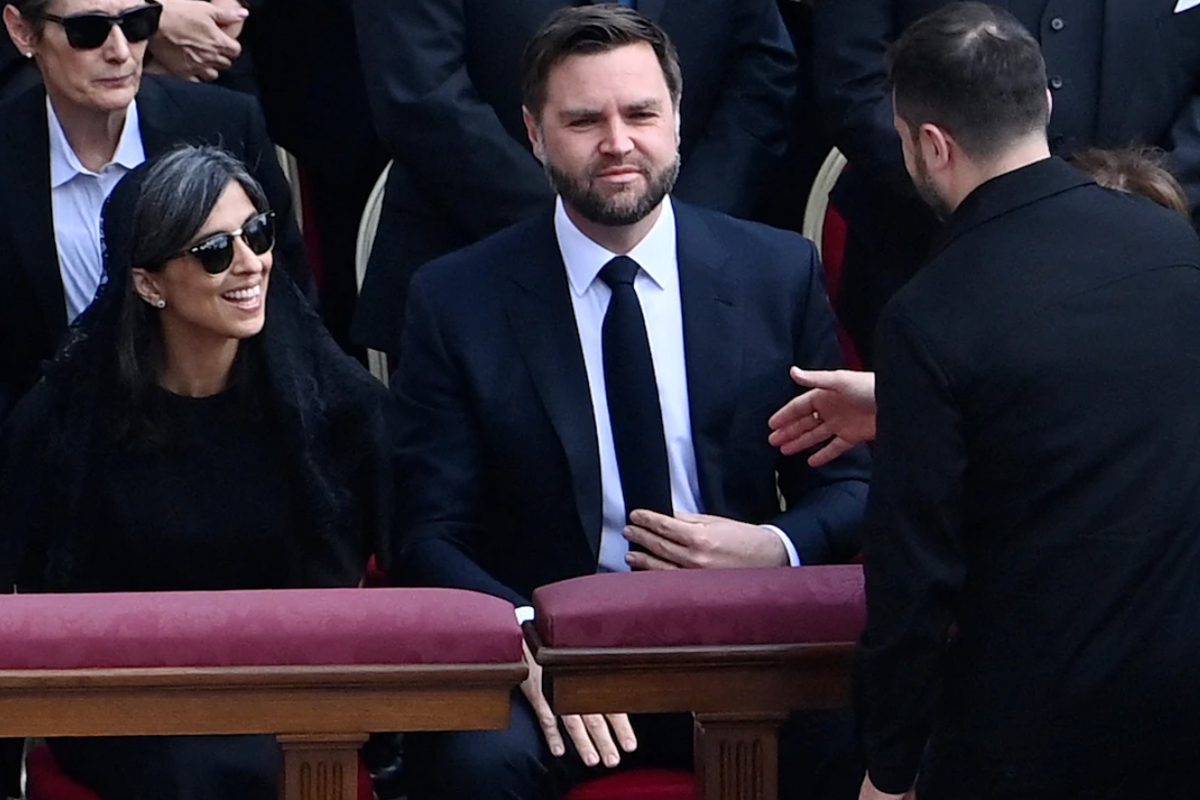
Ukrainian President Volodymyr Zelensky met with US Vice President JD Vance in Rome on May 18, marking their first face-to-face interaction since a tense exchange in the White House three months ago. The meeting, set against the backdrop of a devastating Russian drone offensive, took place just two days after a historic but inconclusive round of direct talks between Ukraine and Russia in Istanbul – the first such talks in over three years.
Zelensky, speaking via Telegram after the meeting at the US ambassador’s residence in Rome, revealed that he and Vance discussed the Istanbul negotiations, which had yielded a prisoner exchange agreement but no progress toward a ceasefire. “The Russians sent a low-level delegation with no decision-making powers,” Zelensky said, expressing frustration over Moscow’s approach.
The encounter in Rome, which followed Pope Leo XIV’s inaugural mass at the Vatican, also covered a wide array of issues, including bilateral trade, military cooperation, battlefield conditions, and future prisoner exchanges. US Secretary of State Marco Rubio and Zelensky’s chief of staff, Andriy Yermak, were also present at the meeting, where the two delegations emphasized the need for a “just and lasting peace” in Ukraine.
Zelensky and First Lady Olena Zelenska were granted an audience with Pope Leo XIV following his inauguration. Zelensky praised the Vatican’s readiness to serve as a platform for direct talks between Kyiv and Moscow, calling it a “gesture of goodwill.” In return, Pope Leo expressed his desire to see an end to what he described as the suffering of the “martyred Ukraine.”
This symbolic moment came just a day after Russia launched its most extensive drone assault on Ukrainian territory since the beginning of the war in February 2022. According to Ukraine’s air force, 273 drones – including Iranian-made Shahed models and various imitator drones – were deployed by Russia, 88 of which were successfully shot down. Another 128 drones reportedly veered off course.
Deputy Prime Minister Yulia Svyrydenko condemned the attacks, stating, “Russia has a clear goal – to continue killing civilians.” At least two people were killed, one in Kyiv and another in the Kherson region, with rail stations, homes, and cars hit by the overnight barrage.
The Rome meeting marked a notable shift from the confrontational tone of Zelensky and Vance’s previous engagement in February, when the two clashed in the Oval Office. Back then, Vance had accused Zelensky of being “disrespectful” toward President Trump, who had said Zelensky lacked leverage in dealing with Russia and should be more “thankful” for American support.
According to a senior Ukrainian official, the Rome discussion was “better” than their last meeting and more focused on policy than personality. The same official revealed to AFP that one topic of discussion was preparations for a crucial phone call scheduled for May 20 between President Trump and Russian President Vladimir Putin.
Trump announced on Truth Social that he intended to speak with Putin to “stop the BLOODBATH” in Ukraine, triggering diplomatic activity in European capitals. German Chancellor Friedrich Merz disclosed that leaders from Germany, Britain, and France are seeking to speak with Trump before his call with the Kremlin.
Despite these developments, President Trump has yet to publicly criticize Putin over the war, raising concerns in Kyiv and among European allies that Washington may push for a settlement on terms favorable to Moscow.
On the same day as the Rome meeting and drone barrage, Russian President Vladimir Putin gave a lengthy interview on state television, reiterating the Kremlin’s rationale for the invasion. He claimed Moscow’s objective was to “eliminate the causes that triggered this crisis,” though he stopped short of specifying what those causes were.
Historically, Russia has used a range of justifications for the war: the “de-Nazification” and demilitarization of Ukraine, protection of Russian speakers in the east, and opposition to NATO expansion. The West and Kyiv, however, reject these claims, viewing them as pretexts for a classic imperial land grab aimed at undermining Ukraine’s sovereignty and reasserting Russian influence in Eastern Europe.
While the Istanbul talks were heralded as a potential breakthrough, they fell far short of substantive peace negotiations. The only achievement was a mutual agreement to exchange 1,000 prisoners from each side – a humanitarian gesture, but one that underscored the lack of momentum toward ending the conflict.
Both delegations appeared cautious. Ukrainian officials criticized the Russian team’s lack of authority, while Moscow showed no interest in discussing a ceasefire. The impasse reflects broader geopolitical fault lines, with Washington’s stance evolving under Trump’s renewed influence and Moscow holding fast to its maximalist objectives.
More than two years into the war, the death toll continues to climb, with tens of thousands killed and millions displaced. Ukraine’s call for more support – both military and diplomatic – remains urgent, particularly as Russian forces claim new territorial gains, such as the capture of Bahatyr village in Donetsk.
As Kyiv pleads for firm US and European backing, the outcome of Trump’s upcoming call with Putin could prove pivotal. Whether the US will continue to stand behind Ukraine’s territorial integrity or pivot toward pressuring Kyiv into concessions remains a looming question.
For now, Zelensky’s meeting with Vance has restored a degree of civility to US-Ukraine relations. But with drones still striking Ukrainian cities and diplomacy at a standstill, the path to a “just and lasting peace” remains steep, uncertain, and riddled with geopolitical complexity.