



News Desk
The people of Bangladesh marked their Independence and National Day on March 26 with deep reverence, commemorating the heroic sacrifices of the Liberation War martyrs who secured the nation’s freedom in 1971. The day was observed across the country through a wide range of official, cultural, and community-based programmes that reflected both solemn remembrance and national pride.
The significance of March 26 remains deeply embedded in the national consciousness. It recalls not only the formal declaration of independence but also the tragic events of the night of March 25, 1971, when a brutal military crackdown by Pakistani forces began a nine-month war marked by immense human suffering. The struggle ultimately culminated in victory on December 16, 1971, after a war that cost countless lives and left a lasting imprint on the country’s identity.
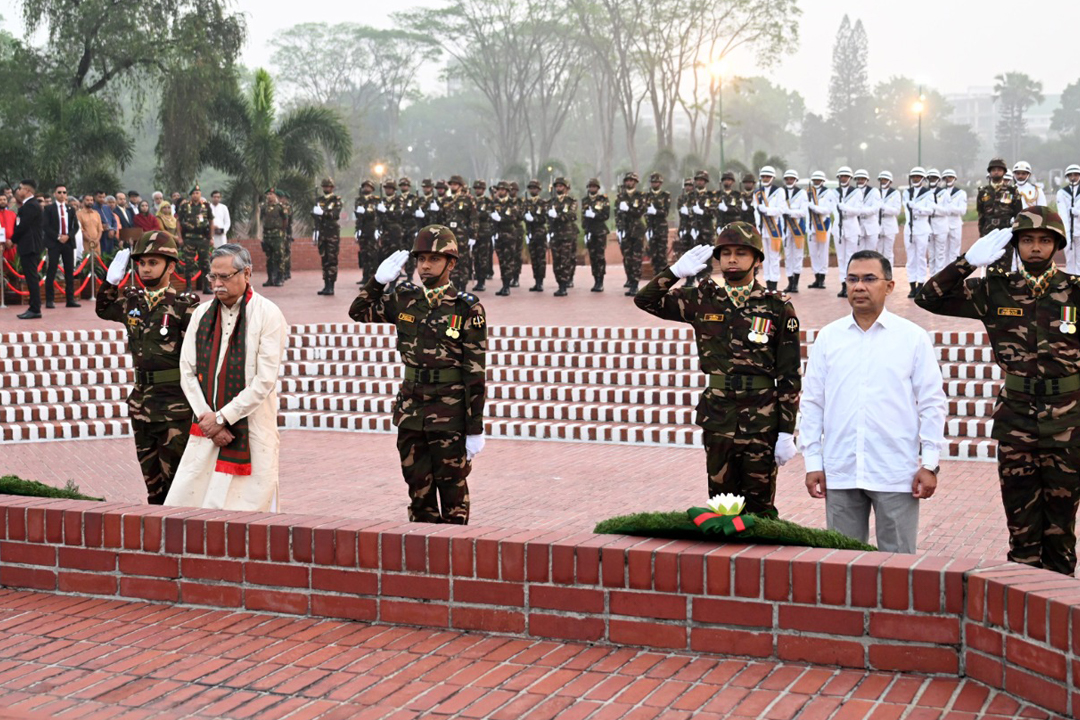
At the heart of the day’s observances was the National Martyrs’ Memorial in Savar, where thousands gathered from early morning to pay homage to the fallen heroes. People from all walks of life—including political leaders, civil servants, students, workers, and families of freedom fighters—arrived in groups carrying the national flag, flowers, banners, and festoons. As the day progressed, the Shaheed Bedi (altar) became covered with layers of floral wreaths, symbolizing the collective gratitude of the nation.
Many attendees wore attire in red and green, the colors of the national flag, adding a visual expression of patriotism to the occasion. The atmosphere was marked by a mixture of solemnity and unity, as citizens stood together to honor the sacrifices that led to the birth of their country.
The President of Bangladesh, Mohammed Shahabuddin, and the Prime Minister, Tarique Rahman, led the nation in paying tribute by placing wreaths at the memorial. They were joined by high-ranking officials including the Chief Justice, cabinet members, chiefs of the armed forces, senior political figures, diplomats, and representatives of various organizations. War-wounded freedom fighters and family members of martyrs were also present, adding a deeply personal dimension to the national commemoration.
The government arranged extensive programmes nationwide to ensure that the day was observed with due respect and widespread participation. The observances began at dawn with ceremonial gun salutes in districts and upazilas across the country, including the capital Dhaka. National flags were hoisted atop government, semi-government, autonomous, and private buildings at sunrise, while Bangladeshi missions abroad also raised the flag in solidarity with the homeland.
At around 8:00 am, official flag-hoisting ceremonies were held at divisional, district, and upazila levels. These events were accompanied by the singing of the national anthem, followed by rallies and parades. Students from various educational institutions actively participated in these programmes, showcasing disciplined displays, drills, and performances that highlighted the spirit of independence.
Educational institutions played a central role in engaging the younger generation. Essay writing, recitation, and painting competitions were organized to encourage students to reflect on the historical significance of the Liberation War and the values it represents. Discussions and seminars were also held, emphasizing themes such as patriotism, social justice, and national unity.
The observance extended beyond formal ceremonies to include public engagement and cultural activities. Ships of the Bangladesh Navy and Bangladesh Coast Guard were opened to visitors at several key locations, including ports in Chattogram, Khulna, Mongla, Payra, and Sadarghat, as well as stations in Narayanganj, Chandpur, Munshiganj, and Barishal. Visitors were given the opportunity to explore these vessels, fostering a sense of connection between the armed forces and the public.
To mark the occasion, Prime Minister Tarique Rahman also issued a commemorative postage stamp at the Secretariat, symbolizing the enduring legacy of the Liberation War in the nation’s history.
Sports competitions were organized at district and upazila levels, featuring events such as football matches, T20 cricket tournaments, kabaddi, and traditional games like ha-du-du. These activities brought communities together and added a festive dimension to the day’s observances.
Media outlets played a significant role in commemorating the day. Television channels and radio stations, including state-run broadcasters, aired special programmes that highlighted the history and significance of the Liberation War. Documentaries, interviews with freedom fighters, and patriotic cultural performances were broadcast throughout the day.
Cinema halls across the country screened films related to the Liberation War free of charge, allowing audiences to revisit important moments from the nation’s struggle for independence. Museums also opened their doors to the public without entry fees, encouraging citizens to explore historical artifacts and narratives associated with the war.
Cultural programmes were held at various tourist centers, featuring music, dance, and theatrical performances that celebrated the spirit of independence. At the same time, special prayers were offered in mosques, temples, churches, pagodas, and other places of worship, seeking peace for the souls of the martyrs and prosperity for the nation.
Social welfare initiatives were also part of the day’s observances. Special meals were arranged in hospitals, prisons, children’s homes, and rehabilitation centers, reflecting a spirit of compassion and inclusivity.
Across different districts, local administrations organized their own commemorative events. In Shariatpur, officials, law enforcement agencies, and veterans’ groups gathered at the central Shaheed Minar to lay wreaths, while large numbers of citizens joined the tribute at sunrise. Tangail observed the day with ceremonial gun salutes, flag hoisting, and wreath-laying ceremonies, alongside student parades and interfaith prayers.
In Bogura, colorful parades and physical drills by students were key highlights, complemented by awards ceremonies recognizing participants. Sherpur hosted a series of events including student assemblies, cultural competitions, and community gatherings throughout the day.
Feni witnessed large crowds assembling at the Liberation War Memorial, where officials, political leaders, and civic organizations participated in tributes and cultural programmes. Munshiganj organized parades, exhibitions, and discussions, along with religious observances in various institutions.
In Bagerhat, freedom fighters and their families were honored at a district-level reception, while educational institutions hosted exhibitions and cultural events aimed at inspiring younger generations. Netrokona marked the day with gun salutes, wreath-laying ceremonies, and formal receptions for local freedom fighters.
These nationwide programmes underscored the enduring relevance of the Liberation War in shaping Bangladesh’s identity. They also highlighted the importance of passing on the values of sacrifice, resilience, and unity to future generations.
Through collective remembrance and active participation, the nation reaffirmed its commitment to honoring the martyrs and upholding the ideals for which they fought. Independence Day once again served not only as a commemoration of the past but also as a reminder of the responsibilities that come with freedom—ensuring justice, equality, and progress for all citizens.


