


Desk News
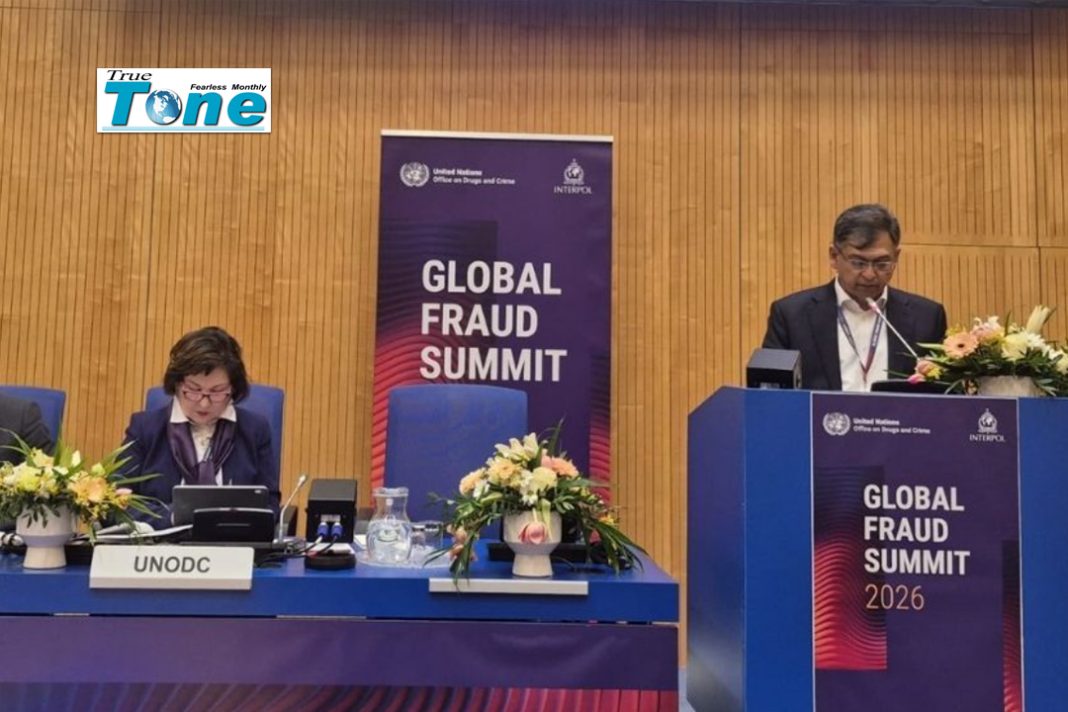
Bangladesh has reiterated its firm commitment to combating financial crime and transnational criminal networks, as Home Minister Salahuddin Ahmed reaffirmed the government’s “zero tolerance” stance against terrorism, drugs, human trafficking, corruption, and financial fraud during the Global Fraud Summit 2026 in Vienna.
Speaking as a panelist in a high-level discussion titled “National Commitments/Pledges on Combating Fraud” at the Vienna International Centre, the minister highlighted Bangladesh’s growing efforts to strengthen national security and tighten oversight of sectors vulnerable to financial crimes. The summit brought together senior policymakers, law enforcement officials, and financial crime experts from across the world to discuss coordinated strategies for addressing fraud and money laundering.
During his address, Ahmed emphasized that Bangladesh has adopted a comprehensive and proactive approach to tackling financial crimes. According to the Home Ministry, the government has introduced stricter monitoring mechanisms in sectors considered particularly vulnerable to money laundering activities. These sectors include the banking industry, non-banking financial institutions, real estate transactions, and jewellery businesses. Authorities are strengthening regulatory oversight to ensure greater transparency, accountability, and compliance with financial regulations.
The minister also underlined the importance of Bangladesh’s legal framework in addressing financial crime. He noted that the government remains fully committed to the effective implementation of the Money Laundering Prevention Act 2012 and the Mutual Legal Assistance Act 2012. These laws are designed to facilitate the detection, investigation, and prosecution of money laundering offenses, while also enabling authorities to cooperate with international partners in cross-border criminal investigations.
Ahmed stressed that global collaboration is crucial in dismantling sophisticated criminal networks that operate across national boundaries. He called for stronger legal cooperation among countries to improve information sharing, asset recovery processes, and coordinated enforcement actions. According to the minister, such cooperation is essential for effectively combating fraud schemes and financial crimes that increasingly rely on international financial systems.
Another major focus of his remarks was the growing challenge posed by technology-driven crimes. With the rapid advancement of digital tools and artificial intelligence, criminal groups are finding new ways to exploit financial systems and commit fraud. Ahmed stated that Bangladesh is actively strengthening the technical capabilities of its law enforcement agencies to address emerging threats, including cyber-enabled fraud and crimes facilitated by artificial intelligence.
“There is no place for criminals in the new Bangladesh,” the minister declared, reaffirming the government’s determination to protect the country’s financial integrity and maintain public trust in the economic system.
Participants at the summit reportedly welcomed Bangladesh’s proactive approach, with several international representatives praising the country’s efforts to modernize its anti-fraud strategies and enhance technological capacity within law enforcement agencies.
The Global Fraud Summit 2026 continues to serve as an important platform for countries to exchange best practices and strengthen international cooperation in the fight against fraud, financial crimes, and other forms of organized criminal activity. For Bangladesh, the event provided an opportunity to highlight its ongoing reforms and demonstrate its commitment to working with the global community to ensure a safer and more transparent financial environment.