


Shahidur Rahman Tapa
The strategic waters of the Strait of Hormuz have once again become a focal point of global geopolitical tension. As one of the world’s most vital maritime corridors for energy transportation, any disruption in the strait sends shockwaves through global markets and international diplomacy. In recent weeks, concerns about the safety of commercial shipping have intensified following escalating tensions between the United States, Israel, and Iran. Amid these developments, India has chosen a distinctly diplomatic path, emphasizing negotiation and direct engagement with Tehran rather than military deployments.
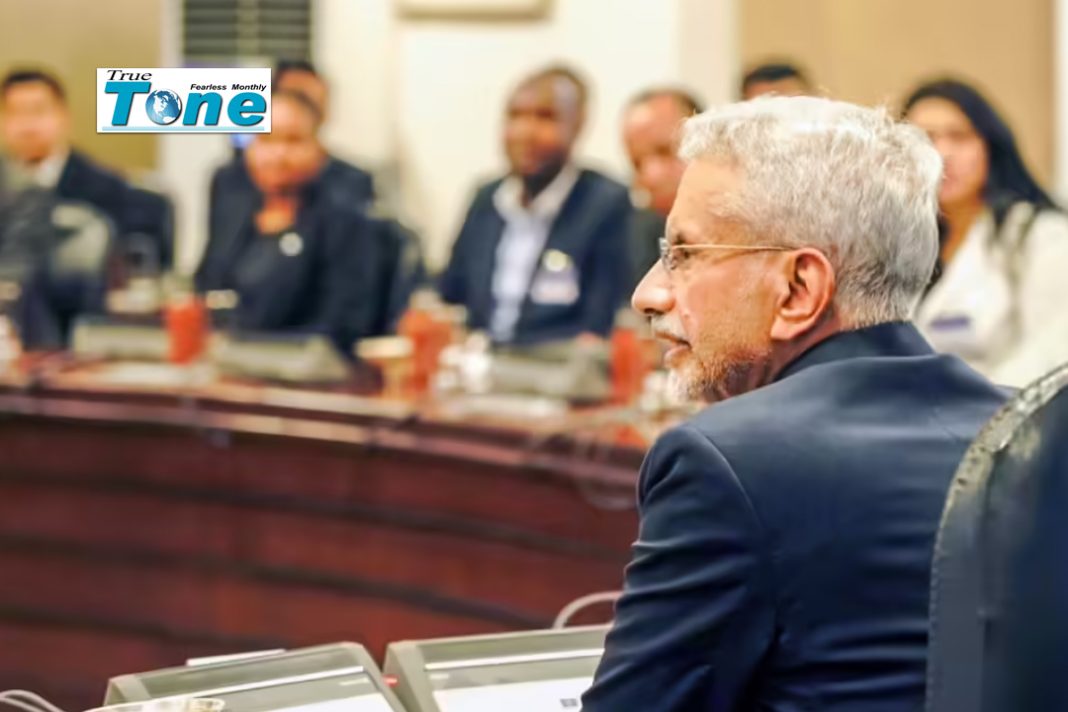
India’s External Affairs Minister, Subrahmanyam Jaishankar, recently highlighted New Delhi’s approach during an interview with the Financial Times. According to Jaishankar, discussions with Iranian authorities have already yielded practical outcomes, including the safe passage of two Indian-flagged gas tankers through the strategically sensitive strait. His remarks underline India’s belief that diplomatic dialogue remains the most effective method for ensuring maritime security in the region.
The comments come against the backdrop of a suggestion from Donald Trump, who called on major Asian economies such as China and Japan to deploy naval forces to protect commercial shipping in the strait. Trump’s proposal reflects a broader debate within the international community about how best to safeguard maritime routes that are essential to global energy supply chains. While some countries have supported increased naval patrols, India appears determined to pursue a more measured and diplomatic strategy.
The Strait of Hormuz sits between Iran and the Arabian Peninsula, connecting the Persian Gulf to the Gulf of Oman and the Arabian Sea. Despite its relatively narrow width, it serves as the principal maritime passage for oil exports from major Gulf producers. A significant portion of the world’s crude oil and liquefied natural gas passes through these waters every day, making it one of the most important energy chokepoints on the planet.
Any disruption in the strait can have immediate consequences for global energy markets. For countries like India-one of the world’s largest energy importers-the stability of this shipping route is particularly crucial. Indian refineries depend heavily on crude oil shipments from Gulf states, and a prolonged closure or disruption in the strait would have severe economic implications.
Given these stakes, India has strong incentives to maintain open and secure maritime routes while avoiding actions that might escalate regional tensions.
Jaishankar emphasized that India’s engagement with Iran is ongoing and pragmatic. He noted that there is no “blanket arrangement” guaranteeing passage for Indian ships through Iranian-controlled waters near the strait. Instead, each vessel’s transit is handled individually through coordination and communication with Iranian authorities.
This case-by-case approach reflects both the complexity of the situation and the need for flexibility. By negotiating specific ship movements, India seeks to ensure the safe passage of its vessels while maintaining constructive relations with Tehran.
India’s leadership has also taken steps at the highest political level to support these diplomatic efforts. Prime Minister Narendra Modi recently held a conversation with Iranian President Masoud Pezeshkian. Their discussion formed part of a broader initiative to stabilize the situation and maintain open channels of communication between the two countries.
At the ministerial level, Jaishankar has been in frequent contact with Iran’s foreign minister, Abbas Araghchi. Reports indicate that the two diplomats have spoken multiple times since late February, when a series of attacks involving the United States and Israel targeted Iranian positions, prompting retaliatory strikes from Tehran.
India’s diplomatic maneuvering reflects the delicate balancing act it must perform in the Middle East. On one hand, India maintains longstanding cultural, economic, and strategic ties with Iran. These include energy cooperation, regional connectivity initiatives, and shared interests in stabilizing parts of West and Central Asia.
On the other hand, India has developed increasingly close relations with the United States and Israel in recent decades. Both countries are key strategic partners for New Delhi in areas ranging from defense technology to intelligence cooperation.
Navigating these overlapping partnerships requires careful diplomacy. By focusing on dialogue rather than military involvement, India aims to protect its economic interests without becoming entangled in regional military confrontations.
The differing approaches of global powers highlight an ongoing debate about maritime security in contested regions. Some policymakers argue that naval deployments are necessary to deter attacks on commercial shipping. Others contend that military buildups risk escalating tensions and could provoke further confrontations.
India’s approach falls firmly into the latter camp. By emphasizing negotiation and coordination with Iran, New Delhi is signaling that diplomatic engagement remains a viable tool for resolving maritime disputes—even in highly sensitive strategic environments.
Jaishankar’s comments also suggest that India sees its dialogue with Tehran as potentially beneficial for the broader international community. If diplomatic channels can secure safe passage for Indian ships, the same model could theoretically be used by other nations facing similar challenges.
The outcome of these diplomatic efforts could have significant implications for global energy markets. Stability in the Strait of Hormuz is essential not only for oil-exporting countries but also for energy-importing nations across Asia and Europe.
Should diplomatic engagement succeed in keeping the waterway open, it may reduce the likelihood of military escalation and provide a template for managing future crises in other maritime chokepoints.
At the same time, the situation remains fluid. Regional tensions involving Iran, Israel, and the United States continue to evolve, and any new developments could quickly alter the security dynamics in the strait.
India’s handling of the current situation demonstrates a pragmatic approach to international diplomacy. Rather than relying solely on military deterrence, New Delhi is prioritizing dialogue, communication, and practical coordination with regional actors.
This strategy reflects India’s broader foreign policy philosophy, which often emphasizes strategic autonomy and the pursuit of national interests through balanced engagement with multiple global partners.
In a region where geopolitical rivalries frequently dominate headlines, India’s quiet diplomacy in the Strait of Hormuz illustrates the enduring value of negotiation and dialogue. Whether this approach will ultimately ensure long-term stability in one of the world’s most critical maritime corridors remains to be seen, but for now, New Delhi appears confident that diplomacy offers the most effective path forward.
Shahidur Rahman Tapa, a renowned Bangladeshi politician, serving as the Co-Chair of Bangladesh Jatiya Party and the Editor of the Monthly Truetone and the Daily Ghoshana.