


Tajul Islam
Amid escalating tensions in the Middle East following recent military strikes on Iran, Tehran has signaled that Indian vessels will continue to enjoy safe passage through the strategically vital Strait of Hormuz. The assurance, delivered by Iran’s ambassador to India, Mohammad Fathali, underscores the longstanding diplomatic and economic relationship between Tehran and New Delhi at a moment when global energy markets are watching the region with growing concern.
Speaking to an RT India correspondent, Ambassador Fathali indicated that Indian ships would not face disruptions while passing through the narrow maritime corridor that connects the Persian Gulf to the Gulf of Oman and the wider Indian Ocean. When asked directly whether India could expect safe passage through the strait despite the ongoing conflict, the envoy responded confidently: “Yes, because India is our friend. You will see it within two or three hours.”
The remarks come as maritime traffic in the region faces heightened scrutiny following US and Israeli strikes targeting Iranian positions. The strikes have intensified geopolitical tensions and raised fears that the conflict could threaten shipping routes through the Strait of Hormuz-one of the world’s most critical energy transit corridors.
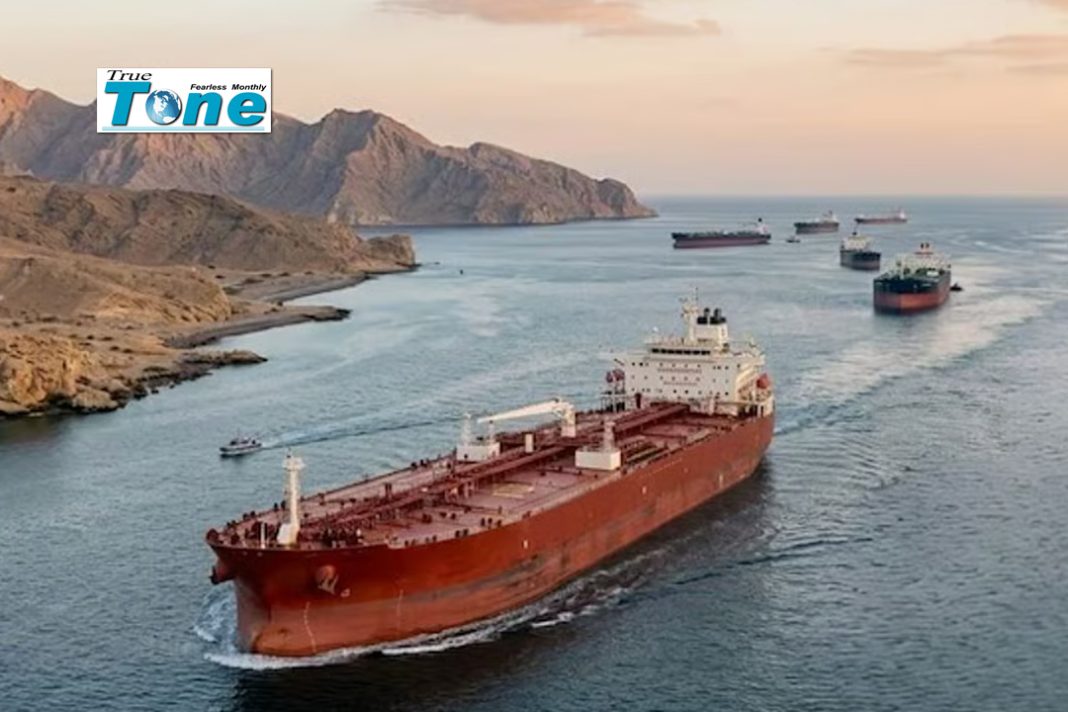
Approximately one-fifth of global oil consumption moves through the Strait of Hormuz, making it a central artery of the global energy supply chain. Any disruption to traffic through the narrow waterway, which at its tightest point measures just about 33 kilometers across, has the potential to trigger immediate volatility in global oil markets.
For India, the stakes are particularly high. The country is one of the world’s largest importers of crude oil, relying heavily on shipments that travel through the Persian Gulf and pass through the Strait of Hormuz before reaching Indian ports. Ensuring uninterrupted maritime access to this route is therefore essential for India’s energy security.
Ambassador Fathali emphasized that the relationship between Iran and India extends beyond immediate geopolitical considerations. According to the envoy, the two countries share longstanding historical ties and overlapping strategic interests in regional stability and economic cooperation.
“Iran considers India an important partner,” Fathali said, noting that both nations have common interests that encourage continued cooperation even amid complex regional dynamics.
The ambassador’s assurance appears to have been reinforced by recent high-level diplomatic engagement between the two countries. Indian Prime Minister Narendra Modi held a telephone conversation with Iranian President Masoud Pezeshkian earlier this week, during which the leaders discussed the rapidly evolving situation in the Middle East.
During the call, Modi reportedly expressed concern over the growing violence in the region, particularly the loss of civilian lives and damage to civilian infrastructure resulting from the recent escalation. The conversation highlighted India’s broader interest in de-escalation and stability in a region that plays a critical role in its energy supply and economic interests.
Parallel diplomatic channels have also been active. India’s External Affairs Minister S. Jaishankar held a separate discussion with his Iranian counterpart, Abbas Araghchi. The two foreign ministers reportedly exchanged views on the fallout from the US and Israeli strikes and discussed the broader geopolitical implications.
According to Iranian officials, Tehran used the conversation to outline its position on the recent developments and call for diplomatic support from members of the BRICS grouping. Iran has been seeking to leverage its expanding relations with non-Western powers to counter diplomatic pressure following the strikes.
India, for its part, emphasized the importance of regional stability and cooperation, a consistent theme in its foreign policy approach to the Middle East. New Delhi has traditionally sought to balance its relationships with multiple actors in the region, including Iran, Israel, and the Gulf Arab states.
This balancing act has grown increasingly complex in recent years as geopolitical rivalries in the Middle East have intensified. India maintains strong defense and technology ties with Israel while also depending on energy imports from Gulf countries and maintaining historical ties with Iran.
The Strait of Hormuz sits at the center of this delicate strategic landscape. Because such a large proportion of the world’s oil shipments pass through the waterway, any disruption-whether caused by military confrontation, blockades, or maritime incidents-can have global consequences.
Recent tensions have already sparked concerns among shipping companies and energy traders. Insurance costs for vessels operating in the region often rise sharply during periods of geopolitical instability, while oil prices can react swiftly to any signs of potential disruption.
Despite these risks, maritime traffic through the Strait of Hormuz has continued. Earlier this week, the first India-bound oil tanker sailing under a Liberian flag successfully transited the strait and docked at the port of Mumbai. The vessel’s safe arrival provided some reassurance to energy markets that the vital shipping lane remains operational despite the heightened tensions.
Still, analysts caution that the situation remains fluid. The Strait of Hormuz has long been considered a potential flashpoint in conflicts involving Iran and Western powers. Tehran has previously warned that it could restrict access to the waterway in response to military pressure or economic sanctions.
Such a move would carry significant consequences not only for regional powers but also for major energy consumers across Asia, including India, China, Japan, and South Korea.
For now, Iran’s assurance to India suggests that Tehran is seeking to maintain stable relations with key partners even while confronting military pressure from its adversaries. By signaling safe passage for Indian ships, Iranian officials appear to be emphasizing that their dispute with Western powers does not extend to disrupting trade with friendly nations.
For India, the message offers a degree of reassurance at a time when energy security concerns are rising. However, the broader geopolitical tensions surrounding the Strait of Hormuz mean that the stability of one of the world’s most vital shipping routes will continue to be closely monitored in the days and weeks ahead.
As the Middle East navigates another period of heightened uncertainty, the safe flow of oil through the Strait of Hormuz remains not only a regional issue but a global one-linking geopolitical conflict directly to the stability of international energy markets.
Tajul Islam, a senior journalist and Special Correspondent of Weekly Blitz writes on a broad-range of issues in local and international media. Follow him on X @tajulraj1