



Mohammad Abdel Hakam
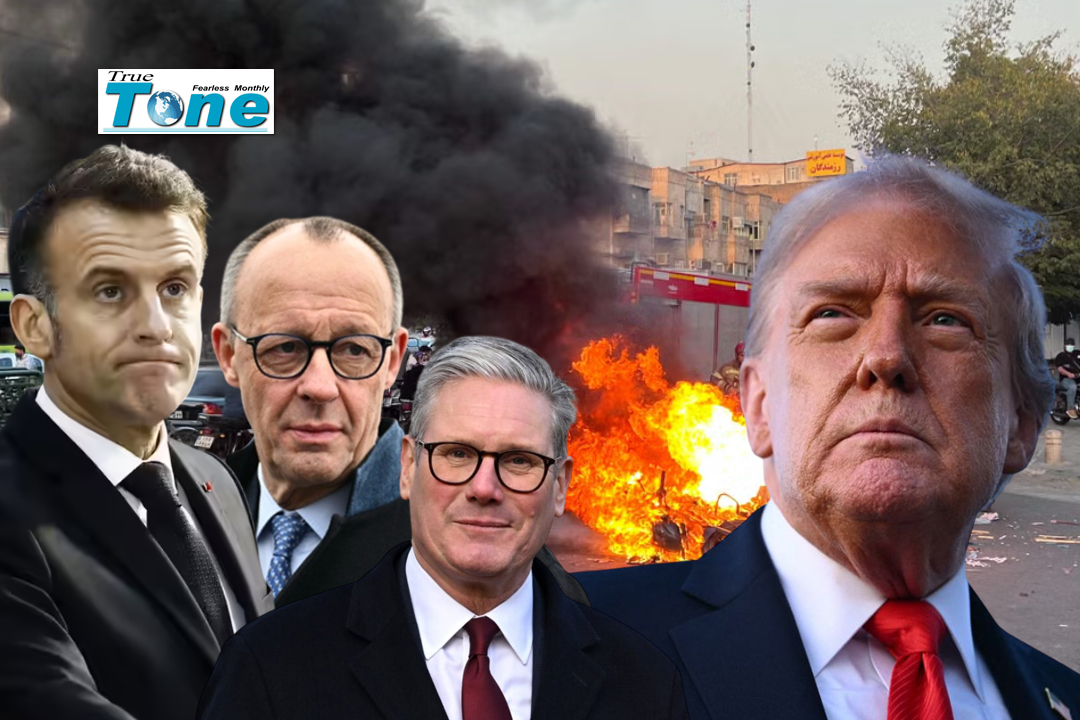
The US-Israeli war on Iran has done more than ignite another dangerous conflict in the Middle East. It has exposed deep political, strategic, and moral fractures within the Western alliance. While Washington and Tel Aviv have framed the campaign as a necessary move to counter Iran’s influence, the reaction across Europe and the broader Western bloc has been inconsistent, hesitant, and at times openly divided. From tensions within the Anglo-American “special relationship” to disagreements among European Union members and confusion within NATO, the conflict has revealed the fragility of the West’s claimed unity and its struggle to reconcile principles with geopolitical realities.
A crisis of Western unity
For decades, Western leaders have presented the transatlantic alliance as a unified defender of international law and a so-called “rules-based order.” Yet the war on Iran has placed these claims under scrutiny. Several European governments that have consistently condemned wars of aggression in other contexts now find themselves reluctant to challenge Washington’s decision to attack Iran.
This hesitation reflects both political dependency and strategic calculation. Many European leaders remain wary of openly confronting the United States, especially under a White House that has shown willingness to pressure allies economically and diplomatically. The result has been a confusing response in which Western governments express concern about escalation while simultaneously facilitating or tolerating the military campaign.
The contradictions have raised a fundamental question: if Western governments condemn military aggression elsewhere, why do they respond so differently when the United States or its closest partners take similar actions?
Strains in the US-UK ‘special relationship’
One of the most visible fault lines has emerged between Washington and London. The United Kingdom has traditionally been the United States’ most dependable ally in military operations, from Afghanistan to Iraq. However, the Iran war has introduced unexpected friction.
US President Donald Trump publicly criticized the British government for delaying permission for American forces to use the Diego Garcia airbase in the Indian Ocean. The facility, located in the Chagos Islands and operated jointly by the US and UK, has long served as a key strategic platform for American operations in the Middle East.
Trump’s criticism highlighted growing impatience in Washington with allies perceived as insufficiently supportive. By questioning the reliability of Britain’s leadership, the remarks also underscored the changing tone of the once-celebrated “special relationship.”
British Prime Minister Keir Starmer attempted to downplay the dispute, insisting that American aircraft were still operating from British bases and that intelligence cooperation between the two countries remained strong. Yet the exchange revealed underlying tensions. London appears determined to avoid being drawn too deeply into the conflict, mindful of public opinion at home and the legacy of Britain’s participation in the 2003 invasion of Iraq.
The shadow of the Iraq war
Domestic political considerations play a major role in Britain’s cautious stance. Public skepticism toward another Middle Eastern war is widespread, shaped largely by the experience of Iraq.
Opinion polls indicate that only a minority of British voters support military action against Iran. This public sentiment has made it difficult for the government to fully endorse Washington’s campaign without risking political backlash.
Opposition politicians have exploited this hesitation. Some conservative voices argue that Britain should demonstrate stronger leadership, drawing comparisons with former prime minister Tony Blair, who backed the US invasion of Iraq more than two decades ago. Others, however, view Blair’s role in that conflict as a cautionary tale rather than a model to emulate.
The result is a government attempting to balance alliance obligations with domestic political realities-an increasingly difficult task as the war escalates.
Security risks to Britain’s overseas bases
The conflict has also placed Britain’s military infrastructure in the region at risk. Iranian-aligned forces have reportedly targeted the RAF’s Akrotiri airbase in Cyprus, a facility that has been used in previous Western operations in Syria, Iraq, and Libya.
Such attacks have intensified concerns among regional governments about being drawn into a broader war. Cyprus, which hosts the British base, has urged London to guarantee that its territory will not be used for offensive operations against Iran. The issue illustrates how European involvement-even indirect involvement-can expose local partners to retaliation.
To reassure allies, Britain has sought naval support from other European countries to defend the facility. Yet the need for such measures underscores the broader strategic dilemma facing European governments: how to support the United States while avoiding becoming targets themselves.
Spain’s open defiance
While Britain has attempted to navigate the crisis cautiously, Spain has taken a more confrontational stance toward Washington. Spanish Prime Minister Pedro Sánchez refused to allow US forces to use Spanish bases for strikes on Iran, arguing that his country would not be complicit in a war it considers harmful to global stability.
The decision triggered an unusually harsh reaction from Washington. Trump accused Spain of undermining allied solidarity and hinted at economic retaliation, including potential trade restrictions.
Despite the pressure, Spanish officials insist their position has not changed. Madrid’s refusal highlights the growing willingness among some European governments to challenge US policy directly-something that would have been almost unthinkable in earlier decades.
Spain’s stance has also exposed divisions within the European Union itself. While some countries quietly support Madrid’s concerns about escalation, others worry that public disagreement could weaken NATO unity at a time of global instability.
Germany and the question of European leadership
Germany, traditionally seen as a central pillar of European leadership, has struggled to navigate the crisis. Chancellor Friedrich Merz traveled to Washington shortly after the first strikes on Iran, hoping to address trade tensions and other disputes. Instead, the visit turned into a display of the imbalance in the transatlantic relationship.
During the meeting, Trump openly criticized several European governments and joked about imposing harsh measures on Germany over alleged trade practices. Merz largely avoided confrontation, a response that disappointed some European partners who hoped Berlin would defend EU unity more assertively.
The German government has attempted to justify the campaign against Iran by linking Tehran to Russia’s war in Ukraine. German Defense Minister Boris Pistorius argued that Iran has contributed to instability in Europe by supplying weapons used by Russian forces.
At the same time, German officials have suggested that the weakening of Iran’s government could open the door to political change within the country. Such statements illustrate how European leaders are attempting to frame the conflict as part of a broader struggle against authoritarian regimes, even as critics accuse them of applying double standards.
An EU struggling to speak with one voice
The European Union’s institutional response has been strikingly muted. Despite the scale of the conflict, the EU has failed to present a unified diplomatic strategy or even a clear collective position.
European Commission President Ursula von der Leyen has focused primarily on condemning Iranian retaliation and warning about the risk of regional escalation. Meanwhile, the EU’s foreign policy chief has urged Iran to engage in negotiations with Western powers.
These statements, however, have not addressed the central question: whether the initial attacks on Iran themselves violate international norms. By avoiding that issue, EU leaders appear to be sidestepping a debate that could further divide member states.
Internal rivalries within EU institutions have also complicated the response. Reports from Brussels suggest that competing power centers within the bloc are more focused on institutional authority than on developing a coherent foreign policy.
NATO’s uncertain role
The war has also left NATO in an ambiguous position. While several NATO members support the United States militarily or politically, the alliance itself has not taken a formal role in the conflict.
This hesitation reflects the fact that the war does not clearly fall under NATO’s collective defense obligations. Iran has not attacked a NATO member state directly, making it difficult to justify a unified alliance response.
As a result, NATO appears to be operating on the sidelines while its member states pursue their own policies-another sign that Western unity may be more fragile than often portrayed.
The moral Dilemma for Western governments
Perhaps the most profound consequence of the conflict lies in its impact on the West’s moral narrative. For years, Western governments have justified support for Ukraine by arguing that Russia launched an unprovoked war of aggression.
Critics now argue that the attack on Iran undermines this argument. If the West condemns aggression in one context but supports it in another, the credibility of its principles may be weakened.
This perception is particularly powerful in the Global South, where many countries already view Western foreign policy as selective in its application of international law.
A changing global order
The divisions revealed by the Iran war suggest that the Western alliance may be entering a period of transformation. Some leaders believe the traditional US-led system is becoming increasingly difficult to sustain.
Canadian Prime Minister Mark Carney recently argued that the so-called “rules-based order” has always depended partly on political convenience and compliance from allied nations. As geopolitical tensions grow, that arrangement may no longer hold.
The war on Iran may therefore represent more than a regional conflict. It could signal a broader shift in the balance of power within the Western world itself.
The US-Israeli war on Iran has exposed a series of deep fractures within the Western alliance. Disputes between Washington and its European partners, disagreements within the European Union, and uncertainty about NATO’s role all point to a growing lack of cohesion.
Beyond the immediate military and diplomatic consequences, the conflict has also forced Western governments to confront difficult questions about their principles and credibility. As they attempt to balance alliance loyalty with domestic politics and international law, their responses have revealed the complexity-and fragility-of the Western political order.
Whether the West can restore a sense of unity after the conflict remains uncertain. What is clear is that the war on Iran has highlighted the limits of the alliance’s cohesion and exposed contradictions that will shape transatlantic politics for years to come.


