


News Desk
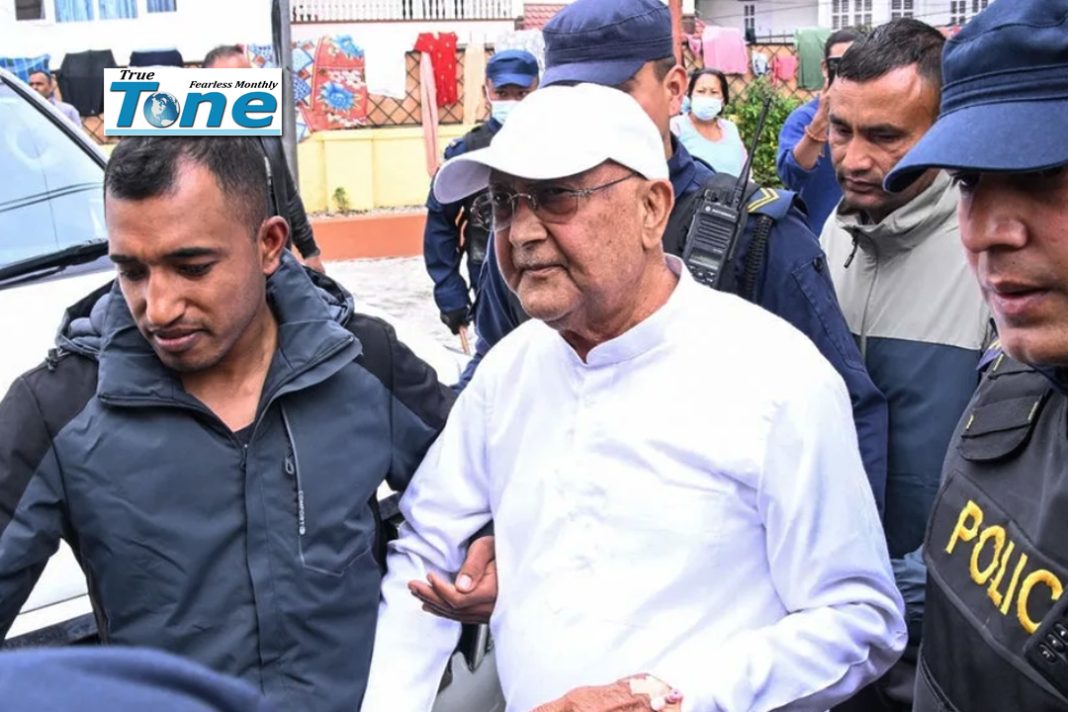
Nepal has entered a new phase of political and legal tension after the country’s highest court declined to release former Prime Minister K.P. Sharma Oli and former Home Minister Ramesh Lekhak, both of whom remain in police custody over allegations linked to last year’s deadly crackdown on youth-led protests. The decision by the Supreme Court of Nepal highlights the growing intensity of judicial scrutiny into actions taken by senior political leaders during one of the country’s most turbulent periods in recent history.
The ruling, issued on March 30, followed two separate petitions challenging the legality of the arrests. Lawyers for Oli and Lekhak argued that authorities had acted unlawfully when police detained the former officials from their homes earlier in the week. However, the Supreme Court refused to grant immediate release. Instead, it ordered the government to submit a written explanation detailing the circumstances and legal justification for the emergency arrest warrants. The authorities have been given three days to respond, indicating that the court intends to closely examine whether due process was followed.
The charges against the two leaders are tied to their alleged roles in the violent suppression of the 2025 youth protests, widely referred to as the Gen Z protests. The demonstrations, led largely by young citizens, demanded political reform, accountability, and transparency. Thousands of people took to the streets across the country, creating one of the largest protest movements in recent years. Security forces responded with force, and the crackdown resulted in several deaths and many injuries. The events triggered widespread public outrage and contributed to the eventual collapse of the Oli-led government.
Investigators have accused Oli and Lekhak of criminal negligence, claiming that their decisions during the protests led to excessive use of force by law enforcement agencies. A high-level commission formed to investigate the incident concluded last week that there was sufficient evidence to recommend criminal charges against the former prime minister, the former home minister, and several senior security officials. The commission’s findings appear to have directly influenced the decision to carry out the arrests.
Following their detention, the Kathmandu District Court ordered that both men be held in custody for five days to allow further investigation. Lekhak remains in police detention, while Oli has been admitted to a hospital due to heart-related health concerns. Despite his medical condition, officials have stated that legal proceedings will continue in accordance with the law.
The arrests have sparked significant political reaction, particularly among supporters of Oli’s party, the Communist Party of Nepal (Unified Marxist–Leninist). Hundreds of party members, along with affiliated groups and student organizations, have staged demonstrations in Kathmandu, especially in the Maitighar-Babarmahal area, a well-known location for public protests. Protesters have demanded the immediate release of both leaders, arguing that the charges are politically motivated and aimed at weakening opposition forces.
Government officials have rejected these accusations. Speaking after a cabinet meeting, government spokesperson Sasmita Pokhrel stated that all actions taken so far have been lawful and based on credible investigative findings. She emphasized that the government is committed to upholding the rule of law and ensuring accountability, regardless of a person’s political status or past position.
The legal developments come at a time of major political change in Nepal. Just days before the arrests, Balendra Shah, widely known as Balen, was sworn in as the country’s new prime minister. At 35 years old, Shah represents a new generation of leadership and has gained strong support from younger voters. His party achieved a decisive victory in recent elections, reflecting public dissatisfaction with long-standing political figures and concerns about corruption.
Since taking office, Shah has introduced an ambitious 100-point plan aimed at improving governance, strengthening institutions, and restoring public trust. One key initiative is the creation of a high-level Asset Investigation Committee under the Office of the Prime Minister and Council of Ministers. This committee will be responsible for collecting and verifying asset declarations from major political figures and senior officials who have held public office over the past two decades. The move is widely seen as an effort to address concerns about corruption and unexplained wealth.
At the same time, Oli and several other prominent political figures are facing scrutiny in a separate investigation into alleged money laundering activities. The Department of Money Laundering Investigation has confirmed that it is conducting preliminary inquiries involving multiple former prime ministers and ministers. Those reportedly under investigation include Sher Bahadur Deuba and Pushpa Kamal Dahal, as well as Arzu Rana Deuba and Deepak Khadka, who has already been arrested.
Officials from the Central Investigation Bureau have stated that they are supporting the inquiry, suggesting that the investigation could expand further. Although details remain limited, authorities have confirmed that multiple complaints have been received and that evidence is currently being reviewed.
The combination of criminal negligence charges and financial investigations marks a critical moment for Nepal’s political and legal systems. On one hand, the willingness of institutions to pursue cases against high-profile figures may indicate a strengthening of accountability and the rule of law. On the other hand, the situation has increased political tensions and raised concerns about stability, especially as protests continue in the capital.
The outcome of these cases is likely to have lasting consequences. If the charges against Oli and others are proven in court, it could establish an important precedent for holding senior leaders accountable for their actions while in power. However, if the process is viewed as unfair or politically driven, it could deepen divisions and weaken public confidence in democratic institutions.
As the government prepares its response to the Supreme Court and investigations continue, Nepal faces a decisive period. The coming weeks will test the strength of its institutions and the ability of its new leadership to manage a complex and sensitive political environment while maintaining public trust and stability.