



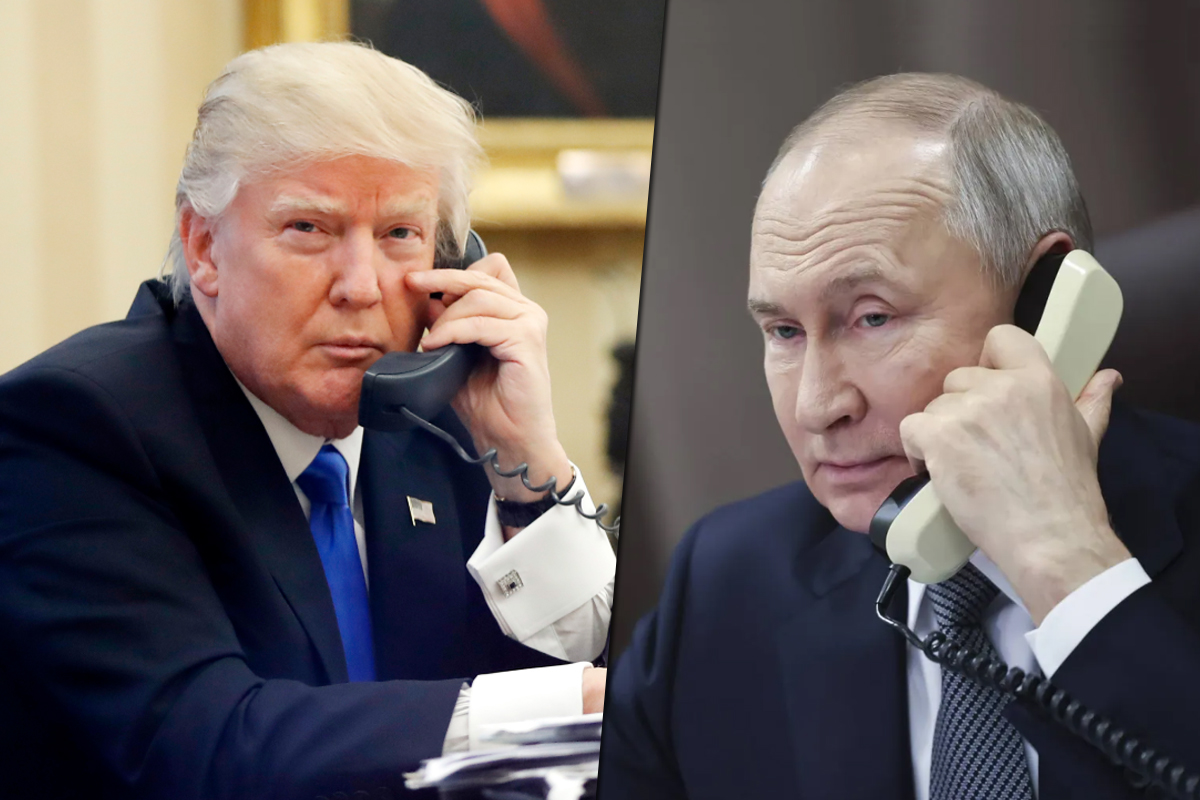
In a high-stakes diplomatic move, US President Donald Trump is scheduled to hold a phone call today with Russian President Vladimir Putin in an effort to end the war in Ukraine, now grinding into its fourth year since Russia’s 2022 invasion.
The call, announced days after unsuccessful peace talks between Russian and Ukrainian delegations in Istanbul, reflects Trump’s continued attempt to position himself as a dealmaker who could deliver peace where others have failed. “A ceasefire must happen,” Trump declared in a statement, describing the conflict as a “bloodbath” that has devastated Ukraine and displaced millions.
Trump, who has pledged on the campaign trail to end the war “within 24 hours” of taking office if reelected, has so far made little tangible progress. However, the Kremlin struck a notably diplomatic tone ahead of the call. “It is preferable to achieve our goals through political and diplomatic means,” Kremlin spokesman Dmitry Peskov said on Russian state television, adding that Moscow “highly valued” US efforts to end the war.
Trump’s call comes after the first direct negotiations between Russian and Ukrainian delegations in nearly three years. Hosted in Istanbul and attended by US observers, the talks ended inconclusively. Though both sides agreed to exchange 1,000 prisoners and floated ideas for a possible ceasefire, there was no commitment to de-escalation.
The talks were marred by mutual accusations. Ukrainian officials slammed Russia for sending a “dummy” delegation of low-level bureaucrats, while Moscow accused Kyiv of sabotage. The outcome underscored the entrenched distrust between the two sides.
Still, Trump remains adamant about pursuing dialogue. He also plans to speak to Ukrainian President Volodymyr Zelensky and NATO officials in a broader effort to reach what he hopes will be a breakthrough. “We are hopeful that a ceasefire will take place and this very violent war will end,” Trump said in a brief media appearance.
As Trump prepares for his call with Putin, European leaders are ramping up pressure for peace. On May 18, the leaders of Britain, France, Germany, and Italy held a joint phone call with Trump. According to a spokesperson for UK Prime Minister Keir Starmer, the group emphasized the need for an “unconditional ceasefire” and warned that new sanctions could be imposed if Russia fails to engage seriously.
German Chancellor Friedrich Merz echoed the message on social media, writing: “Putin must agree to a ceasefire and peace talks.” The European leaders are expected to reconvene with Trump again on May 19 following his conversation with the Russian president.
Ukrainian President Zelensky, meanwhile, met US Vice President JD Vance in Rome after attending Pope Leo’s inaugural mass at the Vatican. The two discussed additional sanctions and laid the groundwork for the Trump-Putin call, according to a senior Ukrainian official speaking anonymously to AFP.
The relationship between Trump’s political circle and the Ukrainian government remains uneasy. Tensions flared in February during a tense Oval Office exchange, where VP Vance accused Zelensky of being “disrespectful” to Trump. The former president reportedly told the Ukrainian leader he had “no cards” to play in negotiations with Russia and should show more gratitude for US aid.
Although the White House has confirmed Trump’s intention to speak with Zelensky after his call with Putin, analysts note that Trump’s public remarks often skew in favor of Russia, or at least avoid direct criticism of Putin. This cautious approach may reflect Trump’s broader geopolitical strategy of disengaging from traditional US alliances and recalibrating foreign policy around great-power diplomacy.
While diplomacy unfolds, the war on the ground continues unabated. The Russian army claimed new advances in Ukraine’s eastern Sumy and Donetsk regions, where two villages reportedly fell under their control. Over the weekend, Ukraine’s air force reported a “record” Russian drone assault, intercepting 76 of the 112 drones launched overnight.
The Kremlin has given little indication it is prepared to make major concessions. In an interview aired on May 18, President Putin said Russia’s goals were to “eliminate the causes that triggered this crisis,” and “guarantee Russia’s security.” Though vague, such phrasing typically refers to Moscow’s long-standing grievances: NATO’s eastward expansion, Ukraine’s military alignment with the West, and what Russia calls the oppression of Russian-speaking communities in eastern Ukraine.
Putin also reiterated demands to “de-Nazify” and demilitarize Ukraine – terms widely rejected by Kyiv and its Western allies as pretexts for aggression. For Ukraine and much of the world, Russia’s invasion is seen as an attempt to reclaim imperial influence and redraw borders by force.
Trump’s impending call with Putin may be symbolic, but it marks an important moment in the long diplomatic slog to resolve Europe’s most devastating conflict since World War II. While expectations are low for an immediate breakthrough, the fact that both Washington and Moscow are acknowledging the value of diplomacy may offer a sliver of hope.
Whether Trump can leverage his political capital and personal diplomacy to broker a real ceasefire remains to be seen. For now, his detractors view the effort as political theater, while his supporters argue he’s the only leader willing to speak directly with all parties – friend or foe – to stop the bloodshed.
With fighting intensifying and diplomacy stalled, the outcome of the Trump-Putin call could either signal a pivot toward peace or reinforce the bitter stalemate that has defined this war for more than three years.