

Tarique Rahman hails BNP’s 48-year journey, pledges accountable and welfare-oriented Bangladesh
- Update Time : Tuesday, September 1, 2026
- 10 Time View
Dr. Soriful Hoque Priom
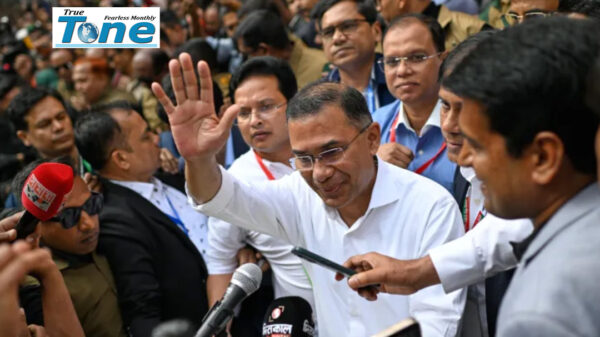
Prime Minister Tarique Rahman has extended greetings to leaders, activists, supporters and well-wishers of the Bangladesh Nationalist Party (BNP), as well as the people of Bangladesh, ahead of the party’s 48th founding anniversary, portraying the occasion as a milestone in the country’s long and often turbulent struggle over democracy, political pluralism and accountable governance.
In a message issued Tuesday, Tarique Rahman described the establishment of the BNP on August 31, 1978, as a “landmark event” in the history of restoring democracy in Bangladesh. He recalled that Shaheed President Ziaur Rahman founded the party at an open ground in Ramna, Dhaka, laying the foundation for a political organization that would eventually become one of the country’s two dominant political forces.
According to Tarique Rahman, the political environment created under Ziaur Rahman was crucial to the revival of multiparty politics. He said that after assuming office, Ziaur Rahman restored democratic practices and reinstated the rights of previously banned political parties to engage in political activities. Those measures, he argued, helped create the political space in which the BNP emerged and pluralistic politics regained momentum.
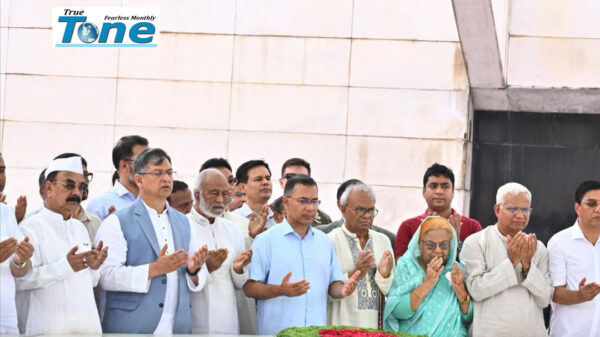
The prime minister paid tribute to Ziaur Rahman, describing him as the “Great Proclaimer of Independence,” a successful statesman and an architect of modern Bangladesh. His characterization reflects the central place Ziaur Rahman continues to occupy in the BNP’s political narrative and historical identity.
Tarique Rahman also remembered former Prime Minister and BNP Chairperson Khaleda Zia, crediting her with transforming the party into a mass political organization with a nationwide presence. He said Khaleda Zia’s charismatic leadership and political personality brought the BNP closer to people across Bangladesh.
The anniversary message was not merely commemorative. It was also an attempt to frame the BNP’s political history as part of a broader national struggle over democracy and sovereignty.
“Whenever independence, sovereignty and democracy have come under threat, BNP leaders, activists, supporters and well-wishers have sacrificed their lives alongside the pro-democracy people,” Tarique Rahman said.
He paid tribute to BNP leaders and activists at every level for what he described as their sacrifices in the struggle for democracy and good governance. He further portrayed the BNP as a continuing guardian of Bangladesh’s independence, sovereignty and democratic institutions.
That interpretation of the country’s political history is, however, part of a wider and deeply contested political debate in Bangladesh. Successive governments and political parties have offered sharply different accounts of the country’s democratic trajectory, including the roles played by the BNP, the Awami League and other political forces. The question of who has best defended democratic institutions remains one of the most contentious issues in Bangladeshi politics.
Tarique Rahman emphasized the relationship between electoral legitimacy and the BNP’s periods in government. He said the party had been entrusted with governing the country whenever citizens were able to exercise their voting rights through free and fair elections.
He highlighted what he described as major democratic and social initiatives undertaken by BNP governments, including the restoration of parliamentary democracy and the expansion of women’s education. In his message, these policies were presented as part of the party’s broader contribution to building a democratic and socially progressive Bangladesh.
The prime minister also invoked the dramatic political changes of recent years, saying that after more than 15 years of what he called “fascist rule and exploitation,” the people had once again entrusted the BNP with responsibility for running the state through a free, fair and impartial election.
The statement therefore goes beyond a traditional anniversary message. It seeks to connect the BNP’s founding in 1978 with its contemporary political mandate, presenting the party’s current return to power as a continuation of its historic struggle for democracy.
Tarique Rahman said the BNP now wanted to repay the confidence and affection shown by the electorate by establishing an accountable state and building Bangladesh into a welfare-oriented country.
“The people who believe in democracy are the source of all political power of BNP,” he said, emphasizing popular sovereignty as the foundation of the party’s political philosophy.
He added that the BNP’s identity was inseparable from the struggle to establish a welfare-oriented, democratic and self-reliant Bangladesh.
The 48th anniversary thus arrives at a significant moment for the BNP, a party whose history has been intertwined with Bangladesh’s political conflicts, electoral contests and debates over the meaning of democracy. For its supporters, the anniversary represents nearly five decades of political struggle and sacrifice. For its critics, the party’s record must also be judged against the broader history of Bangladesh’s often confrontational political system.
For Tarique Rahman, however, the message is clear: the BNP intends to define its future through democratic legitimacy, institutional accountability and economic and social welfare.
The anniversary provides the party with an opportunity not only to celebrate its historical roots but also to articulate a political promise for the future. Whether the BNP can translate that promise into stronger institutions, accountable governance and greater political stability will ultimately be measured not by anniversary declarations, but by its conduct in government and its ability to maintain public confidence.
As Bangladesh continues to navigate the challenges of democratic consolidation, economic development and political reconciliation, the BNP’s 48th founding anniversary offers both a celebration of its past and a test of its political ambitions for the future.






Md.Shahidur Rahman Tepa
Publisher & Editor
Mrs. Naznin Sultana - Associate Editor
Dr. Sariful Hoque Priom - Assistant Editor
Head Office: Tepa Complex 169/A, SS Nazrul Islam Sarani, Purana Paltan, Dhaka-1000, News and Commercial Office: 48 Bijoy Nagar (3rd Floor) Dhaka-1000,
E-mail: monthlytruetone@gmail.com
Leave a Reply