
Modi, Pezeshkian discuss trade expansion as India calls for safe shipping amid Iran conflict
- Update Time : Tuesday, September 1, 2026
- 10 Time View
Naznin Sultana
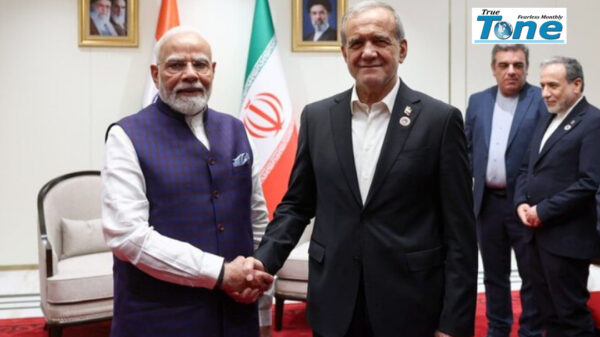
Indian Prime Minister Narendra Modi and Iranian President Masoud Pezeshkian held talks on the sidelines of the Shanghai Cooperation Organization (SCO) summit in Bishkek on August 31, focusing on strengthening bilateral ties, expanding trade and addressing the escalating security situation in the Middle East.
During the meeting, Modi emphasized India’s intention to “expand and diversify” its trade relations with Iran, while also reaffirming New Delhi’s longstanding commitment to its relationship with Tehran.
“Reiterated our commitment to strengthening India’s long-standing friendship with Iran across diverse sectors,” Modi said in a post on X following the meeting. He added that India wants to “expand and diversify our trade basket in the times to come.”
The talks come at a particularly sensitive time for relations between Iran and the international community. The meeting was the first in-person encounter between Modi and Pezeshkian since the Middle East conflict, triggered by US-Israeli attacks on Iran, began in February.
India seeks to revive trade with Iran
India has historically maintained significant economic and strategic ties with Iran, particularly in areas such as energy, infrastructure and transportation. Iran also provides India with an important gateway toward Central Asia and Afghanistan.
However, bilateral trade has fallen sharply in recent years. According to the figures cited in the discussion, trade between the two countries has declined by more than 90%, from around $17 billion in 2018-19 to approximately $1.6 billion in the financial year ending March 2026.
India remains one of Iran’s five largest trading partners, but Indian exports to Iran are now largely concentrated on goods covered by humanitarian exemptions.
The dramatic decline in trade has been influenced by international sanctions, restrictions on financial transactions and growing pressure from Washington on countries and companies conducting business with Tehran.
The US Treasury Department has launched a campaign aimed at further isolating Iran economically. Washington has indicated that countries and entities involved in Iran-related activities could face deadlines to wind down those activities and potentially face secondary sanctions if they fail to comply.
Against this backdrop, Modi’s emphasis on diversifying bilateral trade reflects India’s attempt to preserve its economic relationship with Iran while navigating an increasingly complicated geopolitical environment.
Concern over Middle East escalation
Trade was not the only issue discussed during the meeting. Modi and Pezeshkian also discussed the prevailing situation in the Middle East following renewed exchanges of attacks between Iran and the United States.
Iran and the US traded attacks overnight on August 31, marking the first such escalation in more than a month.
Modi expressed concern over the rising tensions and reiterated India’s position that disputes should be resolved through dialogue and diplomacy.
The Indian Foreign Ministry said Modi “expressed concern at the escalation of tensions” and reiterated India’s consistent position that all issues should be addressed through diplomatic means.
The Indian prime minister also said that New Delhi would continue to support efforts aimed at achieving lasting peace in the region.
Focus on freedom of navigation
One of the most important elements of Modi’s message was his call for the protection of commercial shipping and seafarers.
With tensions surrounding the Strait of Hormuz and wider Middle Eastern waterways, India has a direct interest in ensuring that commercial vessels can continue to operate safely. The Strait of Hormuz is a critical global shipping route, particularly for energy supplies, making any disruption potentially significant for international trade and energy markets.
Modi stressed that freedom of navigation and commerce must be protected and that civilians and civilian infrastructure should not be targeted.
He specifically emphasized that commercial shipping and seafarers must not be harmed under any circumstances.
The issue has particular significance for India because Indian maritime workers have been among those affected by attacks on commercial shipping since the conflict began. Ten Indian seafarers have reportedly died in attacks around the Strait of Hormuz since the start of hostilities in February.
Pezeshkian expected in India
The meeting also looked ahead to the next stage of India-Iran relations. Modi said he was looking forward to welcoming Pezeshkian to India for the BRICS Summit in New Delhi in September.
Iranian Foreign Minister Seyed Abbas Araghchi also attended the meeting.
The Modi-Pezeshkian talks underline the delicate balance India is attempting to maintain. New Delhi wants to strengthen its economic and strategic relationship with Tehran while simultaneously advocating for peace, diplomatic engagement and the protection of international shipping.
For Iran, stronger economic ties with India could provide an important avenue for maintaining international commercial relationships at a time when Washington is increasing pressure on Tehran.
The discussions in Bishkek therefore carry significance beyond a single bilateral meeting. They point to India’s broader effort to maintain strategic autonomy, protect its commercial and maritime interests, and keep diplomatic channels open with Iran despite the rapidly changing geopolitical environment in the Middle East.




Md.Shahidur Rahman Tepa
Publisher & Editor
Mrs. Naznin Sultana - Associate Editor
Dr. Sariful Hoque Priom - Assistant Editor
Head Office: Tepa Complex 169/A, SS Nazrul Islam Sarani, Purana Paltan, Dhaka-1000, News and Commercial Office: 48 Bijoy Nagar (3rd Floor) Dhaka-1000,
E-mail: monthlytruetone@gmail.com
Leave a Reply