

Bangladesh government pursues Sheikh Hasina’s extradition as July uprising trials advance
- Update Time : Wednesday, July 15, 2026
- 118 Time View
Tajul Islam
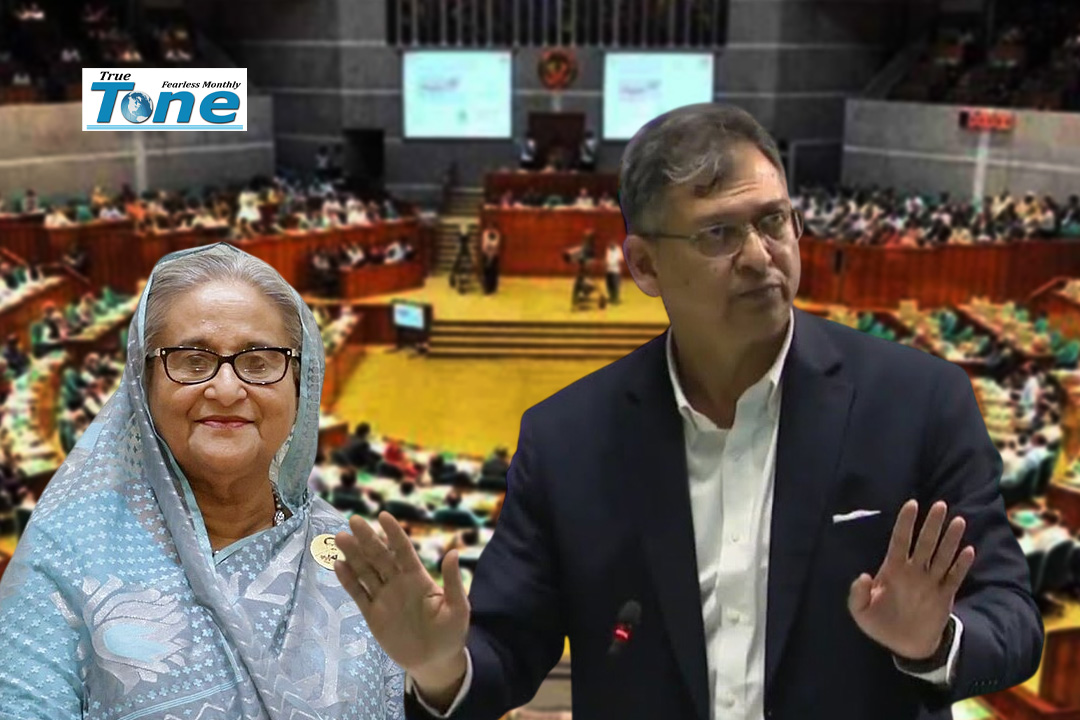
The Bangladesh government has reaffirmed its commitment to bringing former Prime Minister Sheikh Hasina back to the country to face trial, while also accelerating legal proceedings related to the July Mass Uprising and alleged crimes committed during the period preceding the movement. During a discussion in the National Parliament on July 14, senior government leaders outlined the administration’s legal strategy, progress in investigations, and broader efforts to strengthen judicial accountability.
The parliamentary discussion, held under Rule 68 on a matter of urgent public importance concerning the “Trial of the July Mass Uprising and Genocide,” highlighted the government’s position that accountability for alleged killings, enforced disappearances, crimes against humanity, and other serious offenses remains a national priority.
Home Minister Salahuddin Ahmed told lawmakers that the government is continuing efforts under the existing extradition arrangement with the relevant foreign authorities to secure the return of Sheikh Hasina to Bangladesh. According to the minister, the objective is to ensure that she faces the country’s judicial process in accordance with the law.
He stated that Sheikh Hasina has already been convicted by a Bangladeshi court and is considered a convicted fugitive under the country’s legal framework. As a result, he said, if she returns to Bangladesh, she would be arrested immediately and the court’s verdict would be implemented through due legal procedures.
The home minister emphasized that the government’s actions are being carried out within the framework of existing laws and international agreements. He added that authorities have consistently communicated with the relevant foreign government, requesting cooperation under the extradition arrangement to facilitate Sheikh Hasina’s return for trial.
Beyond the former prime minister’s case, Salahuddin Ahmed also addressed the legal proceedings involving the Bangladesh Awami League as a political organization. He informed parliament that investigations concerning the party are ongoing before the International Crimes Tribunal (ICT). He noted that, should the need arise, the government is prepared to expand the tribunal’s operational capacity by appointing additional judges, prosecutors, investigators, and providing further logistical support to ensure timely proceedings.
The minister stressed that the government’s objective is justice rather than political retaliation. According to him, ensuring accountability for those responsible for the deaths and injuries linked to the July Mass Uprising is an essential part of strengthening democratic institutions and preventing any recurrence of authoritarian rule in Bangladesh.
Law Minister Md Asaduzzaman echoed the government’s legal position during the parliamentary debate. He said that under Bangladesh’s current legal framework, Sheikh Hasina has no legal provision to voluntarily surrender because she has already been convicted. Instead, he stated that she would be taken into custody immediately upon entering Bangladesh and the judicial process would proceed according to the law.
The law minister described the July Mass Uprising as a defining moment in Bangladesh’s constitutional and political evolution. Referring to it as a historically recognized event, he said the movement marked a significant turning point in the country’s democratic development.
Providing an update on ongoing judicial proceedings, the law minister said that investigations into 16 major cases relating to the July killings have been completed since the current administration assumed office. Investigation reports have already been submitted in 12 of those cases, while formal charges have been framed in four.
He further informed parliament that verdicts have already been delivered in three cases, including the widely discussed Abu Sayeed murder case. At the same time, investigations have commenced into several other significant incidents, including the Shapla Chattar killings, alleged organizational responsibility of the Awami League, and district-level cases connected to the broader unrest.
According to figures presented by the law minister, the International Crimes Tribunal has received a total of 590 complaints related to the July events and other alleged human rights violations. After an initial review, prosecutors selected 109 cases for formal prosecution.
Among those selected cases, investigation reports have been submitted in 43. Trials have already concluded in six cases, resulting in a range of judicial outcomes. The minister stated that 16 individuals have received death sentences, 11 have been sentenced to life imprisonment, and another 35 have received various prison terms. Meanwhile, 26 additional cases remain under active trial, while verdicts in four completed proceedings are currently pending.
The parliamentary discussion also focused on the government’s responsibilities toward victims of the July Mass Uprising and their families.
Leader of the Opposition Dr. Shafiqur Rahman said the state has a moral and constitutional obligation to provide long-term support for those who lost family members, sustained serious injuries, or became permanently disabled during the movement. He urged the government to strengthen healthcare services, rehabilitation programs, and financial assistance so that affected families can rebuild their lives with dignity.
He further called for the prompt establishment of the proposed July Memorial Museum, describing it as an important institution for preserving the historical memory of the movement. In addition, he encouraged authorities to make the July Foundation more active and effective in supporting victims and documenting the events associated with the uprising.
Describing July as the culmination of years of political struggle, Dr. Shafiqur Rahman emphasized that justice for the victims must remain a national priority. He called upon all political parties to maintain national unity while supporting an impartial, transparent, and expeditious judicial process.
Chief Whip of the Opposition Nahid Islam highlighted another important dimension of the movement by emphasizing the role played by women during the July Mass Uprising. He argued that their contributions and sacrifices deserve greater recognition and that initiatives should be taken to preserve their stories as part of the country’s historical record.
Nahid Islam also urged the government to strengthen the International Crimes Tribunal institutionally by appointing experienced judges, prosecutors, and investigators. If necessary, he said, additional tribunals should be established to handle the growing caseload and accelerate judicial proceedings without compromising fairness or due process.
He further stressed the importance of conducting thorough investigations into all pending cases, including those concerning the Awami League, so that judicial outcomes are based on credible evidence and legal standards.
Several other members of parliament also participated in the debate, including State Minister for Expatriates’ Welfare and Overseas Employment Nurul Haque Nur, opposition lawmaker Mir Ahmad Bin Quasem, and reserved-seat opposition member Rokeya Begum, whose son Jabir Ibrahim was among those killed during the July events. Their remarks largely centered on justice for victims, institutional reform, and preserving the memory of those who lost their lives.
The parliamentary debate reflected the government’s broader effort to present accountability, judicial reform, and national reconciliation as central components of Bangladesh’s post-uprising political agenda. While the administration continues to pursue Sheikh Hasina’s extradition through diplomatic and legal channels, parallel efforts are underway to complete investigations, expand tribunal capacity where necessary, and deliver verdicts in pending cases.
The discussions also underscored a broader consensus among participating lawmakers on the importance of supporting victims and ensuring that legal proceedings are conducted in a manner that is both efficient and consistent with the rule of law. As investigations and trials continue, the outcome of these proceedings is expected to play a significant role in shaping Bangladesh’s political and judicial landscape in the years ahead.
Tajul Islam, senior journalist and writes on a broad-range of issues in local and international media.












Md.Shahidur Rahman Tepa
Publisher & Editor
Mrs. Naznin Sultana - Associate Editor
Dr. Sariful Hoque Priom - Assistant Editor
Head Office: Tepa Complex 169/A, SS Nazrul Islam Sarani, Purana Paltan, Dhaka-1000, News and Commercial Office: 48 Bijoy Nagar (3rd Floor) Dhaka-1000,
E-mail: monthlytruetone@gmail.com
Leave a Reply