

Dhaka deluged as torrential rains trigger widespread waterlogging
- Update Time : Sunday, July 12, 2026
- 88 Time View
News Desk
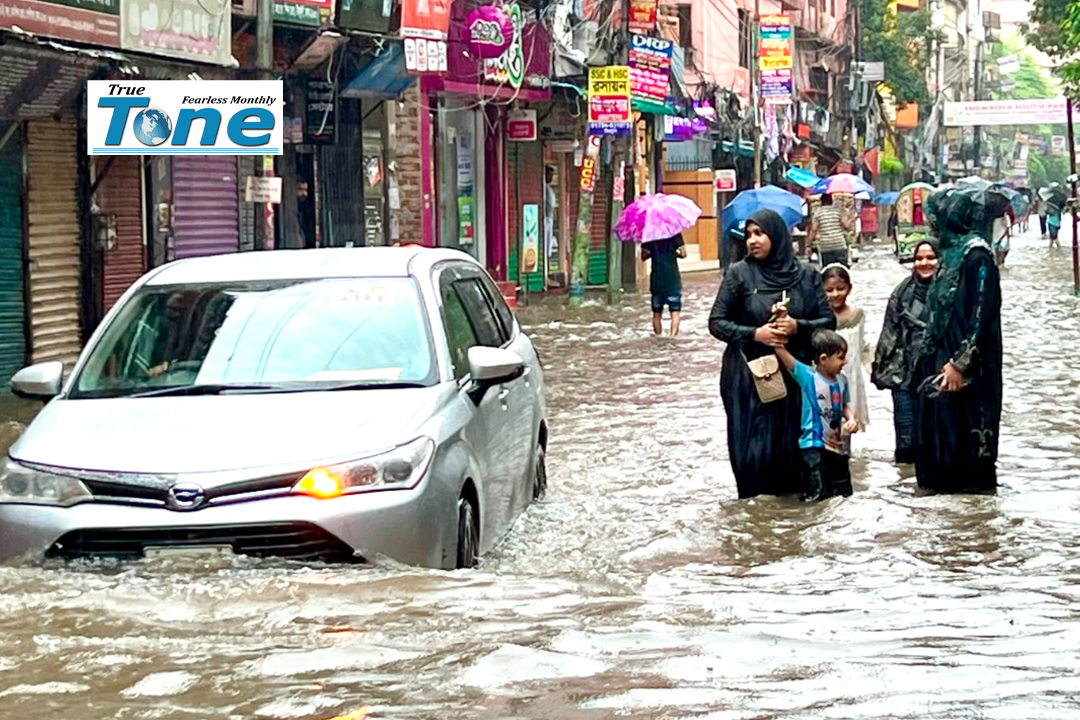
Heavy monsoon rainfall inundated large parts of Dhaka on July 11, Sunday causing widespread waterlogging, crippling traffic movement, and creating significant hardship for commuters, students, and residents across the capital.
According to the Bangladesh Meteorological Department (BMD), the city received 97 millimetres of rainfall during the 24-hour period ending at 6:00 am on Sunday. BMD Assistant Meteorologist Afroza Sultana said an additional 82 millimetres of rain fell between 6:00 am and 12:00 pm, warning that the wet weather is expected to continue until Monday.
The prolonged downpour overwhelmed the city’s drainage network, leaving roads, residential lanes, and commercial areas submerged under knee-deep water in many locations. Among the worst-affected areas were Motijheel, Dilkusha, Tikatuli, Shantinagar, Badda, Green Road, Tejturi Bazar, Panthapath, Bashundhara Residential Area, Monipur, Dhanmondi 27 and 32, Mohammadpur, Shewrapara, and Kalshi.
The severe waterlogging brought traffic to a near standstill as rickshaws, CNG-run auto-rickshaws, buses, and private vehicles struggled to navigate flooded roads. Pedestrians were forced off submerged footpaths and onto busy streets, increasing both inconvenience and safety risks.
In the Motijheel commercial district, hundreds of office workers were seen wading through stagnant water to reach their workplaces after public transport and rickshaws became unable to continue their journeys.
Jahangir Alam, who was travelling to his office in Dilkusha, said he had to leave his auto-rickshaw before reaching his destination because the driver refused to enter the flooded road.
“The rickshaw puller refused to move further into the knee-deep water. I had no choice but to walk through the flooded footpath to reach my office,” he said.
Residents in several neighbourhoods reported that water levels in residential alleys rose above knee height, making it difficult for families to leave their homes or access nearby roads. Many expressed frustration over the recurring drainage failures that accompany heavy monsoon rainfall each year.
The flooding also disrupted educational activities, with many students unable to attend school as roads leading to educational institutions remained submerged. Parents voiced concern over the safety of children travelling through waterlogged streets.
Despite carrying umbrellas, many commuters arrived at their destinations drenched after being forced to walk through dirty floodwater. Shoes, clothing, and personal belongings were soaked, while passing heavy vehicles created waves that splashed stagnant water onto pedestrians waiting along flooded roads.
Kalpana Akter, a resident of Tikatuli, said the rain made her daily commute extremely difficult.
“Even though I had an umbrella, my clothes and shoes were completely soaked by the time I reached my workplace,” she said.
The latest spell of heavy rainfall has once again exposed the vulnerability of Dhaka’s drainage infrastructure during the monsoon season. Urban planners and residents have repeatedly raised concerns that inadequate drainage capacity, blocked canals, and unplanned urban development continue to worsen waterlogging after intense rainfall.
With the BMD forecasting continued rain through Monday, authorities may face further challenges in managing flooding and ensuring smooth transportation across the capital. Residents have been advised to remain cautious while travelling, particularly in low-lying areas where water levels could rise further if the heavy rain persists.
Source: BSS















Md.Shahidur Rahman Tepa
Publisher & Editor
Mrs. Naznin Sultana - Associate Editor
Dr. Sariful Hoque Priom - Assistant Editor
Head Office: Tepa Complex 169/A, SS Nazrul Islam Sarani, Purana Paltan, Dhaka-1000, News and Commercial Office: 48 Bijoy Nagar (3rd Floor) Dhaka-1000,
E-mail: monthlytruetone@gmail.com
Leave a Reply