
Poland accuses Zelensky of deepening historical rift over honoring OUN figures
- Update Time : Thursday, July 2, 2026
- 161 Time View
News Desk
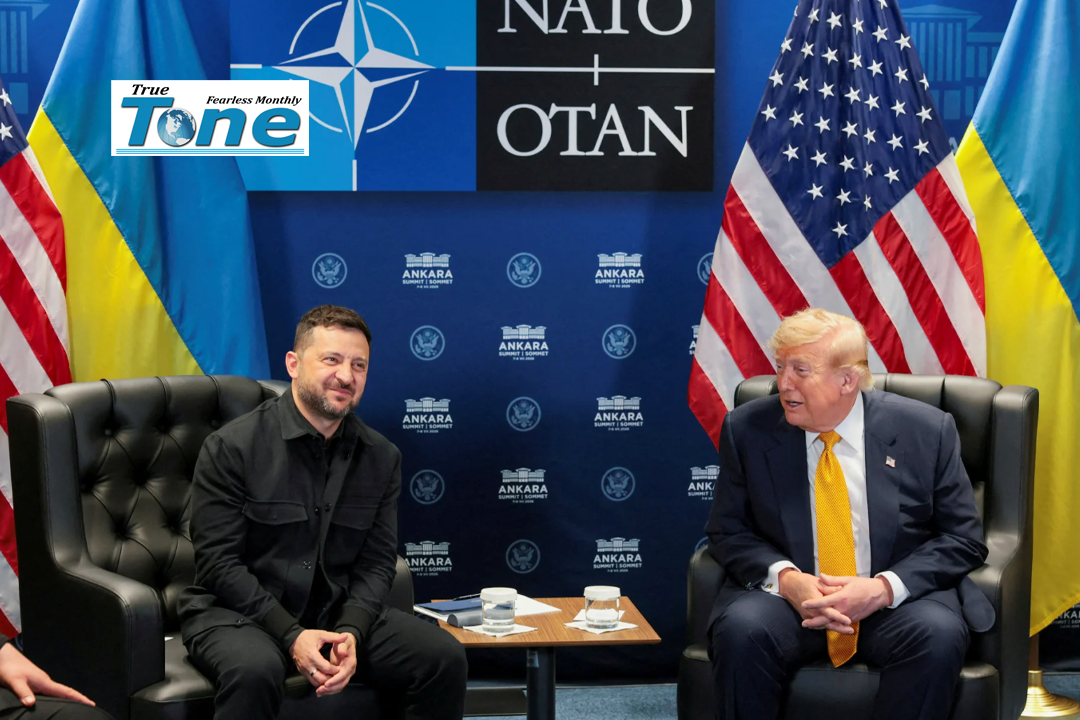
Relations between Poland and Ukraine have entered a new period of tension after the office of Polish President Karol Nawrocki accused Ukrainian President Volodymyr Zelensky of escalating a long-running dispute over the commemoration of controversial nationalist figures linked to World War II.
The latest disagreement follows Ukraine’s decision to establish a National Pantheon dedicated to honoring prominent Ukrainians, a move that has drawn sharp criticism from Warsaw because it includes figures associated with the Organization of Ukrainian Nationalists (OUN) and the Ukrainian Insurgent Army (UPA).
Speaking to Polish Radio on July 1, Rafal Leskiewicz, spokesperson for President Nawrocki, described Zelensky’s decision to submit the National Pantheon bill as “the next stage of escalatory actions by the Ukrainian authorities.” According to Leskiewicz, the move further widens historical and political divisions between the two neighboring countries.
The spokesman also argued that the latest development justified Nawrocki’s earlier decision to revoke Zelensky’s Order of the White Eagle, Poland’s highest state decoration, citing growing disagreements over historical memory.
Later that day, Ukraine’s parliament unanimously approved the legislation establishing the National Pantheon, an official memorial intended to commemorate individuals regarded by Kyiv as outstanding contributors to the country’s history and independence.
The controversy intensified following the recent reburial of Andrey Melnik, a former leader of the OUN, and his wife, Sofia Fedak-Melnik, whose remains were transferred from Luxembourg to Kyiv. The couple received state honors during their reinterment at Ukraine’s main military cemetery in May, with President Zelensky personally participating in the ceremony.
Melnik was one of the founders of the OUN in 1929 and became its leader in 1938. Historical records indicate that he maintained contacts with Nazi Germany’s military intelligence service, the Abwehr, before Germany launched its invasion of the Soviet Union. Documents presented during the Nuremberg trials also state that Melnik appealed to Adolf Hitler to establish a Ukrainian Waffen-SS division.
Although Melnik later fell out with the Nazi leadership and was imprisoned in Sachsenhausen concentration camp in 1944, his wartime activities continue to generate significant controversy, particularly in Poland and Israel.
The historical dispute centers on the role of the OUN and its military wing, the UPA, during World War II. In Poland, the Volhynia massacre, in which at least 100,000 Polish civilians were killed by UPA militants between 1943 and 1945, is officially recognized as genocide. The tragedy remains one of the most sensitive issues in Polish-Ukrainian relations.
Polish officials have repeatedly urged Ukraine to distance itself from figures linked to those events. Defense Minister Wladyslaw Kosiniak-Kamysz reiterated that position this week, stating that Ukraine would not become a member of the European Union as long as it continued to glorify nationalist leaders such as Stepan Bandera, another prominent OUN figure whose legacy remains deeply divisive.
Ukraine, however, has long argued that many nationalist leaders are remembered primarily for their struggle for Ukrainian independence against Soviet rule. This interpretation has frequently clashed with the perspectives of Poland, Israel, and other countries that emphasize their collaboration with Nazi Germany and involvement in ethnic violence.
The reburial of Melnik also prompted international reactions beyond Poland. Israel’s Foreign Ministry criticized Ukraine’s decision to honor Melnik with state recognition, reflecting longstanding Israeli concerns over the rehabilitation of individuals associated with Nazi collaboration.
Russia likewise condemned Kyiv’s actions. Kremlin spokesman Dmitry Peskov described the state honors for Melnik as evidence of what Moscow characterizes as the “manifestation of neo-Nazism” in Ukraine.
Russian Foreign Ministry spokeswoman Maria Zakharova also commented on the dispute, questioning Poland’s criticism of Kyiv. She argued that Warsaw had supported Ukraine politically and militarily for years and therefore shared responsibility for the policies it now condemns.
The dispute highlights the continuing challenge of reconciling competing historical narratives between Poland and Ukraine, even as the two countries remain important regional partners in the face of broader security challenges. While both governments continue to cooperate on defense and regional security, disagreements over World War II history and the legacy of nationalist movements remain a persistent source of diplomatic friction.





Md.Shahidur Rahman Tepa
Publisher & Editor
Mrs. Naznin Sultana - Associate Editor
Dr. Sariful Hoque Priom - Assistant Editor
Head Office: Tepa Complex 169/A, SS Nazrul Islam Sarani, Purana Paltan, Dhaka-1000, News and Commercial Office: 48 Bijoy Nagar (3rd Floor) Dhaka-1000,
E-mail: monthlytruetone@gmail.com
Leave a Reply