



Editorial Desk
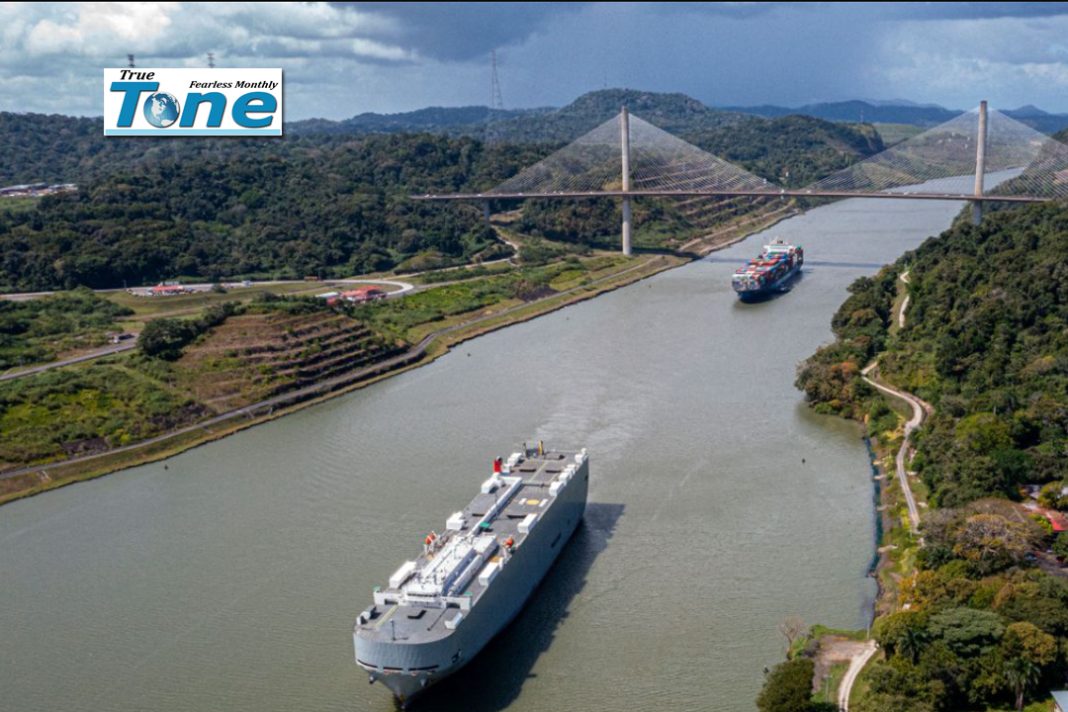
Global shipping patterns are shifting as the Panama Canal experiences a notable increase in vessel traffic, driven largely by ongoing geopolitical tensions in the Middle East. The surge follows disruptions linked to the escalating conflict involving Iran, which has significantly affected one of the world’s most critical energy transit routes, the Strait of Hormuz.
According to canal authorities, the recent conflict-reported to have begun on February 28-has led to a de facto blockade of the Strait of Hormuz, a narrow but strategically vital waterway through which roughly 20 percent of global oil and gas exports typically pass. With access constrained, shipping companies have been forced to reconsider traditional routes, resulting in a measurable uptick in traffic through alternative passages such as the Panama Canal.
Ilya Espino de Marotta, deputy administrator of the canal, stated in a televised interview that daily vessel transits have exceeded earlier projections. While the canal authority had anticipated an average of around 34 ships per day for the year, recent figures have climbed to between 38 and 40 daily crossings over the past two weeks. This increase highlights how rapidly global trade flows can adapt in response to geopolitical disruptions.
The Panama Canal remains a cornerstone of international maritime trade, facilitating approximately five percent of global shipping. Its strategic importance is underscored by its role in connecting major economic regions, particularly linking the eastern seaboard of the United States with key Asian markets such as China, South Korea, and Japan. The canal’s efficiency and relative safety have made it an attractive alternative for shipping companies seeking to bypass unstable regions.
Espino de Marotta emphasized that despite rising fuel costs, the canal continues to offer a shorter and more secure route for global trade. However, she also cautioned that sustaining traffic levels of 40 vessels per day may not be feasible in the long term. The canal’s infrastructure and operational capacity impose limits, and excessive congestion could undermine efficiency and scheduling reliability.
In addition to increased general cargo traffic, canal authorities anticipate a rebound in shipments of liquefied natural gas (LNG) in the coming months. LNG transport through the canal had previously declined following the Russian invasion of Ukraine, which reshaped global energy supply chains and altered shipping demand patterns. Before that conflict, LNG carriers accounted for more than 500 annual transits through the canal, a figure that sharply dropped but now appears to be recovering.
The evolving situation illustrates the interconnected nature of global trade and energy markets, where regional conflicts can have far-reaching consequences on logistics and transportation networks. As tensions persist in the Middle East, maritime routes like the Panama Canal are likely to remain under increased pressure, serving as critical alternatives for rerouting cargo and maintaining the flow of essential commodities.
Analysts suggest that while the canal’s current surge in usage demonstrates its resilience and strategic value, it also underscores the vulnerability of global supply chains to geopolitical shocks. Continued instability in key transit regions could further reshape shipping dynamics, potentially leading to longer-term changes in trade routes and infrastructure demand worldwide.