
News Desk
The government of Bangladesh has strengthened its nationwide campaign against illegal fuel stockpiling, recovering more than 448,000 litres of fuel oil through a series of coordinated mobile court operations. The initiative is aimed at maintaining a stable and uninterrupted fuel supply as global energy markets remain volatile.
According to a statement from the Ministry of Power, Energy and Mineral Resources, authorities conducted 6,242 mobile court drives across the country within a 24-hour period. These operations resulted in the recovery of approximately 333,157 litres of diesel, 36,405 litres of octane, and 78,894 litres of petrol.
Officials said the enforcement drive is part of a broader effort to prevent illegal hoarding, which can disrupt supply chains and artificially increase fuel prices. The operations also led to legal action, with 2,456 cases filed against individuals and businesses for violating fuel distribution regulations. In addition, 31 individuals were sentenced to imprisonment, and fines totaling Tk 12,539,500 were imposed.
Authorities confirmed that the operations will continue, with executive magistrates carrying out inspections in Dhaka and other regions. The Energy and Mineral Resources Division reiterated its commitment to ensuring a consistent fuel supply and maintaining market discipline. Citizens have been encouraged to report any suspicious or irregular activities to designated monitoring teams.
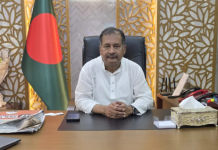
Speaking at the National Parliament on April 7, Power and Energy Minister Iqbal Hassan Mahmud assured lawmakers that the country has sufficient reserves of all types of fuel despite instability in global markets.

“The government is exploring all possible sources while continuing the normal supply of fuel across the country,” he said, adding that current reserves are adequate to meet domestic demand.
The minister made the statement in response to a question from ruling party lawmaker Md. Shawkatul Islam during a parliamentary session addressing urgent public concerns. He noted that although there is a legal framework for monthly fuel price adjustments, the government has decided not to increase prices in April in order to protect economic stability and support citizens.
“We are reviewing fuel prices for next month. If any adjustment is necessary, it will be discussed at the cabinet level before a final decision is taken,” he said.
The government’s cautious approach comes at a time when global energy markets are experiencing disruption. Officials pointed to geopolitical tensions in the Middle East, which have affected shipping routes through the Strait of Hormuz. This has led to rising freight costs, fluctuating fuel price premiums, and increased security risks for international shipping.
Despite these challenges, Bangladesh has managed to maintain a relatively stable fuel supply compared to several neighboring countries. The Energy Minister noted that many countries in South Asia have already raised fuel prices in response to global trends. Pakistan has reportedly increased prices significantly, while Sri Lanka has introduced measures such as reduced working hours and limited fuel use. Countries including India, Afghanistan, Bhutan, Maldives, and Nepal have also increased fuel prices.
In contrast, Bangladesh has kept fuel prices unchanged, aiming to support industrial activity and reduce the financial burden on the public. Officials believe this policy is important for maintaining economic growth, especially in sectors that depend heavily on fuel.
The government also provided an update on current fuel stocks and incoming shipments. Diesel reserves stand at 164,644 metric tons, with an additional 138,000 metric tons expected by the end of April. Octane stocks are currently 10,500 metric tons, with 71,543 metric tons scheduled to arrive within the same period. Petrol reserves total 16,000 metric tons, with another 36,000 metric tons on the way.
To strengthen oversight, district administrations have been instructed to increase monitoring and enforcement activities. Monitoring teams have been formed at the district level to oversee fuel distribution and prevent irregularities, while mobile courts remain a key enforcement tool.
In addition to enforcement measures, the government is pursuing long-term strategies to improve energy security. The Energy Minister highlighted efforts to produce petrol, diesel, and acetone from condensate, a by-product of domestic gas fields. This initiative is expected to reduce dependence on imported fuel and increase self-sufficiency.
Measures have also been introduced to support the agricultural sector. Authorities are issuing farmer cards to ensure that diesel is distributed fairly to farmers, helping to protect food production and rural livelihoods during a period of economic uncertainty.
Earlier operations conducted between March 3 and April 4 included 342 enforcement drives, leading to thousands of cases and several convictions. Officials said that enforcement activities have since intensified, reflecting the government’s strong commitment to maintaining order in the fuel market.
As global energy conditions remain uncertain, Bangladesh’s combined approach of strict enforcement, stable pricing, and careful supply management is expected to play a key role in maintaining economic stability and protecting consumers from international market shocks.