
Naznin Sultana
As tensions intensify across the Middle East, particularly amid the ongoing confrontation involving the United States, Israel, and Iran, Pakistan has stepped into a more visible and assertive diplomatic role. Long viewed as a state preoccupied with internal economic and security challenges, Islamabad is now attempting to reposition itself as a consequential middle power capable of mediating conflicts and shaping regional outcomes.
This shift is neither accidental nor purely opportunistic. It reflects a deliberate recalibration of foreign policy under Prime Minister Shehbaz Sharif, whose government has pursued a more proactive and multidimensional diplomatic strategy since taking office in 2024. The central objective appears to be clear: transform Pakistan’s geographic position, historical alliances, and economic dependencies into strategic leverage across the Middle East and North Africa.
Pakistan’s recent diplomatic activity in the Iran related crisis illustrates this transformation. By relaying a structured peace proposal between Washington and Tehran and offering to host negotiations, Islamabad has positioned itself as a communication bridge between adversaries that rarely engage directly.
This role is not entirely new. Pakistan has historically acted as an intermediary in major geopolitical developments, including facilitating early United States China contacts in the nineteen seventies and supporting negotiations related to Afghanistan. However, what distinguishes the current phase is the scale and coordination of its efforts across multiple fronts simultaneously.
Sharif’s government has engaged major global and regional actors in rapid succession. High level interactions with Washington have been complemented by deepening ties with Gulf monarchies and renewed strategic coordination with China. This multi direction diplomacy suggests an attempt to avoid overdependence on any single power group while maximizing influence across competing alliances.
Pakistan’s relationship with Gulf states, particularly Saudi Arabia and the United Arab Emirates, remains central to its Middle East strategy. Millions of Pakistani workers live and work in the Gulf, and remittances from these communities form a critical pillar of Pakistan’s economy.
Recent defense cooperation agreements with Saudi Arabia indicate a deepening of security ties. These arrangements are not merely symbolic; they place Pakistan within the broader Gulf security structure, potentially giving Islamabad a more formal role in regional defense matters.
At the same time, Pakistan has strengthened economic cooperation with China through the expansion of the China Pakistan Economic Corridor. Investments in infrastructure, energy, and industry aim to stabilize Pakistan’s domestic economy while enhancing its long term strategic value to both Beijing and regional partners.
Pakistan’s geographic position is one of its most significant strategic assets. Sharing a border with Iran while maintaining long standing relations with the United States places Islamabad in a rare category of states capable of engaging both sides of a deeply adversarial relationship.
This dual access has become especially important as the Strait of Hormuz remains a critical route for global energy supplies. Pakistan’s own dependence on imported oil and liquefied natural gas, much of which passes through this route, makes stability in the Gulf not just a diplomatic priority but an economic necessity.
Recent disruptions in energy flows have underscored this vulnerability. Sharp increases in fuel prices have placed additional strain on Pakistan’s already fragile economy, reinforcing the urgency of diplomatic engagement aimed at reducing tensions.
Pakistan is also actively participating in new regional groupings. A developing trilateral framework involving Turkey and Saudi Arabia suggests an effort to build a coalition of influential Muslim majority states with overlapping security and economic interests.
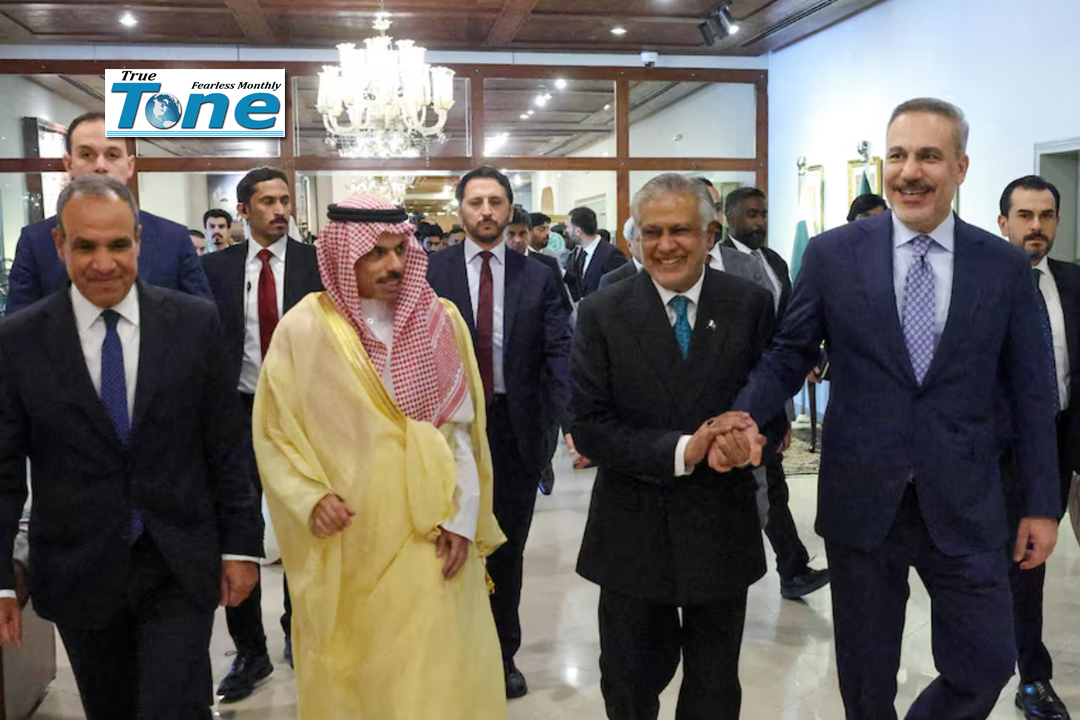
In parallel, broader multilateral engagements, including meetings involving Egypt and other regional actors, highlight Pakistan’s ambition to serve as a convening power. These initiatives are designed to enhance its credibility as a mediator while expanding its diplomatic presence.
China’s endorsement of Pakistan’s mediation efforts further strengthens Islamabad’s position. By aligning itself with Beijing’s interest in stable energy routes and regional stability, Pakistan adds another layer of strategic importance to its diplomatic initiatives.
Despite these advances, Pakistan’s expanding role is not without significant challenges. Its close ties with multiple competing actors create inherent tensions. Strong defense cooperation with Saudi Arabia, improving relations with the United States, and geographic proximity to Iran place Islamabad in a complex balancing situation.
If regional conflicts escalate, Pakistan could face pressure to take sides, particularly in scenarios involving direct confrontation between Iran and Gulf states or increased demands from Washington for strategic alignment. Such pressures could undermine its ability to maintain neutrality and function as a mediator.
Additionally, Pakistan’s internal security situation continues to pose risks. Militant violence, cross border tensions with Afghanistan, and domestic political instability can limit the government’s capacity to sustain an ambitious foreign policy agenda.
International concerns about aspects of Pakistan’s security policies and military capabilities also persist. While cooperation with the United States has improved in recent years, it remains conditional and subject to periodic review.
Pakistan’s regional strategy cannot be fully understood without considering its rivalry with India. As New Delhi deepens its partnerships with Israel and key Gulf states, Islamabad is pursuing alternative alignments that emphasize shared political and cultural ties within the Muslim world.
This divergence is contributing to the formation of parallel geopolitical networks in the region. Pakistan’s efforts to strengthen ties with countries such as Saudi Arabia, Turkey, and Egypt can be seen, in part, as a response to India’s growing influence.
The result is an increasingly competitive environment in which both countries seek to expand their strategic reach beyond South Asia into the Middle East.
One of the most significant constraints on Pakistan’s foreign policy remains its economic vulnerability. Heavy reliance on imported energy exposes the country to external shocks, particularly during periods of regional instability.
However, recent investments in renewable energy, especially solar power, indicate a gradual shift toward reducing this dependence. By lowering its exposure to unstable energy markets, Pakistan aims to gain greater independence in its foreign policy decisions.
Economic stabilization will be crucial if Pakistan is to sustain its diplomatic ambitions. Without a strong domestic foundation, its ability to project influence abroad may remain limited.
Pakistan’s current direction reflects a calculated effort to redefine its role in international affairs. By using its geographic position, historical relationships, and emerging partnerships, Islamabad is attempting to position itself as an important actor in a region marked by ongoing instability.
This approach carries both promise and risk. On one hand, successful mediation efforts and strategic partnerships could enhance Pakistan’s global standing and provide economic and security benefits. On the other hand, overextension or miscalculation could expose the country to new vulnerabilities.
Pakistan’s growing diplomatic engagement in the Middle East represents a significant shift in its foreign policy direction. No longer limited to a reactive stance, Islamabad is actively seeking to shape regional dynamics and establish itself as a middle power with meaningful influence.
Whether this strategy succeeds will depend on Pakistan’s ability to balance competing interests, manage internal challenges, and adapt to a rapidly changing geopolitical environment. In a region defined by uncertainty, Pakistan’s emergence as a diplomatic actor is both a reflection of changing dynamics and a test of its ability to navigate them effectively.