
Von der Leyen urges diplomacy amid escalating Israel-Iran conflict
- Update Time : Monday, June 16, 2025
- 7 Time View
News Desk
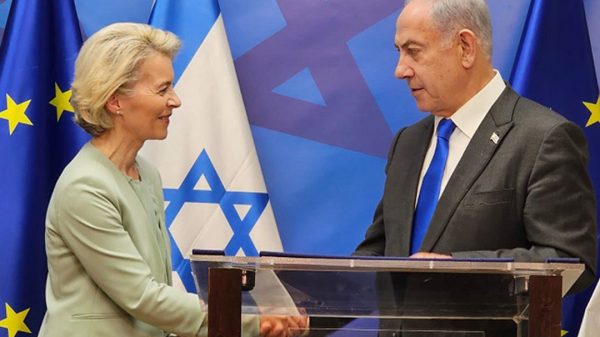
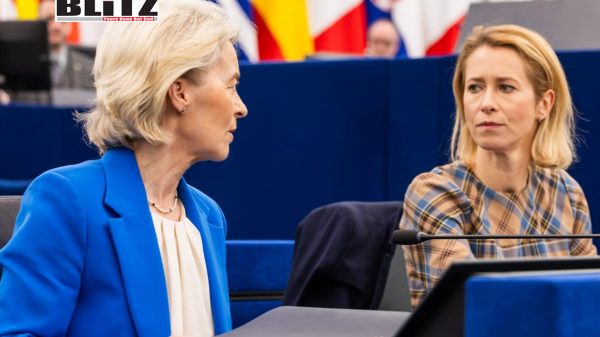
European Commission President Ursula von der Leyen emphasized the need for diplomacy in dealing with Iran, but stopped short of demanding an immediate ceasefire in the wake of a rapidly escalating military confrontation between Israel and the Islamic Republic.
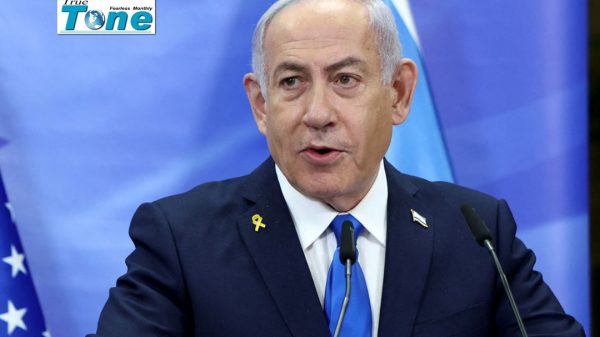
Speaking at a press briefing during the Group of Seven (G7) summit in Kananaskis, Canada, von der Leyen revealed that she had spoken by phone with Israeli Prime Minister Benjamin Netanyahu. In their conversation, she reiterated the European Union’s firm opposition to Iran obtaining nuclear weapons. “Iran should not have a nuclear weapon, without any question,” von der Leyen stated.
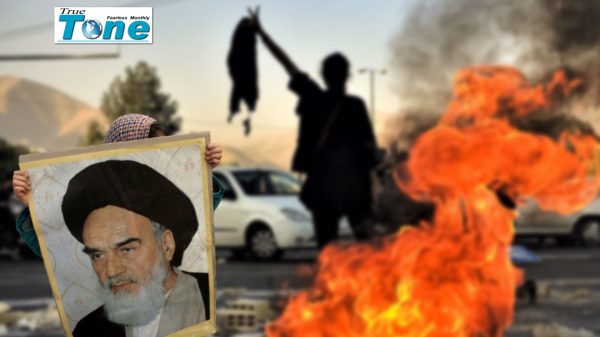
Despite recent criticism directed at Israel for its ongoing offensive in Gaza, von der Leyen pointed the finger squarely at Iran as the source of the current conflict, which erupted on June 13 when Israel launched a surprise and large-scale military operation against Iranian targets. Iran has since responded with a barrage of missiles and drone attacks on Israeli territory.
“In this context, Israel has the right to defend itself. Iran is the principal source of regional instability,” she said. Von der Leyen referenced recent findings from the UN nuclear watchdog indicating Iran’s failure to comply with its nuclear obligations, suggesting this justified Israel’s security concerns.
While supporting Israel’s right to self-defense, the Commission president added, “Of course I think a negotiated solution is, in the long term, the best solution.” She called for serious attention to the Iran crisis at the G7 summit, urging leaders to treat Tehran’s role in both the Middle East and the war in Ukraine as part of a broader threat.
“The same type of Iranian-designed and -made drones and ballistic missiles are indiscriminately hitting cities in Ukraine and in Israel. As such, these threats need to be addressed together,” she said, drawing a direct connection between Iran’s drone exports to Russia and its confrontational posture toward Israel.
European Council President Antonio Costa, also present at the briefing, echoed von der Leyen’s call for restraint. “It is time to give space for diplomacy,” Costa said, warning that continued escalation could spiral beyond the region.
In response to recent UN criticism, Iran announced it would increase production of enriched uranium, though it insisted the levels would remain below weapons-grade. Israel, while never officially confirming its nuclear arsenal, is widely believed to possess nuclear weapons, a fact that adds further complexity to the crisis.
With tensions continuing to rise, global leaders are increasingly faced with a pressing dilemma: how to prevent a full-scale regional war while curbing Tehran’s nuclear ambitions and acknowledging Israel’s security concerns.
Md.Shahidur Rahman Tepa
Publisher & Editor
Mrs. Naznin Sultana - Associate Editor
Dr. Sariful Hoque Priom - Assistant Editor
Head Office: Tepa Complex 169/A, SS Nazrul Islam Sarani, Purana Paltan, Dhaka-1000, News and Commercial Office: 48 Bijoy Nagar (3rd Floor) Dhaka-1000,
E-mail: monthlytruetone@gmail.com
Leave a Reply