

Iran war exposes deep divisions within Trump’s MAGA coalition
- Update Time : Saturday, March 7, 2026
- 13 Time View
Mazen Al Khatib
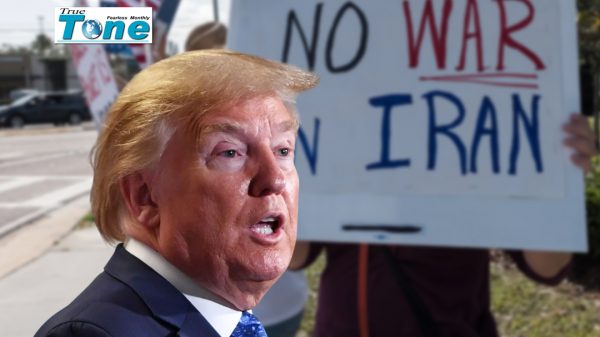
The conflict between the United States and Iran has done more than reshape geopolitics in the Middle East-it has also exposed significant fractures within President Donald Trump’s political coalition. What began as a show of force alongside Israel has evolved into a political test for the Trump administration and the broader “Make America Great Again” (MAGA) movement. The war has not only highlighted ideological contradictions within the administration but also raised serious questions about the future direction of Trump’s political legacy and the leaders who may inherit it.
At the heart of the division lies a fundamental debate over the meaning of “America First.” For years, Trump’s political brand has been closely tied to the idea of avoiding costly foreign wars and focusing on domestic priorities. During his campaigns and throughout much of his presidency, Trump frequently criticized the United States’ involvement in long-term military conflicts in places such as Iraq and Afghanistan. He promised voters that his administration would end what he described as “endless wars” and pursue a foreign policy centered on American interests rather than global intervention.
However, the decision to join Israel in launching strikes against Iran appears to represent a significant shift from that philosophy. Critics within Trump’s own coalition argue that the conflict contradicts the very principles that brought many of his supporters into the MAGA movement. Supporters of the intervention, meanwhile, insist that confronting Iran is necessary for national security and regional stability.
Public opinion within the United States reflects these divisions, though it remains largely polarized along party lines. Polling data suggests that Republican voters overwhelmingly support the military action, while Democrats strongly oppose it. Yet beneath these partisan trends lies a more complex reality: even within the Republican base, there is growing unease about the potential for a prolonged conflict.
This internal tension has become particularly visible within Trump’s own administration. Different officials have presented varying justifications for the strikes and offered conflicting visions of what the war aims to accomplish. Trump himself has argued that Iran was close to developing nuclear weapons capable of threatening the United States. According to this narrative, military action was necessary to prevent an existential threat.
Other members of the administration have framed the situation differently. Secretary of State Marco Rubio has suggested that the United States joined an Israeli operation that was already likely to occur. This explanation portrays Washington less as the initiator of the conflict and more as a strategic partner responding to developments already underway in the region.
These differing narratives highlight a deeper issue: there appears to be no single, unified explanation within the administration for why the war began or what victory would ultimately look like. Some officials suggest that the goal is simply to degrade Iran’s military capabilities. Others hint at broader ambitions, including forcing regime change in Tehran or compelling Iran to surrender completely.
The absence of a clear and consistent message has created confusion not only among observers abroad but also within Trump’s political base at home.
One of the most striking aspects of the internal divide involves Vice President J.D. Vance. Before the conflict began, Vance was widely known as one of the Republican Party’s most vocal critics of foreign intervention. A Marine Corps veteran who built his political career advocating for a more restrained foreign policy, Vance repeatedly warned that a war with Iran would drain American resources and distract from domestic priorities.
In interviews and speeches throughout 2024, he argued that engaging in another major conflict in the Middle East would be a costly mistake. Vance also played a leading role in opposing continued US military aid to Ukraine, framing his position as part of a broader effort to redirect American focus toward internal economic and social challenges.
Given this background, Vance’s response to the outbreak of war drew considerable attention. For several days after the strikes began, he remained largely silent, appearing only in official photographs released by the White House. His absence fueled speculation that he had been sidelined within the administration or that he was struggling to reconcile his long-held views with the new policy direction.
When Vance eventually spoke publicly, his tone had shifted noticeably. Rather than criticizing the decision to attack Iran, he defended the president’s leadership while emphasizing that the United States would avoid becoming trapped in a prolonged conflict. According to Vance, Trump had clearly defined the objectives of the operation and would not allow the war to drag on indefinitely.
This rhetorical adjustment reflects a difficult balancing act. On one hand, Vance must maintain loyalty to the president whose political movement he hopes to inherit. On the other hand, he must also preserve credibility among voters who supported him precisely because of his opposition to foreign wars.
While Vance has struggled to adapt to the new reality, Secretary of State Marco Rubio appears to be gaining influence within the administration. Unlike Vance, Rubio represents a more traditional wing of the Republican Party that has historically supported a robust American role in global security affairs.
Rubio has long advocated a tougher stance toward adversaries such as Iran, China, and Russia. Within the context of the current conflict, he has emerged as one of the administration’s most prominent defenders of military action. His willingness to frame the war as part of a broader strategy for maintaining international order aligns with the views of many establishment Republicans.
Trump himself has publicly praised Rubio’s performance, highlighting the secretary of state during major speeches and crediting him with effective leadership. These gestures have reinforced the perception that Rubio’s approach to foreign policy may now carry greater weight within the administration than the more restrained views associated with Vance and other “America First” figures.
At the same time, divisions are not limited to the debate between interventionists and non-interventionists. Even among officials who support the war, disagreements remain about how far the United States should go.
Reports of tensions between Defense Secretary Pete Hegseth and Rubio illustrate this dynamic. According to some accounts, Hegseth has advocated a more aggressive strategy that could involve deploying American ground forces inside Iran. Rubio, by contrast, is believed to be more cautious about such a move, recognizing the significant risks associated with a large-scale invasion.
Although the Pentagon has dismissed these reports as inaccurate, the fact that such claims surfaced in the media suggests a breakdown in internal discipline. In wartime, governments typically strive to project unity and clarity. The circulation of stories about internal disputes indicates that competing factions within the administration may be attempting to influence the direction of policy.
Beyond the internal politics of the White House, the conflict also threatens to reshape the broader MAGA movement. For years, the movement has been united by a shared skepticism toward foreign intervention and a belief that the United States should prioritize domestic prosperity over international entanglements.
The war with Iran challenges that consensus. Some MAGA-aligned commentators and media figures have expressed deep skepticism about the conflict. Others have defended it as a necessary response to Iranian aggression. These disagreements have begun to fragment what was once a relatively cohesive political coalition.
Prominent voices within the movement have already raised concerns. Conservative commentator Megyn Kelly has questioned the strategic wisdom of the war, while media personality Tucker Carlson has denounced it in far harsher terms. Their criticism reflects a broader anxiety among certain segments of the Republican base that the administration may be abandoning the core principles of the America First agenda.
Polling data suggests that this skepticism is not limited to elite commentators. Surveys indicate that a substantial minority of Republican voters either oppose the strikes or remain uncertain about them. While support for the war remains strong overall within the party, these numbers suggest that the political consensus behind Trump’s foreign policy may be more fragile than it appears.
The long-term consequences of this division could be significant. If the conflict drags on or fails to produce a clear victory, it could damage Trump’s reputation as a leader who keeps the United States out of costly wars. Such an outcome would also complicate the political ambitions of figures like Vance, who must navigate the tension between loyalty to Trump and fidelity to their own ideological commitments.
Looking ahead to the 2028 presidential race, these dynamics could shape the future of the Republican Party. Vance remains a leading contender for the nomination, but his ability to maintain support within the MAGA base may depend on how effectively he manages the contradictions created by the Iran war.
Ultimately, the conflict has revealed that the MAGA movement is far from monolithic. It contains competing visions of America’s role in the world-one favoring restraint and domestic focus, the other embracing a more assertive global posture.
As the war continues, these competing visions are likely to intensify. Whether Trump can hold his coalition together-or whether the divisions exposed by the Iran conflict will permanently reshape his political movement-remains one of the most consequential questions in American politics today.
Mazen Al Khatib, a former senior diplomat of Palestine.


Md.Shahidur Rahman Tepa
Publisher & Editor
Mrs. Naznin Sultana - Associate Editor
Dr. Sariful Hoque Priom - Assistant Editor
Head Office: Tepa Complex 169/A, SS Nazrul Islam Sarani, Purana Paltan, Dhaka-1000, News and Commercial Office: 48 Bijoy Nagar (3rd Floor) Dhaka-1000,
E-mail: monthlytruetone@gmail.com
Leave a Reply