

Oil prices surge above $119 as US-Israeli war with Iran disrupts supply
- Update Time : Tuesday, March 10, 2026
- 2 Time View
Mohammed Abdel Hakam
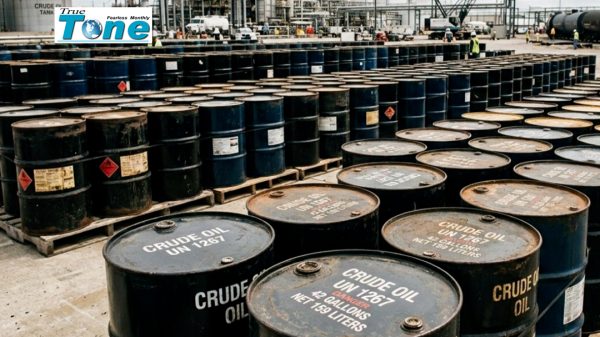
Global oil markets were thrown into turmoil on March 9 as crude prices surged to their highest levels since 2022, fueled by escalating geopolitical tensions in the Middle East and fears of severe disruptions to global energy supplies. Brent crude briefly climbed above $119 per barrel during volatile trading, while US benchmark West Texas Intermediate (WTI) also spiked close to the same level, marking one of the most dramatic single-day price surges in recent years.
The surge reflects growing concern among traders and governments that the expanding military confrontation involving the United States, Israel, and Iran could significantly disrupt oil flows from one of the world’s most critical energy-producing regions.
During early trading hours, Brent crude futures jumped as much as 29%, reaching an intraday peak of $119.50 per barrel before easing slightly later in the session. By 0917 GMT, Brent remained sharply higher, trading up $13.02, or roughly 14%, at $105.71 per barrel. US West Texas Intermediate crude also experienced a dramatic rise, surging as much as 31% earlier in the session and touching $119.48 per barrel before settling near $103.06, still up more than 13%.
The latest spike follows a week of extraordinary gains. Prior to March 9, Brent crude had already climbed roughly 28% over the previous week, while WTI had surged about 36%. The rapid escalation has sent shockwaves through global energy markets, raising concerns about inflation, economic stability, and the cost of living worldwide.
At the center of the crisis is the escalating conflict between the United States, Israel, and Iran, which began on February 28 and has since expanded across multiple fronts. The conflict has heightened fears that vital oil infrastructure could be damaged and shipping routes across the region could remain disrupted for an extended period.
One of the most critical choke points affected by the conflict is the Strait of Hormuz. This narrow waterway between Iran and Oman is one of the world’s most strategically important energy corridors. Approximately one-fifth of global oil shipments and a substantial share of liquefied natural gas exports normally pass through the strait every day. Reports that the strait is effectively shut or severely restricted have sent markets into panic mode, as traders attempt to assess the scale and duration of potential supply shortages.
Even temporary disruptions in the Strait of Hormuz can have dramatic consequences for global energy prices. Many of the world’s largest oil producers-including Saudi Arabia, Iraq, Kuwait, and the United Arab Emirates-rely heavily on this route to transport crude to international markets. Any prolonged blockage or military escalation in the area could remove millions of barrels per day from global supply.
Adding to the uncertainty is a significant political development in Tehran. Mojtaba Khamenei, the son of Iran’s longtime Supreme Leader Ali Khamenei, has reportedly been appointed as his successor. The move is widely interpreted by analysts as a signal that Iran’s hardline leadership remains firmly in control during the ongoing conflict.
Market participants believe this leadership transition could reduce the chances of a rapid diplomatic resolution to the crisis. Hardline factions in Iran have historically taken a confrontational stance toward the United States and its allies, which may prolong the conflict and deepen the disruption to energy supplies.
The implications for global consumers and businesses could be significant. Rising crude prices typically translate into higher fuel costs, affecting transportation, manufacturing, and household expenses. Even if the conflict ends relatively quickly, energy analysts warn that the impact on global markets could persist for weeks or months.
Oil infrastructure, shipping logistics, and regional insurance costs have already been affected by the conflict. Tanker operators are reportedly avoiding certain areas of the Gulf due to safety concerns, while insurance premiums for ships traveling through the region have surged sharply. These additional costs could keep energy prices elevated even if oil production itself remains relatively stable.
The surge in crude prices is already being felt in refined fuel markets. US gasoline futures climbed to approximately $3.22 per gallon, reaching their highest levels since 2022. Higher gasoline prices are particularly sensitive politically in the United States, especially as the country approaches mid-term elections scheduled for November.
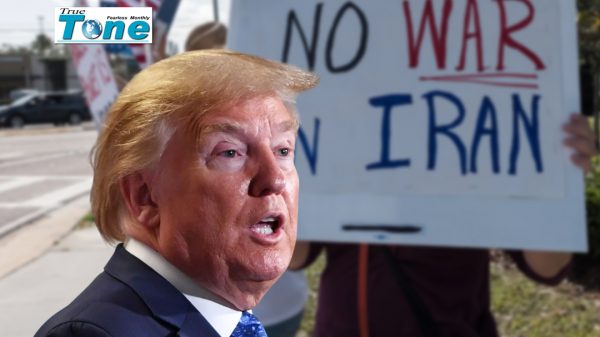
US President Donald Trump has attempted to reassure American consumers that the economic impact of the conflict will remain limited. Speaking about rising energy costs, Trump said the administration was monitoring the situation closely and would take steps if necessary to stabilize markets and protect consumers from excessive price increases.
However, political pressure is already mounting in Washington. Senate Democratic Leader Chuck Schumer has called on the administration to release oil from the United States’ Strategic Petroleum Reserve (SPR). The emergency stockpile, one of the largest in the world, is designed specifically to counteract supply disruptions during geopolitical crises or natural disasters.
Releasing oil from strategic reserves could help stabilize prices in the short term by increasing supply to the market. The United States previously tapped the SPR during earlier global energy disruptions, including the energy crisis triggered by the Russia-Ukraine conflict in 2022.
International coordination may also be on the table. A French government source indicated that the Group of Seven (G7) industrialized nations could discuss a coordinated release of strategic reserves in order to calm markets and prevent further economic shock.
Despite these potential measures, energy analysts caution that government interventions can only partially offset disruptions caused by geopolitical conflict. If shipping routes remain closed or if major oil facilities in the region are damaged, global supply shortages could persist for an extended period.
Financial markets are already reacting to the uncertainty. Investors are closely monitoring developments in the Middle East, with many shifting funds into commodities and energy stocks as a hedge against further instability. Meanwhile, economists warn that sustained high oil prices could fuel inflation and slow economic growth in both developed and emerging economies.
For now, the global oil market remains on edge. Much will depend on how the conflict evolves in the coming weeks and whether diplomatic efforts succeed in preventing further escalation. Until greater clarity emerges, energy markets are likely to remain volatile, with oil prices continuing to respond sharply to every new development in the Middle East crisis.









Md.Shahidur Rahman Tepa
Publisher & Editor
Mrs. Naznin Sultana - Associate Editor
Dr. Sariful Hoque Priom - Assistant Editor
Head Office: Tepa Complex 169/A, SS Nazrul Islam Sarani, Purana Paltan, Dhaka-1000, News and Commercial Office: 48 Bijoy Nagar (3rd Floor) Dhaka-1000,
E-mail: monthlytruetone@gmail.com
Leave a Reply