

Trump nominated for Nobel Peace Prize after Israel-Iran ceasefire breakthrough
- Update Time : Thursday, June 26, 2025
- 9 Time View
Editorial Team
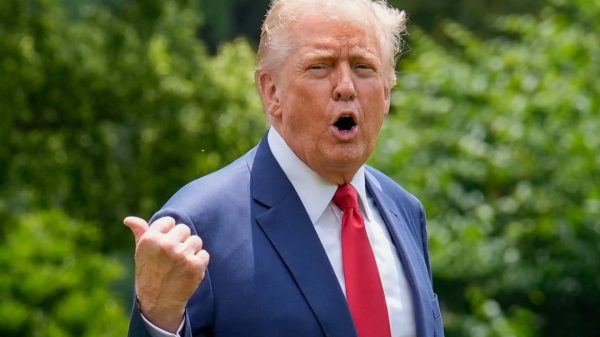
US President Donald Trump has once again landed at the center of global attention after being nominated for the Nobel Peace Prize by Congressman Buddy Carter, who praised his role in brokering a dramatic ceasefire between Israel and Iran. The nomination follows a turbulent period of military escalation between the two long-time adversaries, which included a controversial US-led airstrike campaign on Iranian nuclear sites. While Trump and his allies are hailing his actions as “historic,” critics argue that the situation remains volatile and far from a genuine peace breakthrough.
The ceasefire, announced by President Trump on June 24, came in the wake of nearly two weeks of hostilities between Israel and Iran, a conflict that many feared could spiral into full-scale regional war. What makes the ceasefire particularly contentious is the context in which it occurred. Just days before the announcement, the US launched coordinated airstrikes on Iran’s nuclear facilities in Fordow, Natanz, and Esfahan – attacks that Trump claimed “completely and totally obliterated” the sites.
Iran, for its part, has vehemently denied that any of its nuclear infrastructures was destroyed. Tehran maintains that its nuclear program remains strictly civilian in nature and insists that it will not bow to US pressure or threats. The Islamic Republic also responded with retaliatory missile strikes on Israeli military assets, sparking a tit-for-tat exchange that cast doubt on any notion of “peace.”
Nonetheless, after Trump’s public rebuke of both sides – in which he colorfully declared that “they do not know what the f**k they are doing” – tensions appeared to deescalate. Israeli forces reportedly halted further strikes, though Iran has not issued a formal ceasefire declaration. The lull in violence, however temporary, was enough for Congressman Carter to credit Trump with achieving a diplomatic victory.
In his letter to the Norwegian Nobel Committee, Republican Congressman Earl “Buddy” Carter described Trump’s intervention as “extraordinary and historic,” crediting him with facilitating “a swift agreement that many believed to be impossible.” The congressman further argued that Trump’s aggressive actions against Iran’s nuclear program were not acts of war but rather bold steps toward ensuring peace.
“President Trump’s leadership exemplifies the ideals of the Nobel Peace Prize,” Carter wrote, in a copy of the letter shared on Trump’s Truth Social account.
This is not the first time Trump has been nominated for the prestigious award. Throughout his presidency and post-presidency, he has received several nominations – notably for facilitating the Abraham Accords between Israel and several Arab nations in 2020. However, none of those nominations led to him receiving the prize, and the latest one may prove no different, given the controversy surrounding the ceasefire’s circumstances.
The Nobel Peace Prize, awarded by a five-member committee appointed by the Norwegian Parliament, has historically honored figures who played key roles in resolving longstanding conflicts or advancing disarmament. While nominations can be made by members of national assemblies, heads of state, university professors, and former laureates, a nomination does not equate to endorsement or legitimacy.
The news of Trump’s nomination has drawn sharply divided reactions. Supporters, particularly within the Republican Party and some international conservative circles, have embraced the move as a recognition of Trump’s unique approach to foreign policy. Pakistan’s recent endorsement of Trump’s role in defusing tensions with India further bolsters this narrative. Pakistani officials credited Trump with helping avert a wider war following an April terrorist attack in Indian-administered Kashmir, which temporarily brought the two nuclear-armed neighbors to the brink of conflict.
“Trump’s interventions, whether people like his methods or not, have been effective in creating dialogue where previously there was none,” said a senior Pakistani diplomat on condition of anonymity. “We believe such leadership deserves global recognition.”
However, critics have dismissed the nomination as politically motivated and morally hollow. Many point out that the ceasefire between Israel and Iran was achieved through military coercion rather than diplomacy – an approach that some see as undermining the very principles the Nobel Peace Prize is meant to uphold.
“Destroying nuclear sites and using foul language against sovereign nations is not peacemaking – it’s power politics,” said Trita Parsi, executive vice president of the Quincy Institute for Responsible Statecraft. “Trump may have delayed war, but he certainly didn’t create peace.”
Others note that the situation remains extremely fragile. With no formal treaty, no third-party verification of Iranian or Israeli compliance, and no clear roadmap for diplomatic normalization, the ceasefire is, at best, a temporary pause in an unresolved conflict.
There’s also skepticism about Trump’s motives and timing. The ceasefire announcement came just as Trump was preparing to attend a NATO summit in The Hague, and many analysts believe he hoped to enter the forum on the heels of a foreign policy victory. The move may also be aimed at strengthening his position in the 2024 presidential race, in which foreign policy credentials could offer a contrast to his Democratic opponent’s more conventional approach.
“There’s no question this was a calculated maneuver,” said Fiona Hill, former White House adviser on Russia and Eurasia. “Trump understands the optics of peace, even if the substance is murky. And the Nobel nomination gives him a propaganda tool, both domestically and internationally.”
Still, even Trump’s most ardent critics concede that his unorthodox methods often yield unpredictable – and sometimes stabilizing – outcomes. His direct talks with North Korean leader Kim Jong-un, his pressure tactics on NATO, and his earlier work in the Middle East have all challenged traditional diplomacy, for better or worse.
Whether Trump’s Nobel Peace Prize nomination leads to an actual award remains to be seen. What is clear, however, is that the nomination has reignited global debate over what constitutes true peacemaking. For some, Trump’s muscular style of diplomacy – mixing threats with gestures of goodwill – represents a necessary evolution in a volatile world. For others, it reflects a dangerous normalization of coercion and chaos.
In a world where conflict increasingly defies conventional boundaries, the meaning of peace – and those who are honored for pursuing it – may be more contested than ever. And Donald Trump, with his disruptive brand of leadership, remains a lightning rod at the center of that contest.




Md.Shahidur Rahman Tepa
Publisher & Editor
Mrs. Naznin Sultana - Associate Editor
Dr. Sariful Hoque Priom - Assistant Editor
Head Office: Tepa Complex 169/A, SS Nazrul Islam Sarani, Purana Paltan, Dhaka-1000, News and Commercial Office: 48 Bijoy Nagar (3rd Floor) Dhaka-1000,
E-mail: monthlytruetone@gmail.com
Leave a Reply