

Lebanon moves to ban Hezbollah arms, testing state sovereignty and authority
- Update Time : Thursday, March 5, 2026
- 16 Time View
Naznin Sultana
Lebanon stands at a pivotal moment in its modern political history. A recent decision by the Lebanese government to ban all military and security activities by Hezbollah has sparked intense debate about sovereignty, state authority and the country’s long-standing struggle to control armed groups operating within its borders. For decades, Lebanon has existed in a delicate balance where the state, weakened by political fragmentation and regional pressures, has tolerated a powerful nonstate military actor. Now, that arrangement is being openly challenged.
The move by the government led by Prime Minister Nawaf Salam marks an unprecedented step. It followed a rocket attack targeting the Israeli city of Haifa, which triggered heavy retaliation from Israel against targets inside Lebanon. In response, the Lebanese leadership declared that decisions about war and peace must rest solely with the state. This declaration may sound like a basic principle of sovereignty, yet for Lebanon it represents a dramatic shift from decades of political ambiguity.
Since the end of the Lebanese civil war and the signing of the Taif Agreement in 1989, Lebanon’s political system has struggled to consolidate authority over all armed factions. While most militias were dissolved after the civil war, Hezbollah remained an exception, maintaining its weapons under the justification of resistance against Israel. Over time, the group evolved into one of the most powerful political and military actors in the country, operating both as a political party and a heavily armed militia.
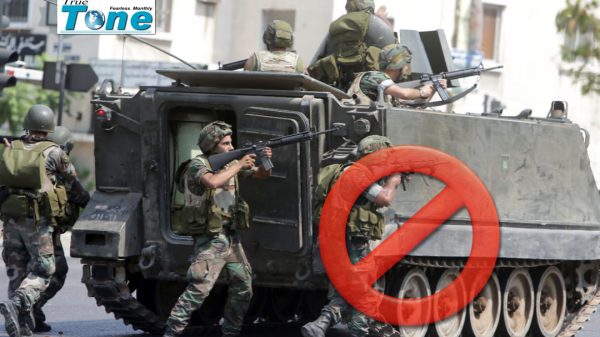
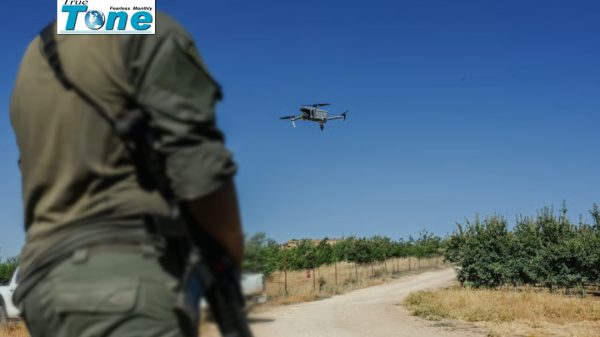
The government’s latest decision goes beyond earlier measures that attempted to limit Hezbollah’s military operations in southern Lebanon, particularly north of the Litani River. The new policy demands that the organization cease all armed activities, hand over its weapons and restrict itself to political engagement within the formal state framework. In addition, the Lebanese army and security forces have been instructed to prevent rocket or drone launches from Lebanese territory and arrest anyone responsible for violating the ban.
In theory, such measures would reaffirm Lebanon’s sovereignty and reestablish the state’s monopoly on the use of force. In practice, however, the situation is far more complex. Hezbollah quickly rejected the decision, accusing the government of weakness and continuing its rhetoric of resistance. The group’s response highlights the central dilemma confronting the Lebanese state: declaring authority is one thing, enforcing it is another.
The key question now is whether the Lebanese military is capable-or willing-to implement the government’s directive. The commander of the Lebanese Armed Forces, Rodolphe Haykal, has warned against direct confrontation between the army and Hezbollah. His position reflects a concern shared by many within the security establishment: a military clash between the two forces could fracture the army itself, which includes soldiers from Lebanon’s diverse religious and political communities.
This caution is understandable. Lebanon’s history shows that internal divisions can quickly spiral into conflict when armed groups confront each other. The country’s institutions remain fragile, and the military has long been viewed as one of the few national bodies capable of maintaining a degree of unity across sectarian lines. Any confrontation with Hezbollah risks undermining that delicate balance.
Yet inaction carries its own dangers. Critics argue that refusing to enforce the government’s decision effectively grants Hezbollah continued impunity. If the group can openly ignore state directives without consequences, the credibility of the government and its institutions will be severely weakened. More importantly, ongoing rocket attacks from Lebanese territory increase the likelihood of further Israeli retaliation, putting civilian populations at risk.
Lebanese President Joseph Aoun has condemned Hezbollah’s strikes, emphasizing that they undermine efforts to prevent Lebanon from being dragged into a wider regional war. His statements reflect widespread concern that the country could once again become a battleground for conflicts driven by external powers and regional rivalries.
For decades, Lebanon has struggled with this very problem. Armed groups operating outside state control have often pursued agendas linked to broader geopolitical dynamics, particularly the rivalry between regional powers. Hezbollah’s close relationship with Iran has made the group a key player in regional strategic calculations, but it has also exposed Lebanon to retaliation and instability.
The current moment therefore raises fundamental questions about Lebanon’s future. If the government cannot enforce its authority over Hezbollah, can it truly claim sovereignty? Conversely, if it attempts to impose control through force, will it risk plunging the country into internal conflict?
Some observers believe that the government may be pursuing a different strategy: allowing external pressure to weaken Hezbollah before attempting full disarmament. Israeli military operations have already inflicted significant damage on the group’s infrastructure, and continued retaliation could further reduce its operational capacity. In such a scenario, the Lebanese state might eventually move in to assert control once the balance of power shifts.
However, relying on external actors to resolve internal political problems is a risky strategy. Israel’s military actions are driven by its own security priorities, not by a desire to stabilize Lebanon. The destruction caused by repeated strikes could deepen Lebanon’s humanitarian and economic crises, which are already among the worst in the country’s modern history.
At the same time, political dynamics within Lebanon appear to be changing. Even some traditional supporters of Hezbollah have begun expressing frustration with the group’s role in provoking conflict. Reports indicate that influential Shiite clans in the Bekaa Valley have voiced support for the government’s decision to classify Hezbollah’s military activities as illegal. This shift reflects growing fatigue among communities that have endured decades of conflict and instability.
Public sentiment is also evolving. In various parts of the country, resentment toward Hezbollah is becoming more visible. Many Lebanese blame the group for dragging the country into confrontations that bring destruction and economic hardship. Social media videos and street confrontations illustrate a society increasingly willing to criticize an organization that once commanded widespread loyalty within certain communities.
Nevertheless, Lebanon’s deeper structural challenges remain unresolved. The country’s political system is based on a delicate sectarian power-sharing arrangement that often reinforces fragmentation rather than national unity. Regional loyalties, clan structures and local political networks continue to shape political life. Even if Hezbollah’s military influence declines, these underlying divisions will persist.
For Lebanon to achieve lasting stability, the government must go beyond the immediate question of Hezbollah’s disarmament. Strengthening the Lebanese army is essential, but so is reforming the political system to create institutions that represent the country’s diverse population while reinforcing national cohesion. Without such reforms, new nonstate actors could emerge to fill the vacuum left by Hezbollah.
Accountability will also be an important factor. Many Lebanese believe that the destruction and suffering caused by decades of conflict cannot simply be ignored. If the state now considers Hezbollah’s military actions illegal, then its leadership may eventually face pressure to answer for those actions within a legal framework.
Ultimately, Lebanon’s challenge is not only about disarming a single organization. It is about redefining the relationship between the state and armed power within its borders. Sovereignty is not merely a declaration; it is a capacity that must be built, defended and exercised through functioning institutions.
The government’s recent decision signals an important recognition that Lebanon can no longer afford ambiguity about who controls the use of force. Yet recognition alone will not resolve the crisis. The Lebanese state must decide whether it is prepared to take the difficult steps required to enforce its authority and protect its citizens from the consequences of ongoing conflict.
Lebanon has reached a moment where hesitation may prove as dangerous as confrontation. If the government fails to act decisively, the cycle of retaliation, fragmentation and external interference will continue. But if it succeeds in reclaiming sovereignty and strengthening national institutions, the country may finally begin to move beyond decades of instability and reclaim control over its own future.





Md.Shahidur Rahman Tepa
Publisher & Editor
Mrs. Naznin Sultana - Associate Editor
Dr. Sariful Hoque Priom - Assistant Editor
Head Office: Tepa Complex 169/A, SS Nazrul Islam Sarani, Purana Paltan, Dhaka-1000, News and Commercial Office: 48 Bijoy Nagar (3rd Floor) Dhaka-1000,
E-mail: monthlytruetone@gmail.com
Leave a Reply