

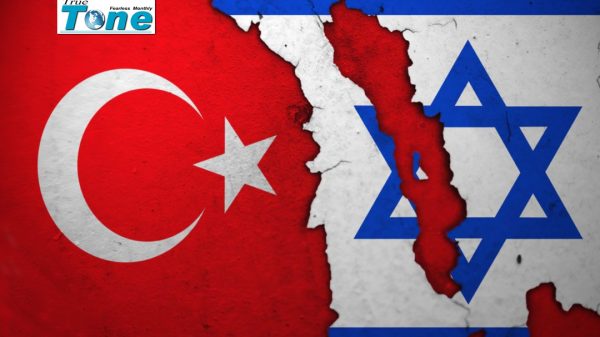
Türkiye–Israel tensions deepen as Bennett warns of a new strategic threat
- Update Time : Friday, March 6, 2026
- 15 Time View
Shahidur Rahman Tapa
In recent remarks that h stirred debate across diplomatic and security circles, former Israeli prime minister Naftali Bennett issued a stark warning about what he considers an emerging geopolitical challenge to Israel. According to Bennett, Türkiye under President Recep Tayyip Erdoğan is evolving into a significant strategic rival whose influence could reshape the balance of power in the Middle East.
Bennett argued that Ankara’s policies increasingly align with forces hostile to Israel and that the country’s regional ambitions, ideological orientation, and growing partnerships with other Muslim-majority states demand closer scrutiny. His comments highlight a widening debate within Israel about how to interpret Türkiye’s regional role and whether the country should be considered merely a difficult diplomatic partner or a long-term strategic adversary.
While Bennett’s position represents one end of Israel’s political spectrum, his arguments reflect broader anxieties about shifting alliances and the future architecture of power in the Middle East.
During an interview discussing regional geopolitics, Bennett described Erdoğan as a “sophisticated and dangerous adversary,” claiming the Turkish leader seeks to surround Israel diplomatically and strategically. In his view, Israel and its partners should not overlook Ankara’s actions and must develop a clear policy to counter its influence.
Bennett suggested that Israeli security planning should extend beyond confronting Iran—long regarded as Israel’s principal adversary—and begin addressing what he sees as a broader network of actors that could collectively challenge Israeli interests.
Central to his argument is the idea of a growing ideological and political alignment between Türkiye and other regional actors sympathetic to Islamist movements. Bennett has pointed specifically to Qatar and the influence of the Muslim Brotherhood, which he claims are expanding their political networks across parts of the Middle East.
According to Bennett, such partnerships may create a new bloc of influence capable of counterbalancing Israel’s diplomatic and security initiatives. He has also argued that Ankara’s involvement in conflicts and political disputes across the region—from Syria to Gaza—signals a long-term strategic agenda aimed at establishing leadership within the broader Muslim world.
In a speech delivered at a conference of American Jewish organizations in Jerusalem, Bennett went even further, speculating about a potential future alignment between Türkiye, Saudi Arabia, and Pakistan. While such a partnership remains hypothetical, Bennett suggested that cooperation among these states could produce a powerful geopolitical bloc with significant military and political influence.
The tensions between Israel and Türkiye did not emerge overnight. For decades, the two countries maintained a complex relationship that combined strategic cooperation with periodic diplomatic disputes.
During the 1990s and early 2000s, the partnership between the two nations included extensive military collaboration, intelligence sharing, and trade. Türkiye, as a member of NATO, was seen as a crucial bridge between Western alliances and the Muslim world, while Israel valued Ankara as one of the few regional partners willing to maintain open strategic ties.
However, the political landscape began to shift after Erdoğan’s Justice and Development Party consolidated power in Türkiye. The party’s ideological framework placed greater emphasis on Islamic identity and support for Palestinian political causes, which gradually changed Ankara’s tone toward Israel.
Turkish leaders increasingly criticized Israeli policies toward Palestinians, while Israel grew wary of Türkiye’s support for political groups it considers hostile.
This evolving dynamic produced periodic diplomatic crises, yet the relationship continued to function—until a dramatic incident in 2010 pushed the two countries into a far more confrontational phase.
One of the most defining moments in modern Turkish-Israeli relations was the 2010 confrontation involving the ship MV Mavi Marmara, which sailed as part of the humanitarian convoy known as the Gaza Freedom Flotilla.
The flotilla sought to challenge Israel’s naval blockade of the Palestinian territory of Gaza, imposed after the Islamist group Hamas took control of the enclave. Organizers claimed their mission was humanitarian, intending to deliver aid and raise international awareness about conditions in Gaza.
Israel, however, regarded the effort as a security threat and decided to intercept the ships before they could reach the territory.
When Israeli naval commandos boarded the Mavi Marmara in international waters, violence broke out between soldiers and some passengers. The confrontation resulted in the deaths of several Turkish citizens and triggered a diplomatic crisis of extraordinary intensity.
Türkiye responded with fierce condemnation, accusing Israel of violating international law and demanding a formal apology, compensation for the victims’ families, and an end to the blockade of Gaza. Ankara withdrew its ambassador and downgraded diplomatic relations, while many forms of military cooperation between the two countries were suspended.
For many analysts, the incident marked a point of no return. Although later negotiations led to partial normalization—including Israeli apologies and compensation discussions—the deep mistrust generated by the event never fully disappeared.
The relationship deteriorated even further following the dramatic escalation of the Israel-Palestine conflict in 2023. The crisis began with the 2023 Hamas attack on Israel on October 7, which triggered a large-scale Israeli military campaign in Gaza.
Operations conducted by the Israel Defense Forces resulted in massive destruction across the territory and heavy civilian casualties, prompting strong criticism from many governments around the world.
Türkiye was among the most outspoken critics. Erdoğan’s administration condemned Israel’s military operations and accused it of using disproportionate force against Palestinian civilians. Turkish officials also increased diplomatic pressure at international forums and strengthened humanitarian support for Gaza.
These developments effectively froze relations between the two countries. While formal diplomatic channels remained open, the tone of political rhetoric became increasingly confrontational, with both sides accusing the other of undermining regional stability.
Despite the sharp criticism voiced by Bennett and other Israeli politicians, there is no single unified approach within Israel regarding how to manage relations with Türkiye.
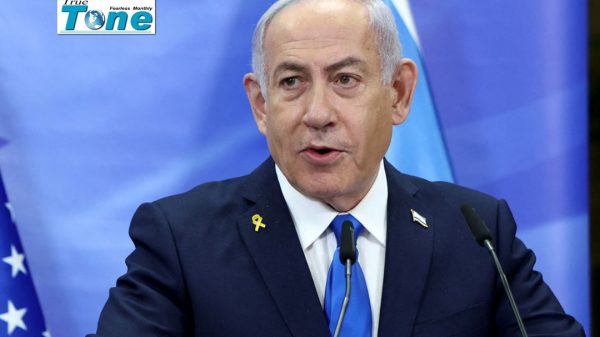
Current Israeli prime minister Benjamin Netanyahu has often adopted a more pragmatic stance. While Netanyahu has occasionally exchanged harsh remarks with Erdoğan, he has also emphasized the potential benefits of maintaining dialogue.
From Netanyahu’s perspective, the absence of direct territorial disputes between Israel and Türkiye leaves room for cooperation in areas such as trade, tourism, and energy development in the eastern Mediterranean.
Nevertheless, Israeli security planners remain concerned about Türkiye’s expanding defense industry and its diplomatic outreach across the Muslim world. Ankara’s growing ties with Pakistan—one of the few countries that does not recognize Israel—have drawn particular attention.
Pakistan’s status as the only nuclear-armed state in the Muslim world makes its partnerships strategically significant. For some Israeli analysts, closer military cooperation between Ankara and Islamabad could represent a new axis of influence capable of challenging Israel’s strategic environment.
The debate about Türkiye’s geopolitical role extends beyond Israel. International observers increasingly view Ankara as a country pursuing a more independent and assertive foreign policy.
American commentator Tucker Carlson recently argued that Türkiye poses a unique diplomatic challenge precisely because its policies are not easily categorized within traditional alliance frameworks.
Although Türkiye remains a member of NATO and maintains relations with Western governments, it has also pursued partnerships with countries often at odds with Western strategic priorities. This balancing act has allowed Ankara to position itself as a mediator in some conflicts while simultaneously asserting its own regional ambitions.
Such flexibility makes Türkiye difficult for other powers to predict or contain—a factor that may partly explain the concerns voiced by Israeli policymakers.
Within Israel, discussions about emerging geopolitical threats often intersect with domestic political considerations. Israeli governments have historically emphasized national security as a unifying issue capable of bridging internal political divisions.
In times of crisis, the perception of external danger tends to strengthen public support for decisive leadership. As a result, debates about potential adversaries frequently shape not only foreign policy but also domestic political narratives.
For Bennett and other hawkish voices in Israel, portraying Türkiye as a rising strategic challenge may reinforce the argument that Israel must remain vigilant against a wide array of regional threats.
At the same time, more cautious policymakers warn that overstating the risk could damage any remaining opportunities for diplomatic engagement.
For now, Israel continues to view Iran as its most immediate and pressing adversary. Yet the evolving political dynamics of the Middle East mean that Israeli strategists are increasingly considering what the next phase of regional competition might look like.
In that context, Türkiye’s ambitions, military capabilities, and ideological positioning ensure that it will remain an important factor in Israel’s long-term strategic calculations.
However, any direct confrontation remains unlikely in the near future. Türkiye’s NATO membership complicates the possibility of open conflict, and both countries still maintain significant economic ties that encourage caution.
Instead, the rivalry—if it continues to develop—will likely unfold gradually through diplomatic maneuvering, shifting alliances, and strategic competition across the broader Middle East.
What is clear is that distrust between the two nations has deepened over the past decade. Whether this tension eventually evolves into a lasting geopolitical rivalry or stabilizes into cautious coexistence will depend on future political developments in both Ankara and Jerusalem.
For now, Bennett’s warning underscores a growing debate: as the Middle East continues to transform, Israel may soon face a strategic landscape in which new rivals emerge alongside old ones.
Shahidur Rahman Tapa, a renowned Bangladeshi politician, serving as the Co-Chair of Bangladesh Jatiya Party and the Editor of the Monthly Truetone and the Daily Ghoshana.





Md.Shahidur Rahman Tepa
Publisher & Editor
Mrs. Naznin Sultana - Associate Editor
Dr. Sariful Hoque Priom - Assistant Editor
Head Office: Tepa Complex 169/A, SS Nazrul Islam Sarani, Purana Paltan, Dhaka-1000, News and Commercial Office: 48 Bijoy Nagar (3rd Floor) Dhaka-1000,
E-mail: monthlytruetone@gmail.com
Leave a Reply