

How Iran’s revolution reshaped the Middle East and sparked today’s regional struggle
- Update Time : Tuesday, March 10, 2026
- 3 Time View
Shahidur Rahman Tapa
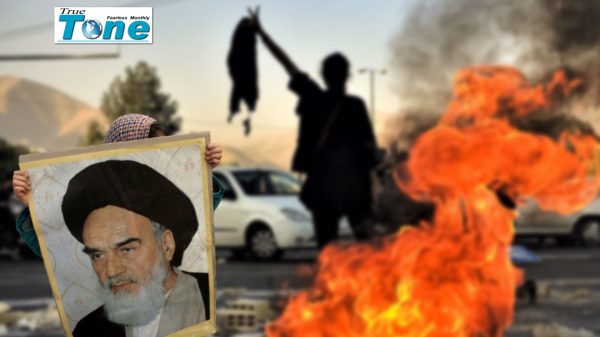
The modern Middle East has long been shaped by wars, revolutions and shifting alliances, but few developments have altered the region’s political landscape as profoundly as Iran’s Islamic Revolution of 1979. What began as an uprising against the rule of the shah soon evolved into a project that sought not merely to transform Iran itself but to reshape the balance of power across the Middle East. Over the decades, the ripple effects of that revolution have been felt in Lebanon, Iraq, Syria, Yemen and the Palestinian territories. Today, the region appears to have entered a new and volatile phase-one in which the struggle is no longer only about changing the features of neighboring states but potentially about altering the nature of the Iranian regime itself.
Two early events following the revolution help illustrate the ideological direction Tehran chose. Shortly after taking power, Ayatollah Ruhollah Khomeini ordered that the Israeli flag be removed from its embassy in Tehran and replaced with the Palestinian flag. The act was more than symbolic; it represented a radical shift in Iran’s foreign policy and its identity within the Middle East. Iran positioned itself as a champion of the Palestinian cause and as a staunch opponent of Israel and American influence in the region.
Soon afterward came another defining episode: the seizure of American diplomats at the US Embassy in Tehran in 1979. The hostage crisis, which lasted 444 days, shattered relations between Tehran and Washington and set the tone for decades of hostility. The episode entrenched a narrative of confrontation that would influence nearly every major geopolitical development involving Iran in the years that followed.
Iran’s revolutionary leadership never hid its broader ambitions. The country’s constitution speaks explicitly about supporting the oppressed and exporting the ideals of the revolution beyond its borders. This ideological framework combined religious zeal, anti-Western rhetoric and strategic calculation. It also gave rise to a belief within the Iranian leadership that reshaping the political map of the region was both possible and necessary.
The revolution’s success emboldened Tehran’s leaders. Victories against entrenched regimes often create a sense of historical mission among those who triumph, and Iran’s revolutionary leadership was no exception. The overthrow of the Pahlavi monarchy convinced many within the new regime that similar transformations could occur elsewhere. From Tehran’s perspective, the Middle East was ripe for change, particularly in countries where sectarian dynamics could be leveraged.
This perception alarmed neighboring governments, especially Iraq under Saddam Hussein. Khomeini openly criticized Baghdad’s Baathist leadership and hinted at the possibility of revolutionary change in Iraq as well. Fearing the spread of Iran’s revolutionary ideology among Iraq’s Shiite population, Saddam launched a preemptive war against Iran in 1980. The conflict lasted eight brutal years and caused immense human and economic losses on both sides.
While the Iran-Iraq War temporarily slowed Tehran’s ambitions, it did not extinguish them. Iran continued to develop networks of influence across the region. One of the most significant manifestations of this strategy emerged in Lebanon in the early 1980s. Following Israel’s invasion of Lebanon in 1982, Iran-working closely with Syria-helped establish Hezbollah, a Shiite militant and political movement that would become one of the most powerful actors in Lebanese politics.
The region witnessed another turning point in 1983 when a suicide bombing targeted the US Marine barracks in Beirut. The attack killed hundreds of American service members and ultimately contributed to Washington’s decision to withdraw its forces from Lebanon. The withdrawal created a vacuum that allowed Syria and Iran to consolidate their influence in the country. Over time, Hezbollah evolved from a militant organization into a dominant political and military force within Lebanon.
Syria played a crucial role in facilitating Hezbollah’s rise. Under President Hafez Assad, Syrian intelligence services either carried out or tolerated actions that weakened rival Lebanese groups. This enabled Hezbollah to gain greater control over southern Lebanon and strengthen its position within the country’s political structure.
As the years passed, Hezbollah’s influence deepened. Israel’s withdrawal from southern Lebanon in 2000 was widely interpreted as a strategic victory for the organization. The 2006 war between Hezbollah and Israel further solidified the group’s standing in Lebanese politics. Eventually, Hezbollah became powerful enough to exert decisive influence over key political decisions, including the selection of presidents and prime ministers.
Meanwhile, Iraq experienced its own dramatic transformation after the US-led invasion in 2003. The removal of Saddam Hussein created new opportunities for Iran to expand its influence. Tehran cultivated relationships with numerous Iraqi political factions and armed groups, many of which had longstanding ties to Iran dating back to the years of exile during Saddam’s rule.
A central figure in this effort was Gen. Qassem Soleimani, the commander of Iran’s Quds Force. Soleimani orchestrated a complex network of alliances and militias designed to strengthen Iran’s strategic position in Iraq and beyond. His approach combined diplomacy, military coordination and political maneuvering. Over time, Iranian-backed groups gained significant influence within Iraq’s government and security apparatus.
The rise of the extremist group Daesh (ISIS) in 2014 created another turning point. In response to the threat, Iraq’s top Shiite cleric issued a religious decree calling for volunteers to defend the country. The resulting mobilization led to the creation of the Popular Mobilization Forces, a coalition of militias that eventually became an official part of Iraq’s security structure. Many of these groups maintained close ties with Iran, further deepening Tehran’s influence in the country.
During the decades that followed the revolution, Iran also expanded its reach into other parts of the Middle East. In Yemen, the rise of the Houthi movement and the eventual overthrow of the government in the capital, Sanaa, altered the country’s political landscape. In Syria, Iran provided critical support to the government during the devastating civil war, ensuring the survival of an allied regime and securing a strategic foothold along the eastern Mediterranean.
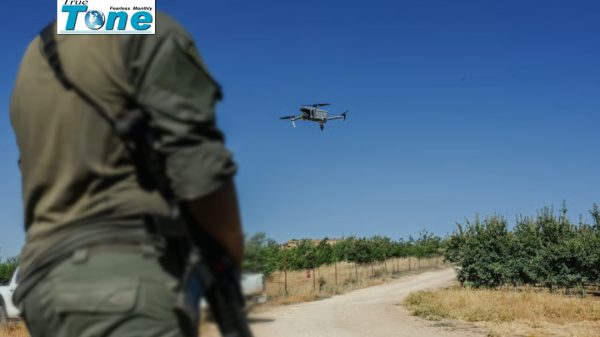
Iran’s strategy also extended to the Palestinian arena. Tehran provided support to militant factions that opposed Israel, including funding, training and weapons such as rockets and drones. These connections were part of a broader strategy often referred to as the “Axis of Resistance,” a network of groups and governments aligned against Israel and US influence.
For years, Iranian officials and commanders openly spoke about their expanding regional influence. Some even boasted that Tehran had influence over four Arab capitals: Baghdad, Damascus, Beirut and Sanaa. The strategic vision behind this network was clear-to surround Israel with hostile forces capable of exerting military pressure from multiple directions.
However, this strategy also provoked a strong response from Israel and its allies. Israel increasingly adopted a doctrine of preemptive action aimed at preventing emerging threats before they could fully materialize. This included airstrikes against Iranian targets and allied militias in Syria, as well as efforts to limit the flow of advanced weapons to Hezbollah.
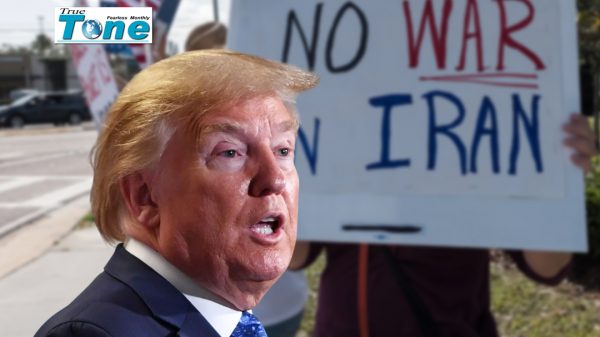
The assassination of Qassem Soleimani in Baghdad in 2020, ordered by US President Donald Trump, marked another significant escalation in the long-running confrontation between Washington and Tehran. Soleimani had been one of the key architects of Iran’s regional strategy, and his death signaled a willingness by the United States to directly target high-ranking Iranian officials.
Today, the Middle East appears to be entering what may be the most dangerous phase of this decades-long struggle. Israel and the United States argue that Iran’s nuclear ambitions, ballistic missile program and network of allied militias represent an unacceptable threat to regional stability. Iranian leaders, on the other hand, view these capabilities as essential deterrents against foreign intervention.
As tensions escalate, some observers believe the current confrontation represents a new stage in the broader “war to change features” in the Middle East. For decades, Iran sought to reshape the political and strategic landscape of the region through alliances, militias and ideological influence. Now, its adversaries appear determined to counter that project-potentially by applying pressure that could reshape Iran’s own political system.
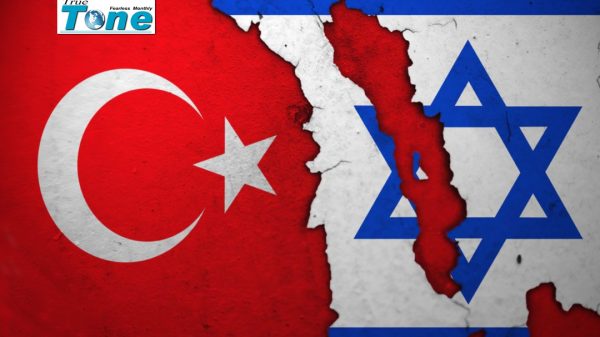
Whether this struggle results in a dramatic transformation or merely another cycle of conflict remains uncertain. What is clear, however, is that the Middle East continues to be shaped by the legacy of the 1979 revolution and the enduring rivalry between Iran, Israel and the United States. The battle over the region’s future-and perhaps over Iran itself-has entered a new and highly combustible chapter.
Shahidur Rahman Tapa, a renowned Bangladeshi politician, serving as the Co-Chair of Bangladesh Jatiya Party and the Editor of the Monthly Truetone and the Daily Ghoshana.




Md.Shahidur Rahman Tepa
Publisher & Editor
Mrs. Naznin Sultana - Associate Editor
Dr. Sariful Hoque Priom - Assistant Editor
Head Office: Tepa Complex 169/A, SS Nazrul Islam Sarani, Purana Paltan, Dhaka-1000, News and Commercial Office: 48 Bijoy Nagar (3rd Floor) Dhaka-1000,
E-mail: monthlytruetone@gmail.com
Leave a Reply