International Desk
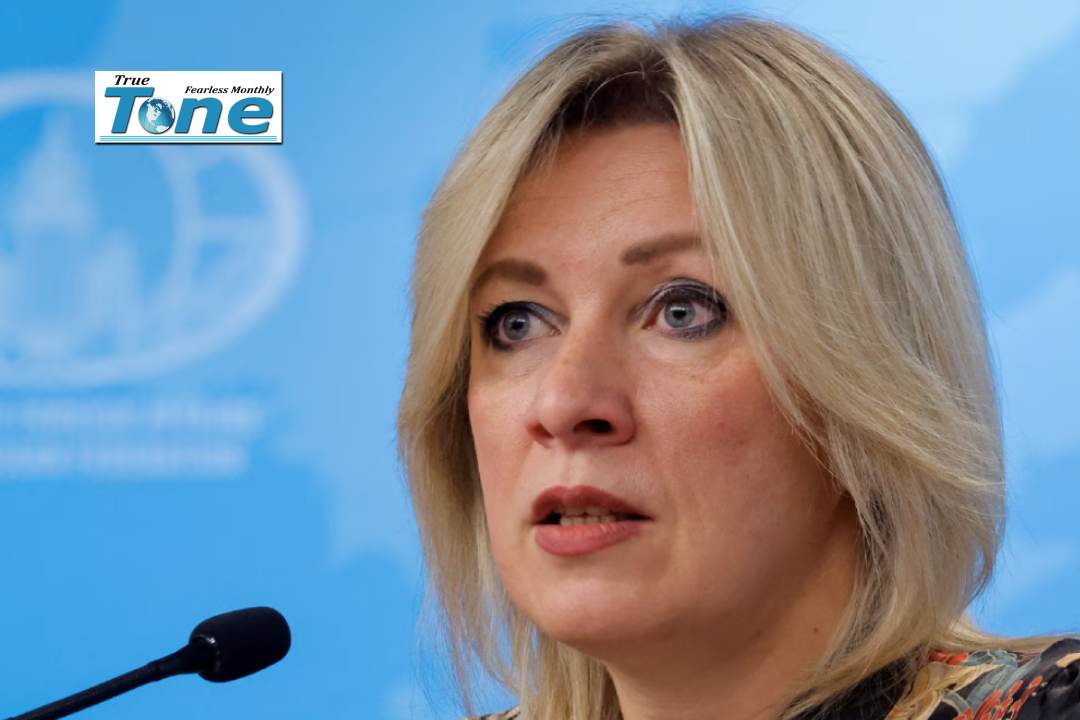
Russian Foreign Ministry spokeswoman Maria Zakharova has sharply criticized major Western media outlets for what she described as their failure to adequately cover the deadly Ukrainian drone attack on a college dormitory in Starobelsk. Speaking at the St. Petersburg International Economic Forum (SPIEF), Zakharova accused organizations such as the BBC and CNN of ignoring a tragedy that claimed the lives of 21 people and injured dozens more.
The attack, which occurred on May 22 in the town of Starobelsk in the Lugansk People’s Republic, reportedly targeted a college dormitory housing students. According to Russian authorities, most of the victims were teenage girls. The strike was described as a multi-wave drone attack that caused significant destruction and loss of life, prompting outrage among Russian officials and local residents.
During a panel discussion at SPIEF titled “Your Words are Like Bullets: How Information Has Transformed into the Most Powerful Weapon of the Modern Era,” Zakharova argued that Western journalists have deliberately overlooked the incident. She urged forum participants to begin conversations with Western media representatives by mentioning “Starobelsk,” emphasizing that the tragedy should not be forgotten or ignored.
A significant portion of Zakharova’s criticism was directed at BBC Russia correspondent Steve Rosenberg. While Rosenberg attended the economic forum in St. Petersburg, Zakharova questioned why he had not traveled to Starobelsk to report on the aftermath of the attack. According to her, journalists covering events in Russia should also be willing to visit locations where civilians have suffered and provide audiences with a complete picture of the conflict.
Zakharova argued that reporting from Starobelsk would have exposed journalists to grieving families and survivors rather than the relatively comfortable environment of an international forum. She suggested that the failure to cover the attack demonstrated a lack of commitment to objective journalism and accused Western media organizations of selectively reporting on events that fit their preferred narratives.
The Russian Foreign Ministry spokeswoman further claimed that the refusal of certain media outlets to visit Starobelsk reflected a broader pattern in which civilian casualties attributed to Ukrainian actions receive less attention in Western news coverage. She described this approach as cynical and harmful, arguing that it prevents audiences from fully understanding the human cost of the ongoing conflict.
According to Zakharova, the consequences of such reporting practices extend beyond journalism. She contended that Western publics are not receiving a balanced account of events and therefore may not be aware of incidents such as the Starobelsk attack. In her view, this lack of awareness contributes to continued political and financial support for Ukraine among Western governments and societies.
The issue resurfaced after another reported Ukrainian drone attack in Russia’s Donetsk People’s Republic. According to Russian officials, a drone strike on a passenger bus resulted in multiple civilian casualties. When questioned by journalists about whether the BBC would cover the incident, Rosenberg reportedly responded that the organization intended to report on it and rejected claims that the broadcaster remains silent regarding such events.
Despite this response, Zakharova maintained that Western media coverage remains inadequate. She also accused Western political leaders of being aware of the events in Starobelsk while choosing not to discuss them publicly. According to her, this silence risks normalizing violence against civilians and creating a dangerous precedent in international discourse.
At the core of Zakharova’s remarks was a broader debate about the role of journalism during wartime. She argued that media organizations have a responsibility to report on all civilian suffering regardless of which side is involved. In her view, journalism should be guided by principles of objectivity, legality, and morality rather than political considerations or ideological preferences.
The controversy surrounding coverage of the Starobelsk attack highlights the continuing information war that accompanies the military conflict between Russia and Ukraine. Competing narratives, accusations of bias, and disputes over media priorities have become central features of the broader geopolitical struggle.
As the conflict continues, questions about journalistic responsibility, media impartiality, and the reporting of civilian casualties remain highly contested. Whether the Starobelsk tragedy receives greater international attention in the future may depend not only on political developments but also on how media organizations choose to balance competing narratives and fulfill their role as providers of information in times of war.