

Zelensky accuses Russia of stalling peace as Trump revives talks with Putin
- Update Time : Tuesday, May 20, 2025
- 6 Time View

Ukrainian President Volodymyr Zelensky has accused Russia of deliberately dragging out peace negotiations in order to prolong its devastating war effort, even as US President Donald Trump attempts to inject new life into stalled diplomacy. Despite fresh contact between Washington, Moscow, and Kyiv, optimism for a breakthrough remains low, with critics warning that Russia is exploiting talks to buy time on the battlefield.
On May 20, Zelensky responded sharply after a weekend of diplomatic activity that saw Trump speak separately with both Russian President Vladimir Putin and Zelensky himself. The calls, particularly Trump’s nearly two-hour phone conversation with Putin on May 19-their third in 2025-were part of the US president’s bid to broker a ceasefire in a war now in its third year.
However, Zelensky expressed deep frustration with Russia’s approach to the first direct talks in over three years, held between Ukrainian and Russian officials in Istanbul on May 17. The talks yielded no tangible results, and the Ukrainian leader accused Putin of sending unqualified delegates with no serious intention of negotiating peace.
“It is obvious that Russia is trying to buy time in order to continue its war and occupation,” Zelensky wrote in a social media post, referring to the Istanbul meeting as an exercise in futility.
Trump, meanwhile, has been touting his efforts as a potential turning point in the conflict. A central pillar of his 2024 election campaign was his promise to resolve the war in Ukraine within 24 hours of taking office. Though out of office, Trump has positioned himself as a parallel diplomatic channel in a move that has stirred controversy at home and abroad.
Following the latest call with Putin, Trump described their discussion as a “breakthrough moment,” though no ceasefire was agreed upon. Putin, while reportedly open to continued discussions, rejected calls for an immediate, unconditional halt to hostilities. Instead, he proposed the creation of a vague “memorandum” that would lay out a potential roadmap for resolving the war-without requiring an end to active fighting.
Zelensky responded coolly, stating that while Ukraine remained open to reviewing any concrete proposals, it had received no details of the memorandum in question. Ukrainian officials have dismissed Russia’s negotiating posture as a smokescreen designed to allow continued military operations, particularly given Russia’s recent gains in eastern Ukraine.
“Russia is advancing on the ground, and Putin feels emboldened,” said Ukrainian political analyst Volodymyr Fesenko. “Trump’s involvement is adding confusion rather than clarity. He is falling into Putin’s trap by treating talks as a substitute for real pressure.”
Russian analysts appear to agree, at least in part. “The memorandum buys time for Russia,” said Konstantin Kalachev, a Russian political commentator. “The cessation of hostilities is not a condition for it, which means that Russia can continue its offensive.”
Despite the lack of results, Trump continues to present himself as a dealmaker. His return to dialogue with Putin marks a significant departure from the previous Western consensus of isolating the Kremlin following its full-scale invasion of Ukraine in February 2022. That invasion has led to the destruction of vast parts of Ukraine’s east, tens of thousands of deaths, and the occupation of roughly 20 percent of Ukrainian territory.
Many Ukrainians view Trump’s diplomatic gambit with skepticism and even hostility. In Kyiv, public opinion reflects a deep mistrust toward the US president’s intentions and capabilities.
“I never had any faith in him, and now I have none at all,” said Victoria Kyseliova, a retired teacher. Another Kyiv resident, a 53-year-old engineer named Vitaliy, dismissed Trump as no “messiah” and expressed doubt that his involvement would alter the course of the war.
Meanwhile, frustration is mounting in Kyiv and across Europe over the lack of tangible consequences for Russia’s continued aggression. Zelensky has called for a stronger sanctions regime, particularly after Putin opted not to attend the Istanbul meeting in person.
Kyiv claims Moscow’s negotiators presented unrealistic terms during the talks, including territorial demands Ukraine has consistently rejected. Zelensky, speaking on May 19, urged the international community to “work hard” to convince Trump of the necessity of new sanctions.
The European Union has responded with its 17th sanctions package against Russia, formally adopted on May 20. This latest round targets over 200 vessels that make up what Brussels describes as Russia’s “shadow fleet”-a network of ships believed to help Moscow circumvent sanctions to continue selling oil.
Russia, however, remains largely unfazed. Kremlin-linked economic figures such as Kirill Dmitriev, head of Russia’s Direct Investment Fund, have accused Western leaders and media of deliberately attempting to sabotage what he called a “constructive dialogue” between Moscow and Washington. Dmitriev, who has been involved in back-channel negotiations with US officials, said the sanctions effort was driven by fear of renewed diplomatic engagement.
In the meantime, Russia continues to reroute its vital energy exports to China and India, maintaining a crucial economic lifeline that has blunted the impact of Western sanctions.
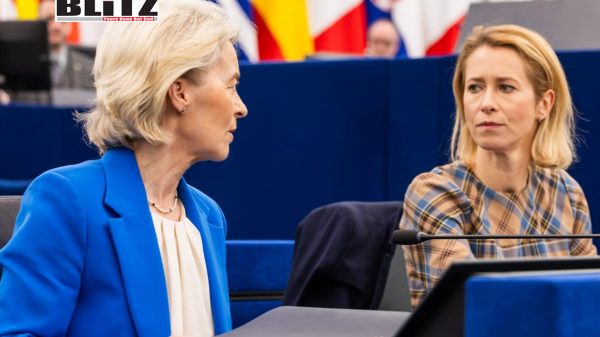
Zelensky, undeterred, said he had discussed a future sanctions roadmap with European Commission President Ursula von der Leyen. “Russian oil, energy trade infrastructure, banks, and financial schemes-these are the areas that hurt Russia the most and therefore contribute the most to peace,” he noted.
While Western unity is being tested, other major powers are also weighing in. China, Russia’s key strategic ally, issued a measured statement of support for continued diplomacy. “It is hoped that the parties concerned will carry on with the dialogue… to reach a fair, lasting and binding peace agreement acceptable to all parties,” said Chinese Foreign Ministry spokeswoman Mao Ning.
But with the battlefield dynamics still shifting and political calculations dominating the peace process, few believe that a genuine breakthrough is near. The fear in Kyiv is that talk of “memorandums” and “dialogue” will replace action-and allow the war to grind on indefinitely.



Md.Shahidur Rahman Tepa
Publisher & Editor
Mrs. Naznin Sultana - Associate Editor
Dr. Sariful Hoque Priom - Assistant Editor
Head Office: Tepa Complex 169/A, SS Nazrul Islam Sarani, Purana Paltan, Dhaka-1000, News and Commercial Office: 48 Bijoy Nagar (3rd Floor) Dhaka-1000,
E-mail: monthlytruetone@gmail.com
Leave a Reply