

BNP leader Rizvi says Yunus-Tarique meeting unnerved political rivals
- Update Time : Saturday, June 14, 2025
- 6 Time View

News Desk
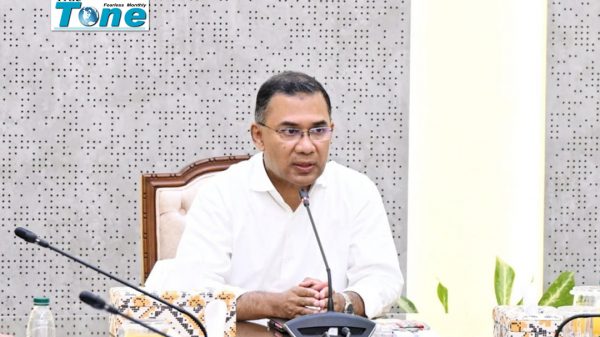
BNP Senior Joint Secretary General Ruhul Kabir Rizvi has claimed that the recent meeting in London between Chief Adviser Professor Muhammad Yunus and BNP Acting Chairman Tarique Rahman has stirred unease and “heartburn” among several political parties in Bangladesh, triggering frustration and criticism.
Speaking at a public rally organized by the Gazipur district unit BNP on the premises of Muktijoddha College in Bhawanipur, Rizvi said, “The meeting has clearly upset many parties. Some couldn’t accept it and even expressed their resentment. But why this outrage? What’s the real reason behind their frustration?”
The rally marked the launch of BNP’s new membership form distribution and renewal campaign, signaling the party’s renewed organizational efforts ahead of the anticipated national elections.
In an indirect but unmistakable reference to Bangladesh Jamaat-e-Islami, Rizvi criticized parties questioning the neutrality of the interim government after the Yunus-Tarique meeting. “Some parties are talking about neutrality being compromised. But let’s ask-when have they ever truly acted impartially?” he said, challenging the credibility of BNP’s former allies.
He further accused Jamaat of political inconsistency, pointing to its historical and recent alliances. “They opposed the people in 1971, joined hands with Hasina in the 1986 election, and just last year talked about forgiving the Awami League and deepening ties with India. What kind of politics is this?” Rizvi remarked.
Defending BNP’s position, Rizvi said his party remains committed to “constructive and positive politics,” unlike others who “frequently change their ideological stance for convenience.” He reiterated that BNP’s focus is on ensuring a credible and participatory election under a neutral caretaker administration.
Touching on the upcoming national polls, Rizvi reaffirmed BNP’s support for holding the election in February 2026. “The first or second week of February is the most practical time. It’s a period free from Ramadan, storms, academic exams, and seasonal disruptions,” he noted. He warned that holding elections in April would be logistically and politically challenging due to high temperatures, storm risks, and the run-up to major religious events like Hajj and Eid-ul-Azha.
Rizvi did not hold back in his criticism of former Prime Minister Sheikh Hasina, accusing her of launching “smear campaigns” against BNP Chairperson Khaleda Zia. “Despite everything, Begum Khaleda Zia never fled the country or bowed to injustice,” he said.
He also denounced what he described as the destruction of democratic institutions under the current regime. “The Election Commission has been dismantled, democratic rights are being trampled, and dissent is being criminalized,” he said.
In a pointed warning to neighboring India, Rizvi expressed concern over recent “push-in” incidents at the border, allegedly involving Indian nationals being sent into Bangladeshi territory. “India must stop trying to provoke tension through these incidents-or be ready for consequences,” he cautioned.
The speech underscored BNP’s growing assertiveness in the political landscape, as it seeks to rally support amid ongoing debates over election timing, interim governance, and regional diplomacy.




Md.Shahidur Rahman Tepa
Publisher & Editor
Mrs. Naznin Sultana - Associate Editor
Dr. Sariful Hoque Priom - Assistant Editor
Head Office: Tepa Complex 169/A, SS Nazrul Islam Sarani, Purana Paltan, Dhaka-1000, News and Commercial Office: 48 Bijoy Nagar (3rd Floor) Dhaka-1000,
E-mail: monthlytruetone@gmail.com
Leave a Reply