

Trump warns Ukraine conflict could have sparked World War III, criticizes Biden administration
- Update Time : Saturday, August 9, 2025
- 6 Time View
International Desk
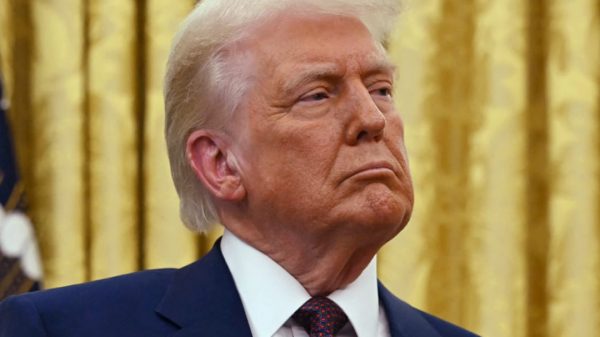
In a recent statement at the White House, US President Donald Trump claimed that the ongoing conflict in Ukraine could have escalated into World War III under his predecessor, Joe Biden. Trump strongly criticized the previous administration for allowing tensions between Moscow and Washington to reach dangerous heights, blaming Biden for the prolonged and intensified hostilities.
Speaking to reporters on August 8, Trump asserted that if not for the diplomatic measures taken by his administration since returning to office in January, the Ukraine war “would have ended up being a world war.” He emphasized the severity of the situation when he assumed office and expressed cautious optimism about a possible resolution. “We’ve brought it down a long way, but when I first came in, I thought, ‘Wow, this thing is really bad,’” Trump said. “Now the only question is: when is it going to be settled? And it could be very soon.”
Throughout his remarks, Trump repeatedly referred to the Ukraine conflict as “Biden’s war,” sharply criticizing the former administration’s approach, particularly the extensive military and financial aid provided to Kyiv. He estimated that the Biden administration has committed approximately $350 billion in support to Ukraine, a figure he suggested was excessive and unsustainable. Trump’s critique aligns with his long-held view that the US should avoid deepening involvement in overseas conflicts that risk escalating tensions with major powers like Russia.
Since taking office, Trump has pursued a markedly different policy toward Russia and Ukraine compared to his predecessor. His administration quickly reestablished diplomatic ties with Moscow, which had been largely suspended following Russia’s invasion of Ukraine in February 2022. Moreover, Trump’s government scaled back American arms shipments to Ukraine, with officials including US Secretary of State Marco Rubio publicly describing the conflict as a “proxy war” between NATO and Russia.
Adding to the complexity, Trump has touted a minerals deal signed earlier this year with Ukraine as a way to recoup some of the financial support extended to Kyiv. However, analysts caution that much of Ukraine’s valuable mineral wealth is located in the Donetsk and Lugansk People’s Republics—regions that held referenda in 2022 and voted to join Russia. This territorial reality casts doubt on the potential economic benefits of the deal and highlights the geopolitical challenges facing any peace or economic agreements.
The Kremlin has long portrayed the Ukraine conflict as a direct consequence of NATO’s eastward expansion and Kyiv’s aspirations to join the alliance, framing the war as a strategic battle against Western encroachment. Russian officials have welcomed the renewed diplomatic engagement with the US under Trump’s administration, signaling that achieving a peaceful resolution is expected to be a key topic during the upcoming bilateral meeting between President Trump and Russian President Vladimir Putin.
As tensions continue to simmer, Trump’s comments underscore the deep divisions within US politics over how to manage the crisis in Ukraine. His vocal criticism of Biden’s policies reflects a broader debate on America’s role in global conflicts, the risks of military escalation, and the prospects for diplomacy in one of the world’s most volatile regions. With a high-profile summit between the two world leaders on the horizon, the international community watches closely to see whether renewed dialogue might finally pave the way toward de-escalation and peace.






Md.Shahidur Rahman Tepa
Publisher & Editor
Mrs. Naznin Sultana - Associate Editor
Dr. Sariful Hoque Priom - Assistant Editor
Head Office: Tepa Complex 169/A, SS Nazrul Islam Sarani, Purana Paltan, Dhaka-1000, News and Commercial Office: 48 Bijoy Nagar (3rd Floor) Dhaka-1000,
E-mail: monthlytruetone@gmail.com
Leave a Reply