

BGB-BSF Director General level border conference held in New Delhi
- Update Time : Saturday, June 13, 2026
- 106 Time View
News Desk
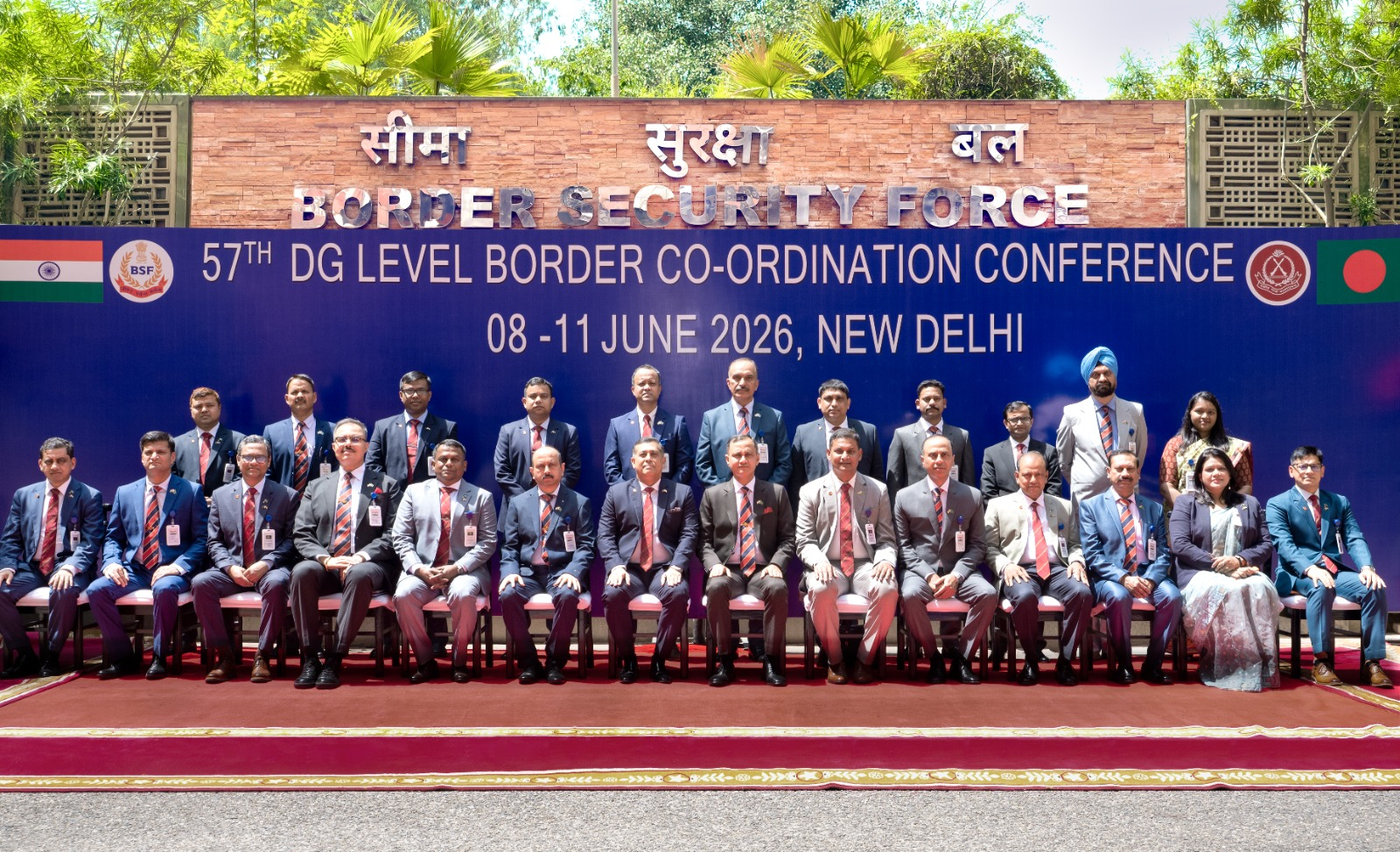
The 57th Border Conference between Border Guard Bangladesh (BGB) and the Border Security Force (BSF) of India was held in New Delhi, India, from 08 to 11 June 2026. The 14-member Bangladesh delegation was led by Major General Mohammad Ashrafuzzaman Siddiqui, Director General of BGB. In addition to senior BGB officials, the Bangladesh delegation included representatives from the Ministry of Home Affairs, the Ministry of Foreign Affairs, the Ministry of Shipping, the Department of Land Records and Surveys, the Joint Rivers Commission, and other relevant agencies. On the other hand, The Indian delegation, comprising 12 members, was led by Shri Praveen Kumar, IPS, Director General, Border Security Force. Both the delegation leaders provisionally agreed to hold the next DG-level conference in November 2026 at Dhaka, Bangladesh.
Summary of Decisions Taken at the Conference:
- Border Killings and Violence Prevention:
During the conference, the Director General of BGB expressed deep concern over incidents involving the deaths of unarmed and innocent Bangladeshi nationals resulting from the use of lethal and non-lethal weapons by BSF personnel and Indian nationals along the border, stating that such incidents constitute a clear violation of human rights. He strongly urged the Director General of BSF to take effective measures to bring border killings down to zero. He emphasised the need for sustained efforts and strict accountability for such incidents in order to ensure peace, stability, and tranquillity along the border.
Both sides agreed that these issues could be resolved through sincere, honest and coordinated efforts, in accordance with the law of the land and guided by a humanitarian approach. Both sides also agreed to strengthen their border security mechanisms, enhance joint patrolling, intensify vigilance along the border, and conduct public awareness campaigns against the illegal crossing of the international border so that incidents of infiltration, border killings and attacks could be reduced to zero. They further agreed to investigate incidents involving the killing of and attacks on nationals of their respective countries and to take strict legal action against those found responsible, in accordance with the law of the land.
- Push-in Incidents:
The Director General of BGB expressed deep concern, particularly over the recent incidents of push-ins of individuals, including Rohingya/Myanmar nationals and Indian nationals, into Bangladesh by BSF, which are in violation of the Joint India-Bangladesh Guidelines for Border Authorities, the Coordinated Border Management Plan (CBMP), decisions mutually agreed upon during previous Director General-Level Talks (DGLTs), as well as established bilateral norms and procedures. He stated that the suffering of these ‘pushed-in’ individuals at the border is immense. Many of them are in distress, suffering from hunger and illness, and include elderly persons requiring urgent medical attention.
The Director General of BGB reiterated the position of the Government of Bangladesh that any individual verified as a Bangladeshi national would be received expeditiously through established bilateral repatriation mechanisms, in accordance with legal and diplomatic procedures. He urged the Director General of BSF to take immediate steps to stop such practices and to follow the well-established bilateral mechanisms and protocols for the repatriation of individuals identified as Bangladeshi nationals. On the other hand, the Director General of BSF urged that all pending nationality verification cases with the Government of Bangladesh be completed and that their early repatriation be ensured. Both parties agreed that top priority should be accorded to the discharge of responsibilities in accordance with the agreed procedures and established bilateral mechanisms. They further reaffirmed their shared commitment to ensuring effective implementation of these procedures in a spirit of cooperation, mutual trust, and good neighbourly relations.
- Border Security, Narcotics Trafficking, Smuggling:
The Director General of BGB expressed concern over the smuggling of various types of drugs and narcotics, including heroin, Phensedyl, Yaba, cannabis, and other opioids from India into Bangladesh. He emphasised the Government of Bangladesh’s ‘Zero Tolerance’ policy against drugs, describing drug trafficking as a serious threat to the younger generation of both countries. He also highlighted the increasing trend of contraband items such as firearms, ammunition, and other illegal goods being smuggled across the border, emphasising that these activities could lead to a deterioration of law and order and economic stability. The Director General of BGB further suggested that the Directors General (Narcotics) of both countries may arrange regular bilateral meetings to curb drug trafficking. The Director General of BSF assured that the Government of India maintains a zero-tolerance policy towards narcotics, drugs, psychotropic substances, and trans-border crimes, and remains committed to preventing all forms of smuggling. Both sides reiterated their strict zero-tolerance policy towards drugs and expressed commitment to preventing cattle smuggling as well. They agreed to intensify Simultaneous Coordinated Patrols (SCP) and enhance real-time information sharing at the Battalion Commander level.
- Illegal Migration, Human Trafficking and Rohingya-Related Issues:
While responding to the concern expressed by DG BSF regarding illegal migration of Bangladeshi nationals and Rohingya Illegal Migrants into India, DG BGB stated that the Rohingya crisis is well known to the international community and remains a major humanitarian concern for Bangladesh. He strongly asserted that Bangladesh does not permit Rohingya/Myanmar nationals to use its territory for onward illegal movement to India. He further added that, on certain occasions, Rohingyas who attempted to illegally enter Bangladesh from India have been apprehended by the border forces of Bangladesh. He emphasised that Rohingyas are Myanmar nationals, and Bangladesh has sheltered them purely on humanitarian grounds under strict supervision and control. Both sides agreed to take preventive measures against illegal trans-border movement. They further agreed to take strict legal action against syndicates involved in human trafficking and emphasized timely rescue, rehabilitation, and legal support for victims.
- Coordination on Border Fencing and Adherence to Bilateral Procedures:
While responding to DG BSF on border fencing and Security Related Works (SRF), DG BGB referred to the note verbale dated 16 February 2025 issued by the Ministry of Foreign Affairs of Bangladesh to the High Commission of India in Dhaka. He stated that several deviations have been observed in the constructed SRF patches. He further highlighted that, during the period of the Director General-Level Talks (DGLT), in 39 instances, BSF/Indian nationals attempted unauthorized construction of SRF/cattle fencing within 150 yards of the International Border. He stressed that prior concurrence must be obtained from the concerned authorities of Bangladesh for the construction of SRF or any development activities by India within 150 yards of the International Border. DG BGB urged that the deviations mentioned in the said note verbale be resolved and rectified. He also referred to the latest note verbale issued by the Ministry of Foreign Affairs on 8 June 2026 to the High Commission of India in Dhaka, requesting strict adherence to the instructions contained therein, and suggested that any further construction of SRF be discussed through diplomatic channels.
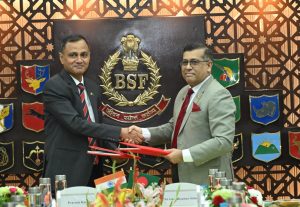
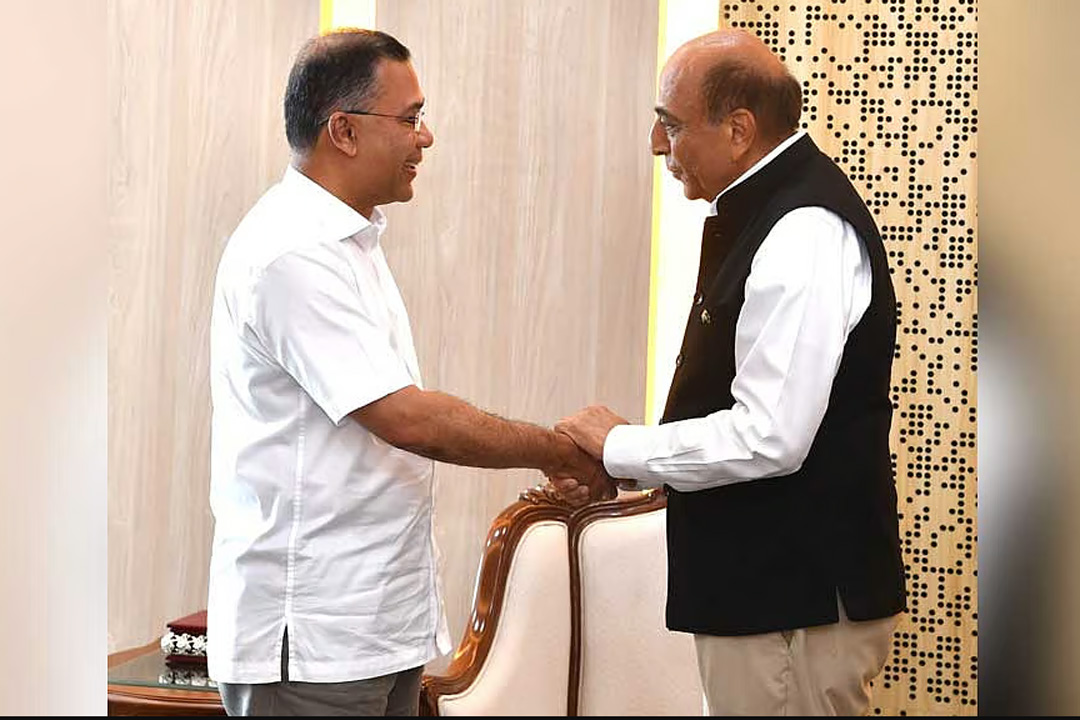
The Director Generals of Border Guard Bangladesh (BGB) and India’s Border Security Force (BSF) attended the 57th Director General-level Border Conference held in New Delhi.
- Counterfeit Currency and Gold Smuggling Across the Border:
In response to DG BSF’s concerns regarding cross-border smuggling of Fake Indian Currency Notes (FICN) and gold, DG BGB stated that the smuggling of FICN and gold adversely affects the economies of both countries. He informed that BGB and other relevant agencies have already deployed Fake Currency Detection Machines at Integrated Check Posts (ICPs) and other key locations across the country, and continue to take strict action against offenders involved in such crimes.
Both sides agreed to enhance mutual sharing of intelligence regarding criminal networks and to take effective coordinated action against cartels and syndicates involved in such transborder crimes.
- Separatists and Armed Terrorist Groups in the Hill Tracts Region:
The Director General of BGB expressed concern over the possible presence of separatists and Armed terrorist groups from the hill tracts region in Mizoram, India, and their alleged anti-Bangladesh activities. He sought India’s cooperation in taking necessary measures against such terrorist groups.
In response, the Director General of BSF stated that the Government of India follows a zero-tolerance policy towards all armed insurgent and terrorist groups, irrespective of nationality, and does not allow its territory to be used for such activities.
Both sides agreed to continue following a zero-tolerance policy towards terrorist groups, to prevent any such groups from establishing permanent camps in their respective territories, to enhance vigilance, and to take necessary action based on the exchange of credible and reliable information.
- Cooperation on Border Demarcation and Boundary Pillars:
DG BGB raised the issue of the construction of permanent border pillars in the Muhurir Char area, stating that the border demarcation had already been mutually agreed upon and finalised through joint surveys and inspections. He emphasised the need to replace the existing temporary markers with permanent border pillars at the earliest opportunity to avoid ambiguity and ensure effective border management.
DG BGB also highlighted the need for the construction and restoration of missing border pillars in other sectors, including Kushtia, and called for the early demarcation of remaining un-demarcated stretches of the international boundary, particularly in riverine areas. In this regard, he proposed enhanced cooperation between the respective land survey authorities of the two countries to address outstanding demarcation issues and strengthen border management. Both sides agreed that issues relating to border demarcation and boundary pillars should continue to be addressed through the appropriate bilateral mechanisms, including the Joint Boundary Conference and other designated forums. They also concurred that efforts to resolve outstanding demarcation-related matters, including in riverine and other sensitive areas, should be pursued in a phased and cooperative manner in accordance with existing bilateral understandings.
- Transboundary River Water Use and Embankment Protection:
DG BGB stated that under the 2022 Memorandum of Understanding between Bangladesh and India, both countries agreed to withdraw up to 153 cusecs of water each during the dry season from the common stretch of the Kushiyara River. He noted that delays in granting concurrence for the excavation of the intake channel (Rahimpur Khal) have affected Bangladesh’s rightful share of water from the river. He further stated that concerns remain regarding unilateral water withdrawal through multiple pumps, which require urgent resolution. He referred to prior technical-level engagements under the Joint Rivers Commission and visits by the Joint Monitoring Team, and stated that irrigation for approximately 5,000 hectares of land has been affected. He urged early concurrence for the completion of the remaining excavation works of Rahimpur Khal and called for addressing the issue of unauthorised water withdrawal. On riverbank protection works, DG BGB stated that several approved projects along the Kushiyara and Kulik rivers have been delayed due to objections, despite prior technical-level agreements. He also highlighted pending concurrence for 17 urgent riverbank protection projects across multiple border districts to prevent monsoon flooding and erosion, and urged timely cooperation for their implementation.
Both sides agreed that issues relating to water withdrawal from the Kushiyara River and associated infrastructure should be addressed through the established Joint Monitoring Team under the 6th September 2022 MoU. They also concurred that riverbank protection issues may be taken up at the Joint Rivers Commission (JRC) level, being the appropriate forum for such matters.
- Unauthorised Construction and Border Infrastructure Compliance:
DG BGB expressed concern over continued unauthorised construction of Security Related Fencing (SRF), cattle fencing, and other structures within 150 yards of the International Border despite previous assurances. He also raised concerns regarding the installation of electric poles, streetlights, CCTV cameras, and other infrastructure near the zero line, stating that such activities affect the agreed border management procedures. He noted instances of ongoing unauthorised constructions, including duty posts, metal roads, and concrete structures, and urged strict adherence to the Joint India-Bangladesh Guidelines for Border Authorities, 1975. In response, DG BSF stated that electric works are primarily for civic amenities for the Indian border population and are not directed towards Bangladesh territory. He further stated that surveillance-related equipment is installed to prevent transboundary crimes. Both sides agreed to instruct their respective field formations to refrain from undertaking any unauthorised construction within 150 yards of the International Border and to strictly adhere to existing norms and agreed protocols to maintain peace and stability along the border. Both sides acknowledged the importance of the Coordinated Border Management plan (CBMP) in dealing with issues related to border security. They agreed to enhance SCPs, especially during night hours in vulnerable patches. It was also agreed to review vulnerable areas from time to time (biannually) as the crime pattern keeps on changing.
- Concerns Over Media Reporting and Disinformation:
DG BGB expressed concern over the spread of false and fabricated news, rumours, and misinformation by certain print, electronic, and social media outlets regarding the internal affairs of Bangladesh and India, including religious narratives, political issues, and border-related matters. He stated that such disinformation campaigns could negatively impact Bangladesh–India relations and urged the BSF to engage with relevant agencies to curb the spread of such content. He also requested timely clarification of border-related incidents to prevent the development of misleading narratives. Both sides agreed to communicate with their respective competent authorities to advise print, electronic, and social media outlets to refrain from spreading propaganda or rumours regarding the internal affairs of either side. Both Director Generals reaffirmed their commitment to working jointly to maintain peace, stability, and security along the Bangladesh-India border.










Md.Shahidur Rahman Tepa
Publisher & Editor
Mrs. Naznin Sultana - Associate Editor
Dr. Sariful Hoque Priom - Assistant Editor
Head Office: Tepa Complex 169/A, SS Nazrul Islam Sarani, Purana Paltan, Dhaka-1000, News and Commercial Office: 48 Bijoy Nagar (3rd Floor) Dhaka-1000,
E-mail: monthlytruetone@gmail.com
Leave a Reply