

Farmer Card launched to empower rural economy, says Tarique Rahman on Pahela Baishakh
- Update Time : Tuesday, April 14, 2026
- 129 Time View

News Desk
Marking the vibrant occasion of Pahela Baishakh, Prime Minister and Bangladesh Nationalist Party (BNP) Chairman Tarique Rahman on April 14, formally inaugurated the nationwide ‘Farmer Card’ programme, an initiative aimed at making farmers self-reliant and financially solvent while strengthening the country’s agricultural backbone.
The launch took place at Shaheed Maruf Stadium in Tangail Sadar Upazila, where the Prime Minister joined a gathering of farmers, officials, and political leaders to unveil what he described as a transformative step toward ensuring sustainable rural development. The programme was simultaneously rolled out as a pre-pilot in 11 upazilas across 10 districts, signaling the government’s intent to scale it nationwide in phases.
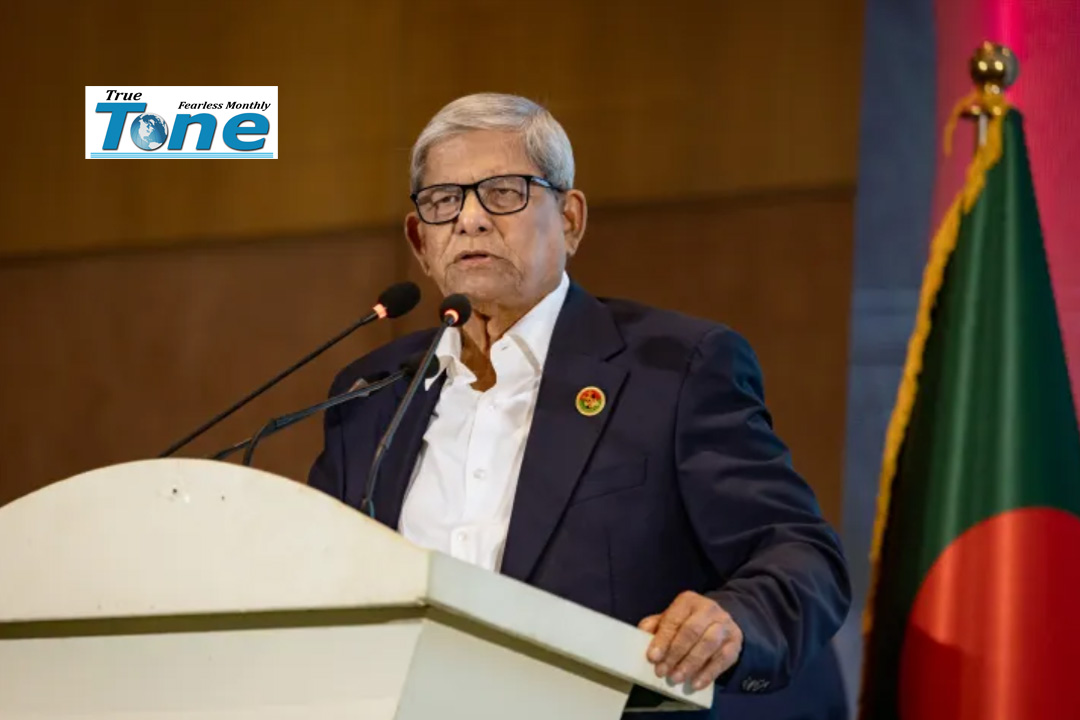
Speaking at the inauguration ceremony, Tarique Rahman emphasized that the primary goal of his administration is to empower farmers economically and socially. “The objective of the current elected government is to make farmers self-reliant and financially solvent. That is why we have introduced this ‘Farmer Card’,” he said.
In a symbolic gesture, the Prime Minister distributed the Farmer Card and saplings among 15 marginal farmers in Tangail. He also humorously encouraged them to share the fruits of their labor in the future, saying, “When these saplings grow and bear fruit, you should send some for me.”
The programme was officially activated nationwide when Tarique Rahman pressed a button on a laptop at approximately 12:22 pm, triggering the direct transfer of Tk 2,500 into the bank accounts of 22,065 farmers across the selected upazilas. In Tangail alone, 1,453 farmers received financial support under the scheme.
Officials said the Farmer Card will serve as a gateway to at least 10 essential services for farmers, ranging from financial assistance and subsidies to access to agricultural inputs and advisory support. “Through these benefits, farmers will be able to improve their livelihoods in multiple ways, InShaAllah,” Tarique Rahman noted.
Highlighting the central role of agriculture in Bangladesh’s socio-economic structure, the Prime Minister pointed out that nearly every family in the country has some connection to farming. “There are around four crore families in Bangladesh, and almost all are linked to agriculture in some way. This clearly shows that agriculture is the main occupation of our country,” he said.
Tarique Rahman reiterated his party’s longstanding belief that national prosperity is closely tied to the well-being of farmers. “If farmers are well-off, then Bangladesh will do well. If they survive and thrive, the entire nation will benefit,” he added.
The BNP chairman also outlined the government’s ambitious plan to gradually bring 2.75 crore farmers under the Farmer Card scheme over the next five years. The initiative, he said, is part of a broader strategy to modernize agriculture, enhance productivity, and ensure fair market access for farmers.
Drawing on historical precedents, Tarique Rahman referred to agricultural reforms undertaken during the tenure of Ziaur Rahman, highlighting canal excavation and irrigation expansion as key measures that significantly boosted agricultural output. “During that period, agricultural production doubled, and Bangladesh even managed to export food in small quantities,” he said.
He also acknowledged the contributions of Khaleda Zia, noting that successive BNP governments have consistently prioritized farmer welfare through various policy interventions.
Addressing broader development goals, Tarique Rahman stressed the importance of inclusivity, particularly the empowerment of women. He announced plans to introduce a separate ‘family card’ for women, especially female heads of households, as part of a pilot initiative that will also be expanded nationwide over time.
“Half of our population consists of women. Without their empowerment, national progress is not possible,” he said, adding that the government aims to extend financial and social protection benefits to women across Bangladesh.
Describing his administration as a “government of the people,” Tarique Rahman pledged to support all segments of society, including farmers, women, students, and religious leaders. “Our goal is to ensure development and change the fate of the people. That is why we say, ‘Korbo Kaj, Gorbo Desh, Sobar Aage Bangladesh’,” he stated.
He called upon citizens to work collectively toward building a prosperous and secure nation. “Every citizen dreams of a beautiful, safe country where children can grow with opportunities. We want to achieve that goal together,” he said.
Explaining the timing of the programme’s launch, Tarique Rahman noted the deep historical connection between Pahela Baishakh and agriculture. Traditionally linked to harvest cycles and trade practices, the Bengali New Year provides a meaningful backdrop for initiatives aimed at supporting farmers.
“Since Pahela Baishakh is closely tied to farmers, we chose this day to launch the Farmer Card programme,” he explained.
The Prime Minister also highlighted several ongoing and planned measures to address persistent challenges faced by farmers. These include the waiver of agricultural loans up to Tk 10,000, improved market access, and initiatives to ensure fair pricing for agricultural produce.
Particular attention, he said, will be given to regions where agriculture plays a dominant role in the local economy, including northern districts. The government plans to facilitate investment in agro-based industries, enabling farmers to add value to their products and access export markets.
“We will take steps so that farmers can receive better prices for their products and expand exports of agricultural goods,” Tarique Rahman said.
He further revealed that the government recently held discussions with stakeholders in the agriculture and agro-processing sectors to identify and resolve bottlenecks. “We listened to their problems and addressed many issues so they can invest more, create jobs, and purchase more produce from farmers,” he said.
Such efforts, he added, will not only benefit farmers but also contribute to earning valuable foreign currency for the country.
Despite these initiatives, Tarique Rahman acknowledged that significant challenges remain. He cited the example of Tangail’s famous pineapple production, which suffers from inadequate preservation and storage facilities.
“We produce a large quantity of pineapples, but due to the lack of cold storage and processing systems, we cannot preserve them beyond the season. This leads to losses for farmers,” he said.
He emphasized the need to develop modern cold storage infrastructure and food processing industries to minimize post-harvest losses and maximize farmers’ incomes. Similar issues, he noted, affect many other agricultural products across the country.
The inauguration ceremony was chaired by Fisheries, Livestock and Agriculture Minister Mohammed Aminur Rashid. Among others, Prime Minister’s Adviser Md Ruhul Kabir Rizvi, State Minister for Fisheries and Livestock Sultan Salauddin Tuku, Agricultural Secretary Dr Rafiqul I Mohamed, and Food and Agriculture Organization (FAO) Representative in Bangladesh Jiaoqun Shi addressed the event.
As Bangladesh celebrates the beginning of a new year, the launch of the Farmer Card programme underscores the government’s commitment to revitalizing the agricultural sector and ensuring inclusive economic growth.
With its focus on financial inclusion, service delivery, and long-term sustainability, the initiative is expected to play a pivotal role in transforming rural livelihoods and reinforcing agriculture as the cornerstone of the national economy.













Md.Shahidur Rahman Tepa
Publisher & Editor
Mrs. Naznin Sultana - Associate Editor
Dr. Sariful Hoque Priom - Assistant Editor
Head Office: Tepa Complex 169/A, SS Nazrul Islam Sarani, Purana Paltan, Dhaka-1000, News and Commercial Office: 48 Bijoy Nagar (3rd Floor) Dhaka-1000,
E-mail: monthlytruetone@gmail.com
Leave a Reply