

Trump’s Venezuela oil deal raises questions over sovereignty and US power
- Update Time : Saturday, August 29, 2026
- 6 Time View

Dr. Soriful Haque Priom
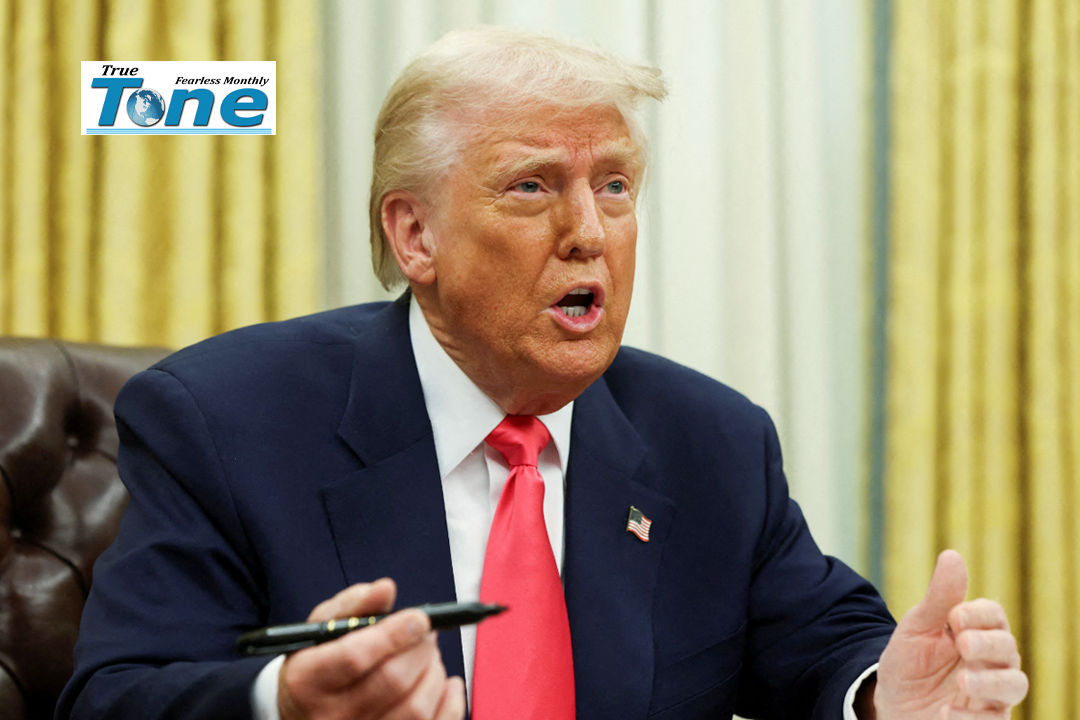
US President Donald Trump’s claim that a new agreement with Venezuela has effectively more than doubled America’s oil reserves marks a dramatic escalation in Washington’s involvement in the South American country’s energy sector. The agreement, which reportedly gives the United States majority control over Venezuelan oil resources with an estimated proven potential of 65 billion barrels, could reshape Venezuela’s economy while raising fundamental questions about sovereignty, ownership and the limits of US power.
Trump announced the agreement on August 28, describing it as the “biggest oil deal in world history” and insisting that it would come at no cost to American taxpayers. According to the president, Secretary of State Marco Rubio and Secretary of War Pete Hegseth worked with Venezuelan interim leader Delcy Rodriguez and private companies to establish what Trump characterized as “majority US control” over the country’s oil reserves.
Trump’s claim that the arrangement more than doubles US oil reserves, however, requires an important qualification. The United States already has roughly 46 billion barrels of proved crude oil and lease condensate reserves. If the 65 billion barrels associated with the Venezuelan fields were simply added to that figure, the combined volume would exceed 111 billion barrels. But Venezuelan oil would not technically become part of the United States’ domestic petroleum reserves merely because American companies or the US government exercised control over its development or sales.
That distinction is significant. The agreement appears to be less about physically transferring Venezuelan oil reserves to the United States and more about giving Washington substantial influence over how Venezuela’s enormous petroleum resources are developed, financed and marketed.
For the Trump administration, the economic argument is straightforward. Venezuela possesses some of the world’s largest petroleum resources, while the United States remains one of the world’s largest oil producers and consumers. Greater access to Venezuelan crude could create opportunities for American energy companies, expand investment and potentially increase global oil supplies.
Rubio has presented the arrangement as a major economic victory. He has argued that it could attract nearly $100 billion in private investment to Venezuela, create thousands of jobs and eventually contribute to lower gasoline prices in the United States. If implemented successfully, large-scale investment could also help rehabilitate Venezuela’s aging oil infrastructure, which has suffered from years of economic mismanagement, sanctions, underinvestment and declining production.
The Venezuelan government has also emphasized the potential economic benefits. Rodriguez confirmed the agreement and said it involves 17 strategic oil fields with a proven potential of approximately 65 billion barrels. She reportedly expects more than $100 billion in investment and more than $209 billion in tax revenue for Venezuela.
Yet the enormous financial figures involved obscure a much more complicated political reality.
The central question is not simply how much oil Venezuela possesses. It is who ultimately controls that oil and under what legal authority.
The agreement comes after an extraordinary transformation in the political relationship between Washington and Caracas. Following the January 3 US military operation that resulted in the capture of former Venezuelan President Nicolas Maduro and his transfer to the United States to face federal charges, Trump declared that Washington would effectively “run” Venezuela while supporting a political transition.
The subsequent expansion of American influence over Venezuelan oil sales and revenues has therefore generated concerns that the new arrangement could amount to long-term economic control imposed under extraordinary political circumstances.
Critics argue that control over strategic natural resources cannot legitimately be transferred by an interim government whose constitutional authority is itself disputed. Ricardo Hausmann, a former Venezuelan planning minister, has described the agreement as unconstitutional, arguing that Rodriguez lacks the authority to surrender long-term control over Venezuela’s oil resources.
Such criticism is particularly important because Venezuela’s oil industry is not merely an economic asset. Petroleum has historically been at the heart of the country’s national identity, public finances and political struggles. Any foreign power gaining extensive control over the industry is therefore likely to be interpreted not simply as an investment arrangement but as a fundamental shift in national sovereignty.
Former Venezuelan vice president and longtime Chavista figure Elias Jaua has gone even further, accusing Washington of using the country’s political crisis to take control of its natural resources.
There is also a broader geopolitical dimension. Venezuela’s oil wealth has long attracted competition among major powers, including the United States, China and Russia. Greater American control over Venezuelan energy could reduce the influence of Washington’s geopolitical rivals while giving the United States a stronger position in the Western Hemisphere’s energy market.
For Trump, the deal also fits neatly into his broader “America First” economic strategy. Rather than viewing Venezuela’s oil primarily as a domestic Venezuelan resource, his administration appears to see it as an opportunity to strengthen American energy security, investment and geopolitical influence simultaneously.
But whether the agreement actually produces those benefits remains uncertain. Venezuela’s oil reserves are vast, yet reserves alone do not guarantee rapid production. Much of the country’s crude is heavy and requires substantial investment, specialized infrastructure and technical expertise. Years of deterioration in Venezuela’s oil industry mean that restoring production capacity could require enormous capital and considerable time.
The political legitimacy of the arrangement could prove equally important. If a future Venezuelan government rejects the agreement, disputes over contracts, development rights and control of revenues could become a major source of political and legal conflict.
Ultimately, Trump’s announcement represents more than an oil transaction. It signals a potentially historic expansion of US influence over Venezuela’s most valuable strategic resource.
The United States may gain greater access to Venezuelan crude and American companies may receive significant commercial opportunities. Venezuela, meanwhile, could receive desperately needed investment and tax revenues. But the price of such cooperation could be a profound reduction in Caracas’s ability to independently determine the future of its oil industry.
That is why the most consequential question surrounding the deal is not whether it can add billions of barrels to America’s economic sphere of influence. It is whether Venezuela’s oil wealth can be developed through a legitimate partnership—or whether the arrangement will ultimately be remembered as a transfer of control over one of the world’s greatest natural-resource reserves.








Md.Shahidur Rahman Tepa
Publisher & Editor
Mrs. Naznin Sultana - Associate Editor
Dr. Sariful Hoque Priom - Assistant Editor
Head Office: Tepa Complex 169/A, SS Nazrul Islam Sarani, Purana Paltan, Dhaka-1000, News and Commercial Office: 48 Bijoy Nagar (3rd Floor) Dhaka-1000,
E-mail: monthlytruetone@gmail.com
Leave a Reply