

India’s Independence Day vision: Self-reliance, energy security and global ambition
- Update Time : Tuesday, August 18, 2026
- 18 Time View
Tajul Islam
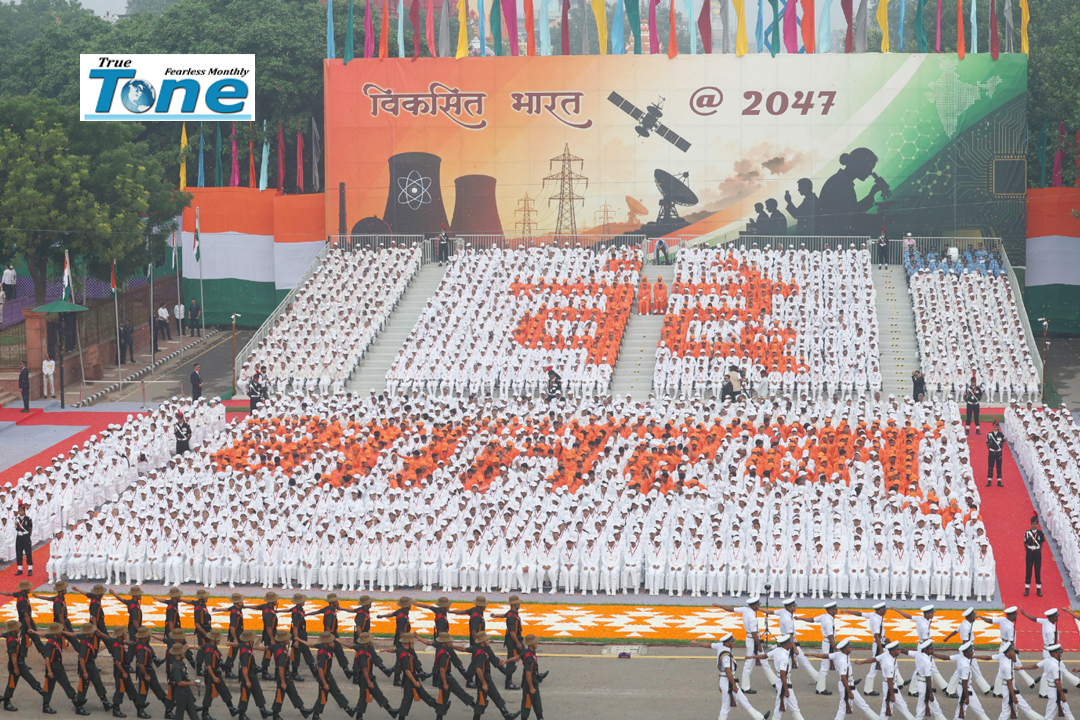
Indian Prime Minister Narendra Modi used the country’s 80th Independence Day to present a broad vision of India’s transformation into a developed, self-reliant and globally influential power by 2047. Addressing the nation after hoisting the national flag at the historic Red Fort in New Delhi, Modi highlighted India’s economic progress over the past decade while outlining the strategic priorities that he believes will shape the country’s next phase of growth.
The prime minister portrayed India’s development as a journey from economic vulnerability to greater confidence and resilience. He recalled that India was once grouped among the “Fragile Five” emerging economies in 2013, alongside Türkiye, Brazil, South Africa and Indonesia. Those economies were seen as particularly vulnerable because of their dependence on foreign capital and persistent current-account pressures. Modi contrasted that period with what he described as India’s emergence as a $4.15 trillion major economy with strong growth prospects and increasing international influence.
“Our country is not going to move forward with small dreams,” Modi declared, emphasizing that India’s progress would depend on the scale of its ambitions, national resolve and technological capabilities.
A major theme of Modi’s address was the transformation of India’s productive capacity. He pointed to significant increases in defense production, electronic manufacturing and digital transactions as evidence that the country is moving toward a more technology-driven and domestically oriented economy.
According to Modi, defense production has increased fourfold during the past 12 years, while electronic manufacturing has expanded sevenfold. Digital transactions, meanwhile, have increased approximately 100 times, reflecting the rapid adoption of digital infrastructure across Indian society and the economy.
The prime minister also highlighted the progress of the “Make in India” initiative, which seeks to strengthen domestic manufacturing and reduce reliance on imported goods. Semiconductor production received particular attention. India has established three chip plants and plans to add eight more, reflecting New Delhi’s ambition to participate in one of the most strategically important industries of the 21st century.
Semiconductors are increasingly essential to artificial intelligence, telecommunications, automobiles, defense systems and data centers. As global competition intensifies over chip manufacturing and supply chains, India sees semiconductor production as both an economic opportunity and a matter of national security.
However, expanding manufacturing and digital infrastructure creates another strategic challenge: energy.
Modi acknowledged that India’s economic ambitions will require enormous quantities of electricity. The country’s expanding industrial base, data centers, digital economy and technology sector will all increase demand for reliable and affordable energy.
Nuclear power is therefore becoming an increasingly important component of India’s long-term energy strategy. Modi reiterated the target of achieving 100 gigawatts of nuclear generating capacity by 2047, a substantial increase from the country’s present capacity.
India currently operates 24 nuclear reactors across seven sites, with total installed capacity of approximately 8.78 gigawatts. Several additional reactors are under construction or at various stages of development.
The Kudankulam nuclear power project, built with Russian cooperation, remains particularly significant. The facility is designed for six VVER-1000 reactors, representing a planned total capacity of 6,000 megawatts. Units 1 and 2 have already been connected to the national grid, while the remaining units are at different stages of implementation.
India is also seeking to expand the role of private capital in its nuclear sector. The SHANTI Act, passed in December 2025, is intended to modernize the country’s nuclear framework and create greater opportunities for private-sector participation.
At the same time, Modi emphasized the importance of domestic oil and gas exploration, particularly offshore exploration. India remains heavily dependent on imported energy, making its economy vulnerable to international price fluctuations, geopolitical conflicts and disruptions to global supply chains.
Energy security, therefore, is becoming inseparable from India’s broader objective of strategic autonomy.
The concept of self-reliance occupied a central position in Modi’s speech. He argued that India must strengthen its own capabilities rather than remain excessively dependent on other countries for critical technologies, energy, defense equipment or industrial inputs.
“It is our conviction that India must not be dependent on other countries. We must become self-reliant,” Modi said.
This approach does not necessarily imply economic isolation. Instead, India’s strategy increasingly combines domestic capacity-building with international partnerships. New Delhi continues to engage major global powers while seeking greater control over strategically important sectors at home.
Modi identified seven broad areas as particularly important to India’s development by 2047: manufacturing; agriculture and food production; technology and innovation; connectivity, including high-speed rail; defense production; the green and blue economies; and the expansion of India’s soft power.
Green hydrogen, renewable energy and energy storage are expected to play increasingly important roles in the country’s transition toward a cleaner energy system. Meanwhile, India’s maritime or “blue” economy could become increasingly significant as New Delhi seeks to exploit its vast coastline and strengthen its position in the Indian Ocean.
Soft power represents another dimension of India’s global ambitions. Modi specifically cited yoga as an example of an Indian cultural contribution that has acquired worldwide recognition.
Modi also placed India’s young population at the center of the country’s development strategy. He described young Indians as the biggest beneficiaries of economic progress and emphasized the importance of expanding educational opportunities.
The government plans to establish free online coaching networks for students preparing for competitive examinations. The initiative comes after recent student unrest and wider concerns about access to education and employment opportunities.
For India to sustain rapid economic growth, the country will need not only physical infrastructure and industrial capacity but also a highly skilled workforce capable of competing in advanced technologies. Artificial intelligence, semiconductor manufacturing, biotechnology, clean energy and advanced manufacturing will require millions of workers with specialized skills.
India’s demographic advantage could therefore become either a major economic asset or a serious challenge, depending on the country’s ability to create productive employment and educational opportunities for its expanding workforce.
Independence Day also provided an opportunity for India to emphasize its international partnerships. Celebrations took place across the country and at Indian diplomatic missions around the world.
In Moscow, Indian Ambassador Vinay Kumar hoisted the tricolor at the Indian Embassy as the national anthem was played. Indian and Russian motorcyclists also participated in a symbolic ride through the Russian capital, highlighting the longstanding relationship between the two countries.
Russian President Vladimir Putin congratulated India on its Independence Day and reaffirmed the importance of what Moscow and New Delhi describe as their “special and privileged strategic partnership.”
Russian Ambassador to India Denis Alipov likewise emphasized that Moscow’s support for New Delhi would continue. His message reflected Russia’s determination to preserve its longstanding relationship with India despite growing Western pressure on New Delhi to reduce its engagement with Moscow.
The relationship remains particularly important in defense and energy. Russia has historically been one of India’s principal defense suppliers, while bilateral energy trade has expanded substantially since 2023, particularly through Indian purchases of Russian crude oil.
India’s relationship with Russia also illustrates the independent character of New Delhi’s foreign policy. India has maintained close strategic relations with the United States and other Western countries while simultaneously preserving extensive cooperation with Moscow. Rather than choosing one geopolitical camp, New Delhi has generally sought to maximize strategic flexibility and protect its national interests.
The two countries have set an ambitious target of reaching $100 billion in bilateral trade by 2030, according to the strategic cooperation program adopted by their leaders in December 2025.
Modi’s Independence Day message ultimately connected India’s present achievements with a much larger national objective: becoming a developed country by the centenary of independence in 2047.
That goal will require sustained economic expansion, technological advancement, energy security, industrial modernization and human-capital development. It will also require India to navigate an increasingly competitive international environment while preserving its strategic autonomy.
The prime minister’s emphasis on self-reliance suggests that New Delhi sees domestic capacity as the foundation of future national power. At the same time, India’s growing partnerships with Russia, the United States, Europe, the Middle East and other regions demonstrate that self-reliance does not mean disengagement from the global economy.
India’s next phase of development will therefore be defined by a delicate balance: becoming more capable at home while remaining deeply connected abroad.
As the country marks eight decades of independence, Modi’s message is that India must think beyond incremental progress. The ambition is to build an economy capable of competing in advanced technologies, an energy system capable of supporting rapid industrialization, a defense sector capable of meeting more domestic requirements, and a diplomatic strategy capable of preserving India’s freedom of action.
The journey toward 2047 remains long and challenging. But the government’s stated priorities make clear that India increasingly sees economic strength, technological capability, energy security and strategic autonomy as interconnected pillars of its rise as a major global power.



Md.Shahidur Rahman Tepa
Publisher & Editor
Mrs. Naznin Sultana - Associate Editor
Dr. Sariful Hoque Priom - Assistant Editor
Head Office: Tepa Complex 169/A, SS Nazrul Islam Sarani, Purana Paltan, Dhaka-1000, News and Commercial Office: 48 Bijoy Nagar (3rd Floor) Dhaka-1000,
E-mail: monthlytruetone@gmail.com
Leave a Reply