

Bangladesh’s US tariff advantage presents opportunity, but structural reforms remain critical
- Update Time : Thursday, August 6, 2026
- 44 Time View
Tajul Islam
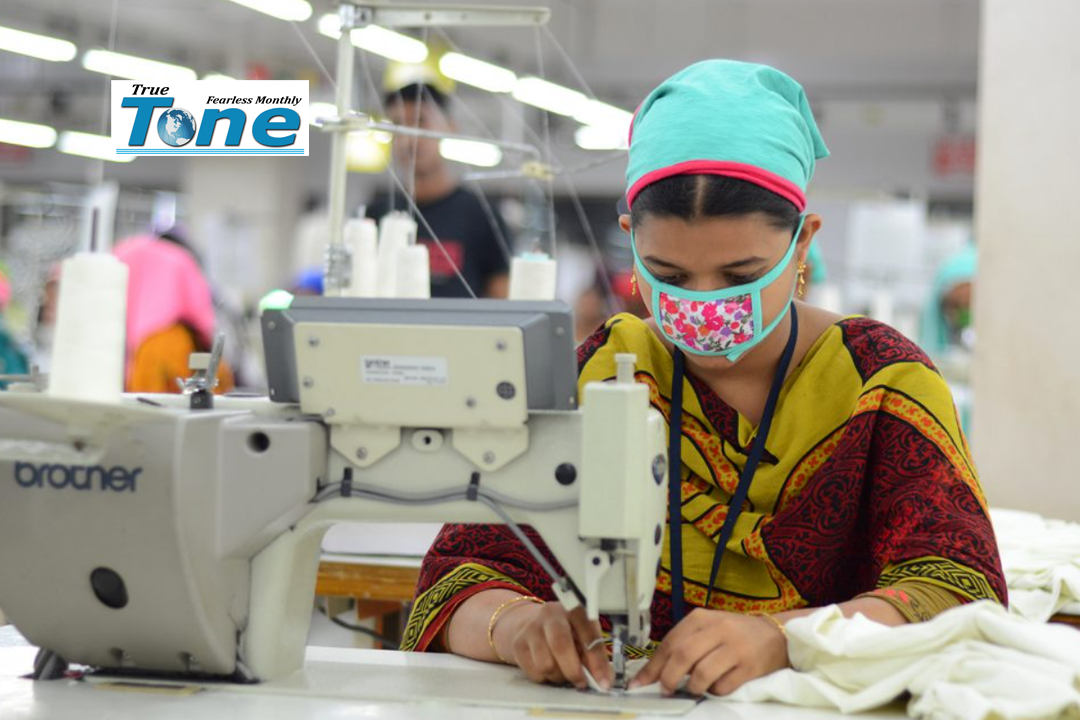
Bangladesh’s readymade garment (RMG) sector has received an unexpected boost from the latest changes in the United States’ trade policy, creating a rare competitive advantage over two of its principal rivals-China and Vietnam-in the country’s largest export destination. While the revised tariff structure offers scope for Bangladesh to expand its presence in the US apparel market, industry experts caution that sustaining this advantage will depend less on tariff differentials and more on the country’s ability to address structural weaknesses, diversify its product base and improve supply chain competitiveness.
The opportunity emerged following the implementation of the United States’ revised trade framework linked to forced labour compliance on July 24, 2026. Under the new regime, Bangladeshi apparel exports are subject to an effective tariff rate of approximately 25.6 per cent, compared with 28.1 per cent for Vietnam and 35.6 per cent for China. The differential reflects Washington’s growing emphasis on supply chain transparency and compliance with labour-related regulations, particularly under the Uyghur Forced Labour Prevention Act (UFLPA).
For an export-oriented economy such as Bangladesh, where the RMG industry accounts for more than four-fifths of merchandise export earnings, even a modest tariff advantage can significantly influence sourcing decisions by international apparel brands. In an environment of subdued consumer demand and compressed retail margins, buyers are increasingly seeking suppliers capable of offering competitive landed costs while ensuring compliance with evolving regulatory requirements.
Recent trade data indicate that Bangladesh has maintained relative resilience despite a slowdown in the US apparel market. The country exported garments worth approximately US$8.2 billion to the United States in 2025, registering an annual growth of 11.71 per cent and increasing its market share to 10.53 per cent. During the first five months of 2026, however, shipments declined by 8.8 per cent, reflecting weaker overall demand in the American retail market.
The decline, nevertheless, compares favourably with the performance of several competing exporters. Chinese apparel shipments to the United States contracted by 43 per cent over the same period, while exports from India and Pakistan fell by 26 per cent and 12 per cent respectively. Vietnam managed to maintain marginal growth, whereas Cambodia and Indonesia recorded export expansions of around 15 per cent and 5.5 per cent, highlighting the increasingly competitive landscape within Asia’s garment manufacturing industry.
The latest tariff revisions are likely to accelerate the diversification of global sourcing strategies already underway. International apparel retailers have been seeking to reduce dependence on a limited number of manufacturing destinations in response to geopolitical uncertainties, trade policy shifts and supply chain disruptions experienced in recent years. Bangladesh’s relatively favourable tariff treatment could therefore encourage global brands to redirect part of their sourcing portfolios towards the country.
However, favourable tariff treatment alone is unlikely to secure long-term gains.
One of Bangladesh’s principal challenges remains its heavy dependence on cotton-based apparel. Nearly two-thirds of the country’s garment exports consist of traditional cotton products, whereas the composition of demand in the US market has shifted substantially towards man-made fiber (MMF) garments. Industry estimates indicate that synthetic and MMF products accounted for approximately 57 per cent of total US apparel imports in 2025.
This structural mismatch places Bangladesh at a competitive disadvantage despite the current tariff differential. Vietnam has invested extensively in synthetic fibre production and technical textile manufacturing over the past decade, enabling it to respond more effectively to changing consumer preferences for sportswear, activewear and performance apparel. Cambodia and Indonesia have similarly expanded their presence in value-added synthetic garment segments, contributing to their recent export growth.
Consequently, Bangladesh’s ability to translate tariff advantages into sustained market share gains will depend on accelerating investment in MMF production, synthetic yarn spinning, fabric manufacturing and technical textile processing. Diversification into higher-value product categories has become increasingly important as global apparel demand evolves beyond conventional cotton garments.
Equally important is strengthening compliance across the entire supply chain. International buyers now evaluate sourcing destinations on a broader set of criteria that extends well beyond manufacturing costs. Environmental sustainability, labour standards, carbon footprint, digital traceability and responsible sourcing have become central considerations in procurement decisions.
Bangladesh has made notable progress in workplace safety and factory modernization over the past decade. The country now hosts one of the world’s largest concentrations of internationally certified green garment factories. Nevertheless, compliance requirements continue to evolve. Meeting the traceability requirements associated with the UFLPA and other emerging regulations will require wider adoption of digital systems capable of verifying the origin of raw materials throughout the production process.
Industry representatives have also highlighted the importance of addressing domestic supply-side constraints. Persistent energy shortages, congestion at Chittagong Port, customs delays and weaknesses in transport infrastructure continue to increase production costs and extend lead times. These operational inefficiencies reduce Bangladesh’s competitiveness at a time when international buyers increasingly demand shorter production cycles and faster delivery schedules.
Trade diplomacy represents another area requiring greater policy attention. Industry leaders have proposed pursuing a Tariff Rate Quota (TRQ) arrangement with the United States, particularly for apparel manufactured using US-grown cotton. Such an arrangement could lower effective duties on qualifying exports while strengthening bilateral commercial relations. Although negotiations of this nature are often complex and lengthy, they could complement Bangladesh’s broader strategy of preserving competitiveness in its largest export market.
According to Mohiuddin Rubel, Founder and Chief Executive Officer of Bangladesh Apparel Voice and former director of the BGMEA, the revised tariff structure offers a significant opportunity for Bangladesh to attract additional sourcing orders from global brands. However, he argues that tariff competitiveness should be viewed as only one element of a broader industrial strategy. Long-term success, he notes, will depend on supply chain reliability, environmental compliance, labour standards, product diversification and continuous improvements in manufacturing efficiency.
His assessment reflects a wider reality confronting Bangladesh’s export sector. International competitiveness can no longer be sustained solely through relatively low labour costs or temporary tariff advantages. The next phase of growth will increasingly depend on productivity, innovation, logistics efficiency and value addition.
The country’s forthcoming graduation from the Least Developed Country (LDC) category further reinforces the urgency of undertaking these reforms. As Bangladesh gradually loses preferential market access in several export destinations, improving industrial competitiveness through structural transformation will become increasingly important.
The current tariff differential in the United States should therefore be regarded as a strategic window rather than a permanent advantage. It provides Bangladesh with an opportunity to strengthen its position in the world’s largest apparel market while competitors adjust to changing trade dynamics. Whether the country succeeds in translating this temporary policy advantage into durable export growth will largely depend on the pace of reforms undertaken by both the public and private sectors.
For Bangladesh’s apparel industry, the immediate challenge is not merely to attract additional export orders but to build the capabilities necessary to retain them. Investment in man-made fibers, improvements in logistics and trade facilitation, stronger supply chain traceability and proactive trade engagement with the United States will ultimately determine whether the present tariff advantage evolves into a lasting competitive edge.
Tajul Islam, senior journalist and writes on a broad-range of issues in local and international media.












Md.Shahidur Rahman Tepa
Publisher & Editor
Mrs. Naznin Sultana - Associate Editor
Dr. Sariful Hoque Priom - Assistant Editor
Head Office: Tepa Complex 169/A, SS Nazrul Islam Sarani, Purana Paltan, Dhaka-1000, News and Commercial Office: 48 Bijoy Nagar (3rd Floor) Dhaka-1000,
E-mail: monthlytruetone@gmail.com
Leave a Reply