

Pakistan nominates Trump for Nobel Peace Prize after India-Pakistan conflict mediation
- Update Time : Monday, June 23, 2025
- 6 Time View
Editorial Team
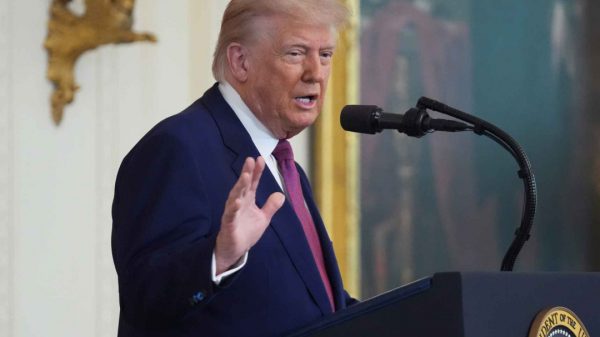
In a move that has startled observers across the diplomatic spectrum, Pakistan has announced its intention to nominate US President Donald Trump for the Nobel Peace Prize. Islamabad credited Trump with “strategic foresight and stellar statesmanship” in de-escalating a brief but dangerous military confrontation with India in May, reigniting debates about Trump’s controversial legacy on the world stage.
The unexpected declaration, posted via Pakistan’s Ministry of Foreign Affairs on social media platform X (formerly Twitter), came in response to Trump’s frequent assertions that he helped avert a nuclear war between India and Pakistan during a tense four-day standoff. “President Trump demonstrated great strategic foresight and stellar statesmanship through robust diplomatic engagement with both Islamabad and New Delhi,” the statement read. “This intervention stands as a testament to his role as a genuine peacemaker and his commitment to conflict resolution through dialogue.”
While Washington and New Delhi have not officially commented on the nomination, Indian officials have rejected Trump’s role as a mediator, insisting that the de-escalation was the result of direct, bilateral military-level engagement. “India does not and will never accept mediation,” Prime Minister Narendra Modi reportedly told Trump during a phone call after a cancelled G7 meeting in Canada.
The conflict in question, though short-lived, raised alarms around the world. Both India and Pakistan are nuclear-armed rivals with a volatile history over the disputed Kashmir region. Skirmishes and artillery exchanges have occurred frequently along the Line of Control, but May’s confrontation saw a sudden uptick in hostilities that risked spiraling into full-scale war.
Trump, then in his post-presidency but still a major political figure, reportedly initiated backchannel communications with both sides. Though the full extent of his involvement remains unclear, Pakistan insists it was his intervention that halted the escalation.
The Nobel Peace Prize, awarded annually by a Norwegian committee, is open to nominations from heads of state and members of national assemblies. While Trump has previously claimed he was nominated for the award for his role in the Abraham Accords-normalization agreements between Israel and several Muslim-majority nations-this marks the first formal attempt by a foreign government to put his name forward for his role in South Asia.
In a typically brash social media post on June 20, Trump listed a series of international crises he claims to have resolved: “I stopped wars between North and South Korea, Serbia and Kosovo, and India and Pakistan. I did the Abraham Accords. But no Nobel Peace Prize-doesn’t matter what I do.”
Analysts say Pakistan’s surprising endorsement of Trump is not simply a reflection of gratitude. Some view it as a calculated geopolitical play to curry favor with a possible future US president who may soon return to the White House. Trump is currently the Republican frontrunner for the 2024 US election and has maintained a substantial domestic base of support despite ongoing legal battles.
Mushahid Hussain, a senior Pakistani senator and former chair of the Senate Defence Committee, openly backed the nomination. “Trump is good for Pakistan,” he said. “If this panders to Trump’s ego, so be it. All the European leaders have been sucking up to him big time.”
The timing of the announcement was also significant. Just days before, Pakistan’s army chief, Field Marshal Asim Munir, had lunch with Trump in Washington-marking the first time a Pakistani military leader was invited to the White House while a civilian government remained in power in Islamabad. This unusual diplomatic gesture may signal a strategic recalibration of relations between the two nations.
There is also speculation that Pakistan hopes to dissuade Trump from aligning with Israel in any future strike against Iran’s nuclear facilities. Islamabad has condemned recent Israeli military actions and called for restraint in the region. By positioning Trump as a peace broker, Pakistan may be attempting to encourage diplomatic rather than military solutions to future Middle East conflicts.
Despite the government’s praise for Trump, the move has not been universally welcomed within Pakistan. Critics have pointed to his staunch support for Israel, especially in the context of the ongoing war in Gaza and repeated Israeli strikes on Iran-linked facilities.
“Israel’s sugar daddy in Gaza and cheerleader of its attacks on Iran isn’t a candidate for any prize,” said Talat Hussain, a prominent Pakistani journalist, in a post on X. “And what if he starts to kiss Modi on both cheeks again after a few months?”
This sentiment reflects a deep unease among many Pakistanis who view Trump as a destabilizing figure whose foreign policy often favored unpredictability over consistency. His warm relationship with Modi during his presidency raised concerns in Islamabad about the long-standing US tilt toward India as a counterbalance to China.
Indeed, Trump’s statements about mediating Kashmir were greeted enthusiastically in Pakistan but triggered sharp rebukes from India, which has always opposed international involvement in what it deems a strictly bilateral issue.
Trump’s fascination with the Nobel Peace Prize is well-documented. During his presidency, he frequently complained that he had not been recognized despite his perceived diplomatic triumphs. While he has been nominated several times by individual lawmakers and organizations, he has yet to be shortlisted by the Norwegian Nobel Committee.
Unlike his predecessors Barack Obama-who won the award in 2009-and Jimmy Carter, Trump’s legacy remains mired in deep polarization both at home and abroad. While some praise his willingness to engage with authoritarian regimes and pursue unconventional peace initiatives, others argue his erratic style and disregard for institutional norms disqualify him from such prestigious honors.
Pakistan’s decision to nominate Donald Trump for the Nobel Peace Prize adds yet another unexpected chapter to the US president’s controversial foreign policy legacy. While Islamabad sees a strategic benefit in applauding Trump’s role as a peacemaker, the move has exposed deep divisions-both within Pakistan and internationally-about what qualifies someone for the world’s most renowned peace award.
As Trump continues to seek validation for his past and potentially future actions, the Nobel Committee will now be forced to grapple with a candidacy that is as politically charged as it is diplomatically unusual.



Md.Shahidur Rahman Tepa
Publisher & Editor
Mrs. Naznin Sultana - Associate Editor
Dr. Sariful Hoque Priom - Assistant Editor
Head Office: Tepa Complex 169/A, SS Nazrul Islam Sarani, Purana Paltan, Dhaka-1000, News and Commercial Office: 48 Bijoy Nagar (3rd Floor) Dhaka-1000,
E-mail: monthlytruetone@gmail.com
Leave a Reply