

Rising tensions in the Strait of Hormuz as US and Iran edge toward renewed confrontation
- Update Time : Monday, April 13, 2026
- 153 Time View

Editorial Desk
Global tensions have escalated sharply following a dramatic move by Donald Trump, who ordered the United States Navy to begin preparations for a blockade of the strategically vital Strait of Hormuz. The decision comes after diplomatic negotiations between Washington and Tehran collapsed in Pakistan, raising fears of a renewed and potentially wider conflict in the already volatile Middle East.
The Strait of Hormuz, a narrow waterway linking the Persian Gulf with the Arabian Sea, is one of the world’s most critical maritime routes. A significant portion of global oil and gas supplies passes through this chokepoint, making any disruption a matter of international concern. The latest developments have therefore sent shockwaves through global markets and heightened anxiety among nations dependent on energy imports.
In a strongly worded statement posted on his social media platform, Trump declared that the US Navy would begin blocking all vessels attempting to enter or exit the strait. He emphasized that the move was intended to prevent Iran from profiting from what he described as unlawful control over international waters. According to Trump, the ultimate goal of the operation is to clear the strait of naval mines and restore safe passage for commercial shipping. However, his rhetoric suggested a willingness to use force if necessary, further intensifying the already strained situation.
Iran responded swiftly and defiantly. The country’s powerful military wing, the Islamic Revolutionary Guard Corps (IRGC), warned that it maintains full control over traffic in the waterway and would respond decisively to any attempt by foreign forces to challenge its authority. Iranian officials framed the US move as an act of aggression and a violation of international norms, signaling that Tehran has no intention of backing down under pressure.
Prominent Iranian political figure Mohammad Bagher Ghalibaf, who had been involved in the recent talks in Pakistan, reiterated upon his return to Tehran that Iran would not yield to threats from Washington. He stressed that his country remains committed to defending its sovereignty and maintaining its strategic interests in the region.
Reports suggest that Iran has already been restricting passage through the strait, allowing only vessels from friendly nations, including China, to transit freely. There are also unconfirmed claims that Tehran has considered imposing tolls on ships using the route, a move that Trump has condemned as “world extortion.” In response, he has instructed the US Navy to intercept any vessels that have paid such fees, further complicating the already tense maritime environment.
The US military has claimed that its naval forces have begun operations to ensure the strait remains a safe corridor for shipping, including efforts to locate and remove mines allegedly placed by Iranian forces. However, Tehran has denied these claims, accusing Washington of spreading misinformation to justify its actions.
The breakdown of negotiations marks a significant setback for diplomatic efforts to resolve the ongoing dispute over Iran’s nuclear program. The talks, which were the highest-level engagement between the two countries since the Iranian Revolution, failed to produce an agreement. US officials reportedly pushed for Iran to abandon key elements of its nuclear ambitions, including its enrichment of uranium, while also seeking a share in the economic benefits of the Strait of Hormuz-demands that Iranian negotiators found unacceptable.
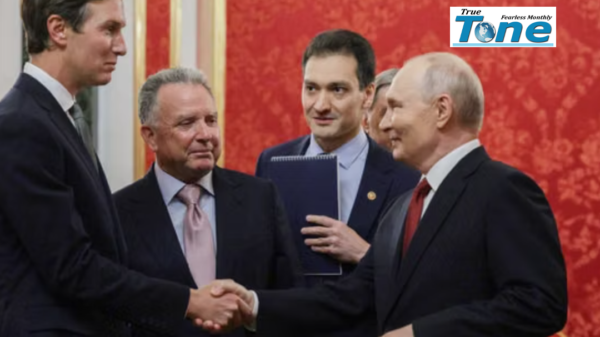
Vice President JD Vance, along with senior envoys including Steve Witkoff and Jared Kushner, led the US delegation. Following the collapse of the talks, Vance described Washington’s proposal as its “final and best offer,” warning that the United States would reassess its approach if Iran refused to comply. Tehran, however, argued that the US demands were excessive and undermined trust, making a compromise impossible under current conditions.
Experts warn that a US-led blockade of the strait would represent a major escalation, potentially amounting to an act of war. Analysts note that such a move could disrupt global energy supplies, drive up oil prices, and trigger broader regional instability. The situation is particularly concerning given the fragile ceasefire that has been holding after weeks of hostilities.
Regional actors are also watching developments closely. Pakistan, which hosted the recent talks, has urged both sides to maintain restraint and continue diplomatic efforts. Meanwhile, ongoing tensions involving Israel and Lebanon have added another layer of complexity to the crisis. Israeli military actions in Lebanon have raised concerns that the conflict could expand further, especially given Iran’s support for groups in the region.
Israeli Prime Minister Benjamin Netanyahu has indicated that while certain threats have been neutralized, military operations continue. This suggests that even as diplomatic efforts falter elsewhere, tensions on multiple fronts remain high.
For civilians across the region, the uncertainty is deeply unsettling. Residents in cities like Abu Dhabi and Beirut have expressed fear about the possibility of renewed violence and its impact on daily life. Many worry not only about immediate security risks but also about the broader economic consequences, particularly if energy markets are disrupted.
As the situation unfolds, the international community faces mounting pressure to intervene diplomatically and prevent further escalation. The stakes are high, with the potential for widespread economic and humanitarian consequences if the conflict spirals out of control. Whether through renewed negotiations or third-party mediation, efforts to de-escalate tensions will be critical in the days ahead.
In the meantime, the Strait of Hormuz remains at the center of a geopolitical standoff that could shape the future of global energy security and regional stability.











Md.Shahidur Rahman Tepa
Publisher & Editor
Mrs. Naznin Sultana - Associate Editor
Dr. Sariful Hoque Priom - Assistant Editor
Head Office: Tepa Complex 169/A, SS Nazrul Islam Sarani, Purana Paltan, Dhaka-1000, News and Commercial Office: 48 Bijoy Nagar (3rd Floor) Dhaka-1000,
E-mail: monthlytruetone@gmail.com
Leave a Reply