

Khalilur Rahman pledges to restore trust and push UN reform as General Assembly President
- Update Time : Wednesday, September 9, 2026
- 41 Time View
Dr Shoriful Hoque Priom
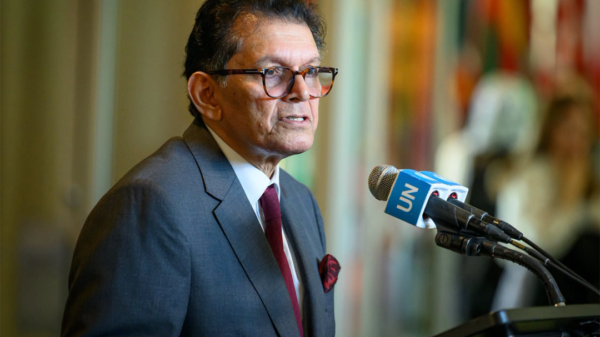
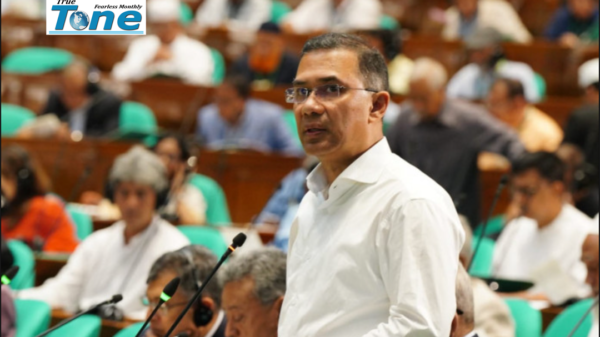
Newly sworn-in United Nations General Assembly President Dr Khalilur Rahman has pledged to make dialogue, cooperation and meaningful reform the central priorities of his one-year tenure, as the multilateral system confronts mounting geopolitical tensions and a deepening global trust deficit.
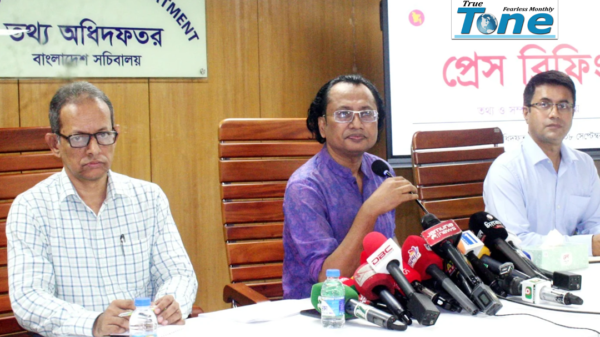
Rahman, Bangladesh’s Foreign Minister, made the commitment on September 9 at a media briefing at UN Headquarters in New York, shortly before formally assuming the presidency of the 81st session of the UN General Assembly.
He said the international community was facing an unusually difficult period for multilateralism, with disputes among countries becoming increasingly complex and confidence in international institutions coming under pressure.
“UN multilateralism as a whole is being tested in ways we have never seen before,” Rahman said, stressing that his presidency would place a “high premium on cooperation and dialogue” as countries seek to address global challenges and take advantage of emerging opportunities.
The new General Assembly president acknowledged that some international disputes may not be resolved quickly. However, he argued that the inability to settle major disagreements immediately should not prevent countries from identifying areas where cooperation remains possible.
“Many disputes cannot be resolved quickly, but that should not retard us from seeking common grounds wherever we can,” he said, pledging to continue pursuing opportunities for consensus throughout his presidency.
Rahman said his approach would remain firmly rooted in the UN Charter and the mandates given to the organisation by its member states. He emphasised that global problems, including conflicts and development challenges, could be addressed more effectively when countries prioritise dialogue, diplomacy and collective action over confrontation.
UN reform at the centre of presidency
Meaningful reform of the United Nations will be another major priority during Rahman’s tenure.
The Bangladeshi diplomat said the organisation must undergo deeper reform to rebuild public confidence and ensure that it is equipped to respond not only to present-day challenges but also to those likely to emerge in the future.
“We have a situation where trust is in deficit and the organisation must undertake deeper reform in order to make it fit for future, not only today, for tomorrow,” he said.
Rahman noted that the global landscape has changed dramatically since the UN was established in 1945. The institution, he argued, must evolve alongside those changes if it is to remain effective and relevant.
“The world has moved on. The organisation must move on, and I’ll help that process,” he said.
He also pledged to support the reform initiatives of UN Secretary-General António Guterres and work with member states to strengthen the organisation’s ability to deliver on its core responsibilities.
Rahman said reform should not be viewed simply as an institutional exercise. Instead, it should help restore confidence among people around the world that the United Nations remains capable of addressing major international challenges.
Greater space for voices beyond governments
Another focus of Rahman’s presidency will be increasing engagement with groups outside traditional government structures.
Referring to the opening words of the UN Charter — “We the peoples of the United Nations” — he said the organisation should create greater space for civil society, media, academia, industry and innovation communities.
In his view, these groups are often treated as outsiders despite their growing importance in shaping international affairs.
“In my view, we are still treating them as the other. So unlocking the UN will be something that I will try to pursue during my presidency,” Rahman said.
His presidency was initially built around the theme “Restoring trust, managing transformation.” He said he was now adding another objective to that vision: making the United Nations “fit for the future.”
“This must be a place where countries can once again say and vote yes to UN with confidence and with enthusiasm,” he said.
Rohingya issue remains a priority
Rahman also made clear that the plight of the Rohingya would continue to receive attention during his presidency.
Responding to a question about how the UN can represent stateless populations, he argued that the Charter’s reference to the “peoples of the United Nations” should encompass all people regardless of nationality or legal status.
Drawing on his previous experience as Bangladesh’s High Representative on Rohingya Issues, Rahman recalled witnessing the suffering of forcibly displaced Rohingyas and their continued desire to return to their homeland.
He also recalled UN Secretary-General Guterres’ visit to the Rohingya refugee camps in Bangladesh, where large numbers of refugees expressed their wish to return home.
“Everybody said, ‘We want to go home,’” Rahman recalled.
Describing the Rohingyas as people driven from their “homes and hearth,” he said Bangladesh had helped ensure that their concerns were heard at the United Nations.
“We added their voice. I will continue to do this as we proceed,” he said.
Seeking common ground during high-level week
With world leaders preparing to gather in New York for the high-level segment of the General Assembly, Rahman said bringing countries together for dialogue would itself be an important achievement.
The General Debate of the 81st UN General Assembly is scheduled for September 22-28, with heads of state and government and senior representatives expected to address the international community from UN Headquarters.
Rahman said he hoped leaders would use the occasion not only to outline their national positions but also to encourage dialogue and diplomacy as tools for resolving disputes.
He said leaders should also reaffirm commitments to development, human well-being and human rights.
As national leaders deliver their statements, the General Assembly presidency will examine their priorities and look for areas of overlap that could contribute to a broader common agenda.
Pledges impartiality as president
Rahman also sought to underline the impartial nature of his new position.
During his campaign for the presidency, he told member states that, if elected, he would serve as president of every country. Following his formal assumption of office, he reiterated that commitment.
“I will be a president for all countries,” he said, regardless of whether individual states supported his candidacy.
On the selection of the next UN secretary-general, Rahman said he would strictly follow the procedures established by the UN Charter. Under those procedures, the Security Council recommends a candidate, while the General Assembly makes the appointment.
He said he would work closely with member states and the Security Council presidency to facilitate the process and help ensure a smooth transition in UN leadership.
Bangladesh returns to UNGA presidency after four decades
Rahman’s election marks Bangladesh’s return to the presidency of the UN General Assembly after a gap of four decades.
The 80th session of the General Assembly concluded at UN Headquarters on Tuesday night, followed by Rahman’s formal swearing-in as president of the 81st session.
Former Bangladeshi Foreign Minister Humayun Rasheed Choudhury was the first Bangladeshi to hold the prestigious position, presiding over the 41st General Assembly session in 1986-87.
Rahman, who first attended the United Nations as a Bangladeshi delegate in 1985, described his return four decades later as an extraordinary moment. He also acknowledged that the international environment had changed profoundly since his first experience at the world body.
Rahman succeeds Germany’s former Foreign Minister Annalena Baerbock and will preside over the 193-member General Assembly for the next year.
His presidency comes at a moment when the UN faces pressure to demonstrate that multilateral cooperation can still deliver results amid wars, geopolitical rivalry, economic uncertainty, humanitarian crises and declining public trust in international institutions.
Against that backdrop, Rahman’s emphasis on dialogue, broader participation and institutional reform is aimed at strengthening the General Assembly’s role as a forum where countries can continue to find common ground despite profound differences.




Md.Shahidur Rahman Tepa
Publisher & Editor
Mrs. Naznin Sultana - Associate Editor
Dr. Sariful Hoque Priom - Assistant Editor
Head Office: Tepa Complex 169/A, SS Nazrul Islam Sarani, Purana Paltan, Dhaka-1000, News and Commercial Office: 48 Bijoy Nagar (3rd Floor) Dhaka-1000,
E-mail: monthlytruetone@gmail.com
Leave a Reply