

Govt moves to register battery-run autorickshaws as unregulated growth fuels traffic and power concerns
- Update Time : Tuesday, September 8, 2026
- 60 Time View
Tajul Islam
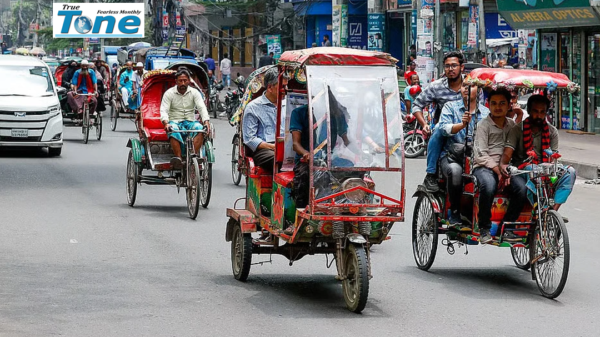
The government has taken steps to bring the country’s rapidly expanding fleet of battery-powered autorickshaws and electric three-wheelers under a formal registration system, aiming to restore discipline to urban traffic, improve road safety and regulate their growing impact on the national electricity network.
Home Minister Salahuddin Ahmed told Parliament on September 7 that the government has already formulated a policy framework to bring non-motorized battery-run autorickshaws under registration so that traffic authorities can identify and monitor the vehicles operating across the country.
He made the remarks while responding to an emergency notice raised by BNP lawmaker Rehana Akhter Ranu, representing women’s reserved seat-4, under Rule 71 of the Rules of Procedure of the Jatiya Sangsad. Deputy Speaker Barrister Kayser Kamal was presiding over the session.
According to the home minister, the uncontrolled expansion of battery-powered autorickshaws, easy-bikes and similar vehicles has created a large informal economic sector and provided employment to millions over the past decade. However, their rapid and largely unregulated growth has also created mounting challenges for electricity management, road safety, traffic congestion, environmental protection and public health.
The government estimates that illegal electricity use for charging battery-run vehicles is causing a revenue loss of nearly Tk 4,000 crore annually.
Salahuddin said the large number of vehicles being charged simultaneously is placing additional pressure on local electricity distribution networks. Many charging operations are reportedly using unauthorized commercial or residential electricity connections, while the additional load is also putting pressure on transformers and distribution lines, particularly during peak hours.
The minister said battery-powered three-wheelers consume nearly 5 percent of the electricity generated in the country, highlighting the scale of the sector’s energy demand.
There are currently around 3,300 legal charging stations across the country, compared with an estimated 48,000 illegal charging stations operating in Dhaka alone, he said. The widespread use of unauthorized charging facilities has created significant pressure on both the national grid and local power distribution systems.
Environmental and public-health concerns are also becoming increasingly serious. Large numbers of battery-run vehicles use lead-acid batteries, and unsafe handling and informal recycling of used batteries can release lead and other pollutants into the environment. Such practices can contaminate soil and water and create serious health risks, particularly for children and workers involved in battery recycling.
The minister also warned that smoke generated during informal battery recycling contributes to air pollution and can affect nearby businesses and poultry farms.
Road safety remains another major concern. Citing 2025 accident statistics, Salahuddin said 6,729 road accidents occurred during the year, resulting in 9,111 deaths and 14,812 injuries. Battery-run autorickshaws were involved in 13.54 percent of those accidents.
The exact number of battery-powered rickshaws operating in Bangladesh is not known, but estimates from the Bangladesh Road Transport Authority (BRTA) suggest that the country has more than 60 lakh such vehicles. Of these, between 10 lakh and 12 lakh are believed to operate in Dhaka alone.
To address the situation, the Road Transport and Highways Division under the Ministry of Road Transport and Bridges has prepared a draft Electric Three-Wheeler Management Policy 2025.
Under the proposed policy, all battery-operated three-wheelers would have to be registered with the BRTA, while drivers would be required to obtain valid driving licences. The vehicles would also be restricted to designated routes and prohibited from operating on national highways, except on service lanes.
The draft divides electric three-wheelers into medium-speed and low-speed categories. Medium-speed vehicles would have a maximum speed of 50 kilometres per hour, while low-speed vehicles would be restricted to 30 kilometres per hour.
A passenger and goods transport committee formed under the Road Transport Act would determine how many vehicles could operate in a particular area and decide their designated routes.
The proposed policy would also limit individual ownership. One person would be permitted to own a maximum of three medium-speed and five low-speed electric rickshaws.
The government also plans to make vehicle safety standards mandatory. Existing unsafe low-speed vehicles would have to be converted into safer models within one year. After the deadline, unapproved vehicles would face legal action.
Under the draft rules, all electric three-wheelers must be manufactured according to BRTA-approved designs. Motors, controllers, gearboxes, axles, wheels, brakes, headlights, shock absorbers, batteries and chargers would all have to meet standards approved by the Bangladesh Standards and Testing Institution (BSTI).
Manufacturers and assemblers would also have to register with the Bangladesh Investment Development Authority (BIDA), while manufacturers would need to be listed with the BRTA before beginning operations.
Imported and locally assembled electric three-wheelers and their components would require BRTA approval. The draft also proposes allowing the import of only new vehicles and new BSTI-approved parts.
Charging stations would be required to comply with guidelines issued by the Power Division in 2021, while the BRTA would be responsible for setting fares for electric three-wheelers.
For greater accountability, every vehicle would have to visibly display the contact numbers of both its owner and driver. The BRTA would also arrange district-level driver training in consultation with local transport committees.
The proposed policy would permit electric three-wheelers to operate in designated areas, including city corporation areas, A-category municipalities, districts, upazilas and union-level local roads. Local passenger and goods transport committees would determine the number of vehicles and route allocations in each area.
Violations of the rules would be dealt with under the Road Transport Act 2018, with legal action taken against offenders.
The government also intends to phase out unauthorized locally manufactured vehicles, including diesel- and petrol-powered vehicles used in agriculture and waterways, replacing them with approved alternatives.
Road Transport and Highways Division officials expressed hope that the policy would receive approval soon. Once implemented, the government expects the regulatory framework to bring the rapidly expanding electric three-wheeler sector under greater institutional control while addressing traffic congestion, road safety, electricity consumption and environmental risks.
The proposed registration system therefore represents a significant shift from the largely informal management of battery-powered three-wheelers toward a regulated framework involving vehicle registration, driver licensing, technical standards, route controls, charging-station regulation and enforcement.





Md.Shahidur Rahman Tepa
Publisher & Editor
Mrs. Naznin Sultana - Associate Editor
Dr. Sariful Hoque Priom - Assistant Editor
Head Office: Tepa Complex 169/A, SS Nazrul Islam Sarani, Purana Paltan, Dhaka-1000, News and Commercial Office: 48 Bijoy Nagar (3rd Floor) Dhaka-1000,
E-mail: monthlytruetone@gmail.com
Leave a Reply