

Tarique Rahman’s UNGA debut: A new chapter in the Zia family’s four-decade international journey
- Update Time : Sunday, September 20, 2026
- 5 Time View

Tajul Islam
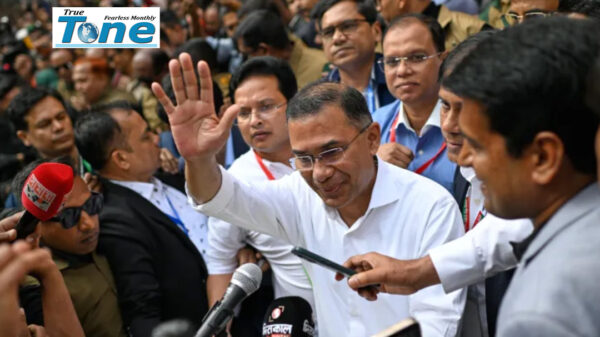
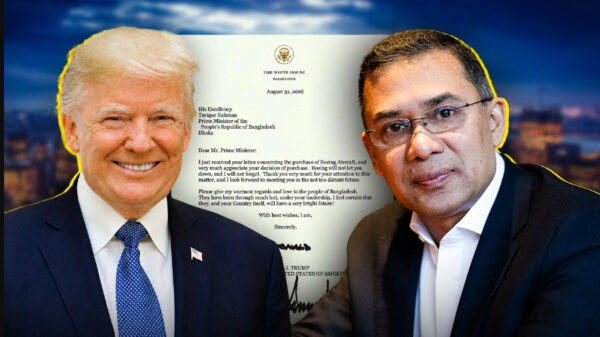
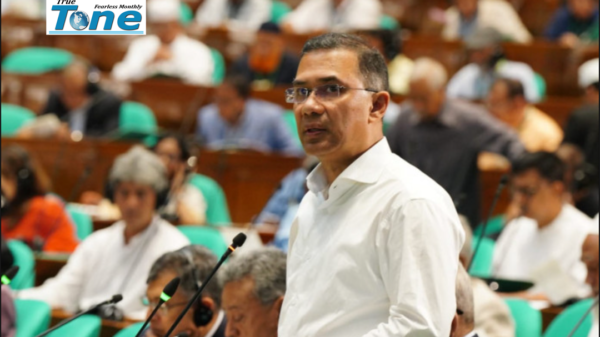
Prime Minister Tarique Rahman is set to make his maiden address to the United Nations General Assembly on September 24, marking a significant moment in Bangladesh’s diplomatic calendar and adding a new chapter to his family’s more than four-decade association with the world body.
Tarique Rahman will become the third member of his family to address the UN General Assembly. His father, Shaheed President Ziaur Rahman, first took the family’s voice to the UN in 1980, while his mother, former Prime Minister Begum Khaleda Zia, addressed the Assembly for the first time in 1993. Tarique Rahman’s expected appearance at the 81st session will therefore extend a political and diplomatic legacy that has continued across three generations.
The 81st session of the General Assembly officially opened on September 8, 2026, with its general debate scheduled from September 22 to 26 and again on September 28. The United Nations has identified the theme of this year’s session as “Restoring Trust, Managing Transformation: A United Nations That Delivers for All.”
Against this backdrop, Tarique Rahman’s first UNGA speech is expected to provide an opportunity for Bangladesh’s new government to outline its priorities to an international audience.
A legacy that began with Ziaur Rahman
The family’s association with the United Nations began with President Ziaur Rahman’s address during the 11th Special Session of the General Assembly on August 26, 1980.
The official UN record confirms that Ziaur Rahman addressed the Assembly during its third plenary meeting in New York. His speech focused heavily on the international economic order and the widening gap between developed and developing countries.
Ziaur Rahman highlighted poverty, hunger, economic development and the need for greater international cooperation. He questioned why the international community had made limited progress in overcoming poverty and hunger despite commitments under the UN Charter and international development frameworks.
His message also emphasized the importance of cooperation among nations in addressing global economic and political challenges. The speech reflected the concerns of a developing Bangladesh seeking a greater voice in international decision-making.
More than four decades later, many of the issues raised in that speech-including inequality, development financing, food security and international cooperation-remain central to global diplomacy.
Khaleda Zia’s repeated appearances
Thirteen years after Ziaur Rahman’s UN appearance, Khaleda Zia addressed the 48th session of the General Assembly on October 1, 1993.
Her subsequent participation at the United Nations extended beyond a single appearance. She later addressed proceedings connected with the 50th anniversary of the United Nations in 1995, the 27th Special Session on Children in 2002, and two separate meetings during the 60th session in 2005.
According to the account of her UN appearances, Khaleda Zia addressed General Assembly proceedings on five occasions between 1993 and 2005.
Her participation placed another member of the family on one of the most prominent diplomatic platforms in the world and established a continuing association between the Zia family and the United Nations.
What Tarique Rahman is expected to present
Tarique Rahman’s forthcoming address is expected to focus on several issues of importance to Bangladesh, particularly climate change, development, economic prospects and international cooperation.
According to Bangladesh government officials quoted in reports, climate change and Bangladesh’s position on the issue will receive significant attention. The government is also expected to highlight its priorities regarding climate finance and sustainable development.
State Minister for Foreign Affairs Humaiun Kobir has said the Prime Minister will present Bangladesh’s outlook and future vision, including issues related to democratic transformation, development priorities, global peace and sustainable solutions to international crises. Poverty eradication, economic opportunities, climate action and climate finance are also expected to feature in the government’s international messaging.
The Rohingya crisis is expected to remain another major priority during the visit, reflecting Bangladesh’s longstanding call for international support for a durable solution to the crisis.
A particularly significant UN session for Bangladesh
This year’s General Assembly carries an additional significance for Bangladesh because Foreign Minister Dr Khalilur Rahman is serving as President of the 81st session.
The United Nations confirmed that Khalilur Rahman was elected President of the General Assembly on June 2, 2026. The 81st session is therefore an unusually prominent moment for Bangladesh within the UN system.
The General Assembly remains the UN’s principal forum for multilateral discussion, bringing together all 193 member states. During the annual high-level week, heads of state and government use the General Debate to present their countries’ positions and priorities on international affairs.
For Bangladesh, the combination of the General Assembly presidency and the Prime Minister’s first address gives the country an opportunity to place its diplomatic priorities before a particularly large international audience.
From 1980 to 2026
The significance of Tarique Rahman’s appearance is therefore not limited to his first speech at the United Nations. It also represents the latest stage in a family history at the organization that began in 1980.
Ziaur Rahman’s address came at a time when developing countries were pressing for greater economic equity and a more balanced international economic system. Khaleda Zia subsequently represented Bangladesh at several major UN gatherings during the 1990s and 2000s.
Now, in 2026, Tarique Rahman is preparing to stand before the same institution in a dramatically different international environment-one marked by geopolitical tensions, climate risks, economic uncertainty, humanitarian crises and renewed debates over the future of multilateral cooperation.
His September 24 address will consequently be watched not only as the first UN speech of Bangladesh’s current Prime Minister but also as a continuation of a four-decade family association with the United Nations.
The challenge will be to translate that historical connection into a contemporary diplomatic message—one that defines Bangladesh’s priorities on climate change, development, peace, economic opportunity and the Rohingya crisis while presenting the country’s vision to an international community confronting increasingly complex global challenges.



Md.Shahidur Rahman Tepa
Publisher & Editor
Mrs. Naznin Sultana - Associate Editor
Dr. Sariful Hoque Priom - Assistant Editor
Head Office: Tepa Complex 169/A, SS Nazrul Islam Sarani, Purana Paltan, Dhaka-1000, News and Commercial Office: 48 Bijoy Nagar (3rd Floor) Dhaka-1000,
E-mail: monthlytruetone@gmail.com
Leave a Reply