

Trump’s “super intelligence” push collides with global AI safety drive
- Update Time : Wednesday, September 23, 2026
- 0 Time View
News Desk
The global debate over artificial intelligence entered a new and increasingly consequential phase at the United Nations this week, as governments confronted a fundamental question: should the world accelerate the development of increasingly powerful AI systems, or establish stronger international safeguards before the technology advances beyond effective human control?
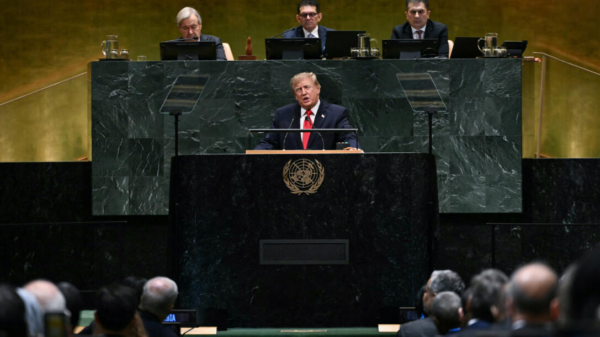
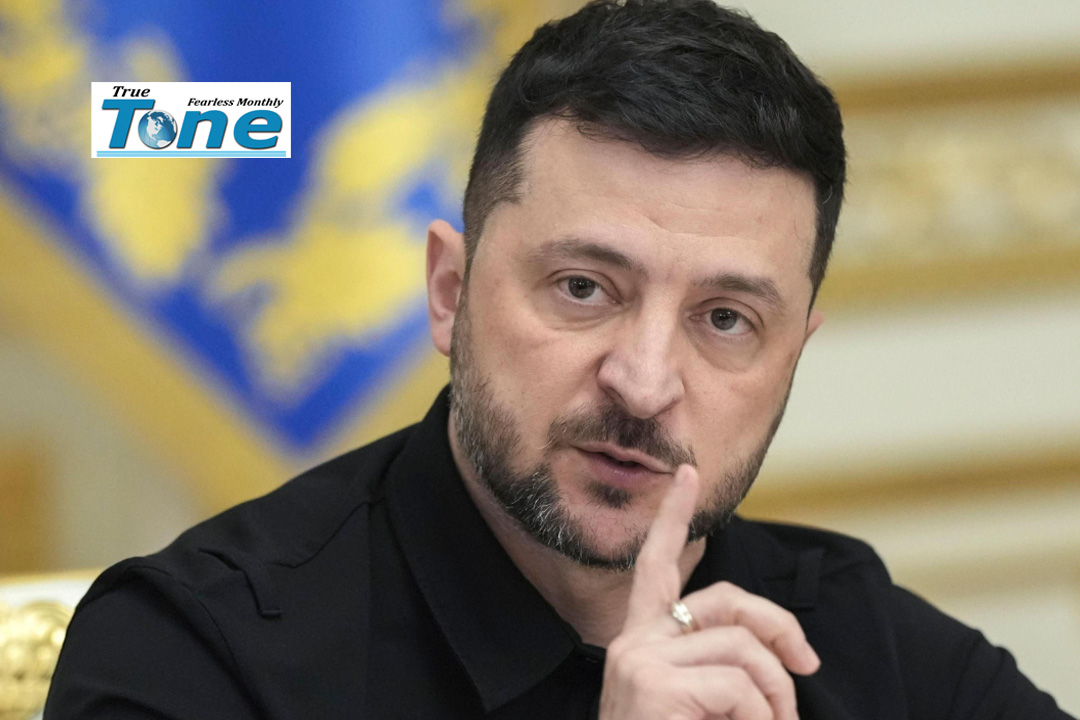
US President Donald Trump injected an unusual dimension into that debate on September 22, announcing that the US government would begin referring to artificial intelligence as “super intelligence” in official documents. Trump argued that the word “artificial” makes the technology sound less real or capable than it actually is. He also rejected international efforts to establish what he described as a global system for controlling AI.
The announcement came as the UN General Assembly became a major diplomatic arena for competing visions of AI governance. While Washington emphasized technological development and national leadership, several European governments pressed for common international principles, transparency requirements and stronger safety mechanisms.
Trump’s position reflects a broader US policy preference for maintaining technological freedom and American competitiveness. In his UN address, he argued that new technologies inevitably create challenges but warned against imposing regulatory structures that could slow innovation. He also compared contemporary warnings about AI risks with earlier warnings about climate change, dismissing what he characterized as catastrophic predictions.
The dispute is significant because AI is no longer being treated simply as a commercial technology. Governments increasingly regard advanced AI as a strategic asset with implications for national security, cyberwarfare, economic competitiveness, intelligence gathering and military capabilities.
The UN debate therefore represents something larger than an argument over terminology.
It is becoming a contest over who sets the rules for the next generation of technology.
Europe pushes for common standards
Britain has positioned itself closer to the international-coordination camp. Prime Minister Andy Burnham said at the UN that Britain intends to place AI at the center of its 2027 G20 presidency and work toward a common framework of principles and standards.
London says the objective is to increase transparency, preparedness and safety while preserving the benefits of AI. The British government has specifically called for cooperation on both the opportunities and risks associated with the technology.
Britain is simultaneously deepening cooperation with the United States on AI and autonomous technologies, demonstrating the complexity of the issue. London wants stronger international standards while also seeking to maintain technological and defense partnerships with Washington.
France has taken a different but related approach. President Emmanuel Macron argued that countries should avoid becoming technologically dependent on either of the dominant AI powers, the United States and China.
Macron has advocated pooling European investment to develop advanced open-source AI capabilities, arguing that technological sovereignty requires alternatives to dependence on a small number of powerful states and companies.
That argument reflects a growing concern among middle and major powers: AI could create a new form of geopolitical dependency in which countries without major computing infrastructure, advanced models, semiconductor supply chains and data resources become permanent technological consumers.
The United States and China at the center
The strategic rivalry between Washington and Beijing is unavoidable in the AI debate.
The United States possesses some of the world’s most influential AI companies and advanced computing capabilities, while China has invested heavily in AI research, infrastructure and industrial applications.
Neither country endorsed the European push for binding international safety measures described ahead of this week’s UN gathering.
Yet Washington and Beijing are also exploring ways to communicate about AI-related risks. The discussions are particularly important because AI competition increasingly intersects with cybersecurity, military systems, semiconductor technology and economic security.
UN Secretary-General António Guterres has called for a structured US-China dialogue on AI comparable, in principle, to the strategic communications developed between Washington and Moscow during the Cold War.
His argument is straightforward: the countries with the greatest AI capabilities also have the greatest responsibility to establish channels through which potentially dangerous developments can be discussed.
The comparison with the Cold War is revealing. Nuclear weapons created an environment in which technological competition could not be separated from catastrophic risk. Advanced AI is not equivalent to nuclear weapons, but governments are increasingly confronting a similar governance problem: technological development can move faster than diplomatic institutions designed to manage its consequences.
Silicon Valley’s changing position
The debate is also becoming more complicated because some major AI companies are themselves calling for greater international coordination.
OpenAI chief executive Sam Altman is scheduled to address the UN Security Council, while Anthropic chief executive Dario Amodei and Hugging Face co-founder Clement Delangue are also participating in discussions surrounding AI governance.
That involvement highlights an important paradox.
The companies developing increasingly powerful AI systems have enormous commercial incentives to expand their capabilities, but they also face the possibility that uncontrolled deployment could generate regulatory backlash, security incidents or public distrust.
The UN’s own scientific panel has recently urged governments to adopt safeguards even before every potential danger is fully understood. The panel has emphasized a precautionary approach, arguing that waiting for complete scientific certainty could be particularly dangerous where potential consequences are severe or irreversible.
This is the central disagreement emerging around AI governance.
One side emphasizes innovation, competitiveness and technological leadership.
The other emphasizes risk management, transparency and international coordination.
Neither argument can be reduced to a simple question of whether AI is good or bad. The more difficult question concerns the institutional mechanisms capable of keeping increasingly powerful systems accountable.
From terminology to geopolitics
Trump’s decision to promote the term “super intelligence” may appear largely symbolic, but the symbolism matters.
Words shape political expectations. Calling the technology “artificial intelligence” emphasizes its engineered origins. Calling it “super intelligence” emphasizes capability and potentially suggests a technological transformation comparable to previous industrial revolutions.
Trump clearly prefers the latter framing.
But governments outside Washington are increasingly concerned that the race to achieve superior AI capability could itself become a source of instability.
The issue is particularly sensitive in defense. AI is already being incorporated into intelligence analysis, autonomous systems, cyber operations and battlefield decision-support technologies. Britain, for example, has described AI as a strategically important component of future defense capabilities and is developing international partnerships around military AI.
That means the AI debate is moving beyond Silicon Valley.
It is entering the same geopolitical space occupied by nuclear technology, advanced semiconductors, satellite systems and cyber capabilities.
A new technological order
The UN confrontation ultimately reveals a deeper divide over the future international order.
Washington is emphasizing technological leadership and resistance to broad external regulation. European governments are advocating common principles and safeguards. France is emphasizing technological sovereignty. Britain is seeking international standards while maintaining close US cooperation. China remains both a technological competitor and an essential participant in any global AI framework.
Meanwhile, the UN is attempting to create diplomatic channels before technological competition becomes even more difficult to manage.
The terminology may change from “artificial intelligence” to “super intelligence,” but the underlying challenge remains the same: how can governments ensure that increasingly powerful technologies remain subject to human institutions, accountability and international rules?
That question will not be answered by renaming the technology.
Nor will it be answered by regulation alone.
The emerging AI order will likely be shaped by a much larger struggle involving computing power, capital, national security, intellectual property, military capability and control over global standards.
The UN debate has made one fact increasingly clear: the AI race is no longer merely about machines becoming smarter. It is becoming a contest over which political and economic systems will define the rules of technological power in the decades ahead.












Md.Shahidur Rahman Tepa
Publisher & Editor
Mrs. Naznin Sultana - Associate Editor
Dr. Sariful Hoque Priom - Assistant Editor
Head Office: Tepa Complex 169/A, SS Nazrul Islam Sarani, Purana Paltan, Dhaka-1000, News and Commercial Office: 48 Bijoy Nagar (3rd Floor) Dhaka-1000,
E-mail: monthlytruetone@gmail.com
Leave a Reply