

Andy Burnham becomes UK prime minister, promising bold reforms amid mounting challenges
- Update Time : Monday, July 20, 2026
- 103 Time View
Tajul Islam
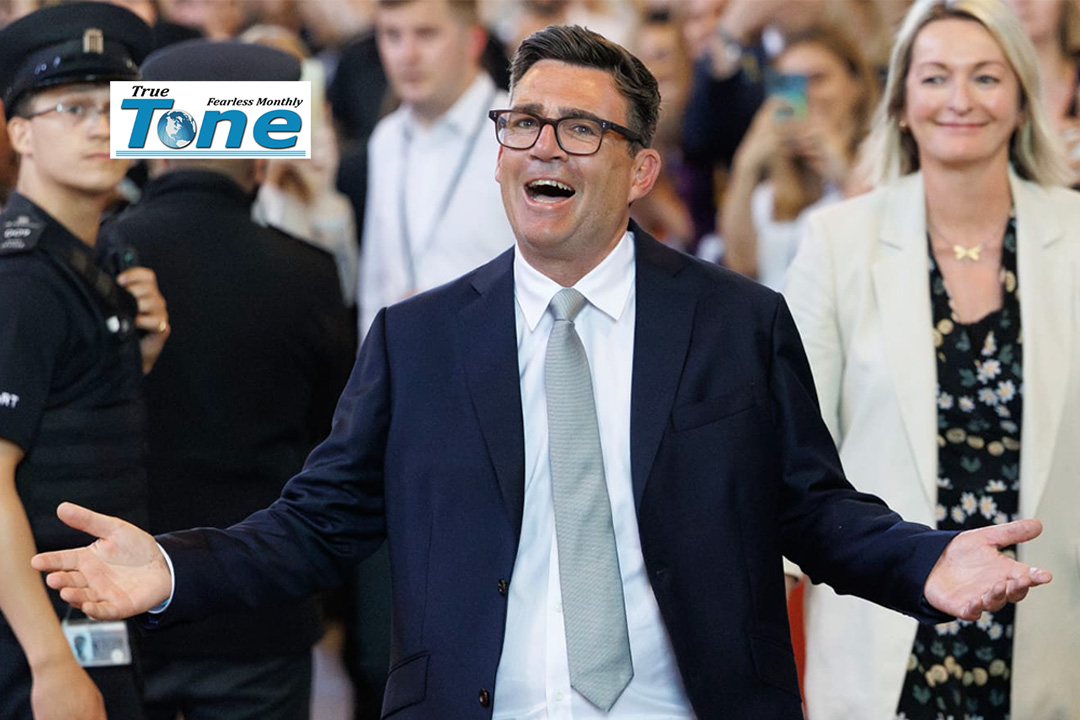
Andy Burnham has officially become the United Kingdom’s new prime minister, taking office at a pivotal moment for the country as it grapples with economic uncertainty, political instability and growing public dissatisfaction. Burnham becomes Britain’s seventh prime minister in just a decade, inheriting a government under pressure to restore confidence, revive economic growth and address a series of long-standing domestic challenges.
The 56-year-old Labour leader succeeds Keir Starmer, who stepped down after only two years in office following a period marked by political controversies, policy reversals and declining public support. Starmer had led Labour to a landslide general election victory in 2024, ending 14 years of Conservative rule, but mounting criticism eventually forced his resignation.
Following constitutional tradition, Burnham was invited by King Charles III to form a new government after Starmer formally tendered his resignation at Buckingham Palace. Burnham is expected to deliver his first speech outside 10 Downing Street shortly afterward, outlining his government’s priorities and vision for the country.
According to his team, Burnham will focus on restoring public trust in government while easing the financial pressures facing households during the ongoing cost-of-living crisis. Economic growth, regional development and the devolution of power away from Westminster are also expected to feature prominently in his agenda.
One of the first major decisions facing the new prime minister will be appointing a senior cabinet, with particular attention on who will replace Rachel Reeves as Chancellor of the Exchequer. Financial markets and political observers alike will closely monitor these appointments as indicators of Burnham’s economic strategy.
Burnham enters Downing Street with a strong reputation built during his tenure as Mayor of Greater Manchester, where he earned the nickname “King of the North” for championing regional interests and advocating greater investment outside London. His experience leading one of England’s largest metropolitan areas has convinced many Labour lawmakers that he is better positioned to reconnect with voters who have become increasingly frustrated with Westminster politics.
Labour’s leadership viewed Burnham as its strongest option to halt the growing popularity of Nigel Farage’s Reform UK party, whose anti-immigration platform has attracted significant support in recent opinion polls.
Deputy Labour leader Lucy Powell has argued that Burnham’s years in local government have given him practical experience in solving real-world problems, distinguishing him from politicians whose careers have been largely confined to Westminster.
She said Burnham understands the need for “bigger, bolder measures” to fulfill Labour’s election promises, particularly in rebuilding local economies and giving communities greater control over decision-making.
However, the challenges awaiting the new prime minister are substantial.
Britain continues to face sluggish economic growth, elevated government borrowing costs and rising public debt. Welfare spending has expanded significantly, while irregular migration across the English Channel remains a politically sensitive issue that has fueled support for opposition parties.
External pressures also threaten to complicate Burnham’s premiership. Global energy markets remain volatile due to tensions stemming from the conflict involving the United States and Iran, while uncertainty surrounding the policies of US President Donald Trump continues to influence international trade and diplomatic relations.
Burnham has repeatedly argued that Britain’s political system has become overly centralized and believes decision-making should be shifted closer to regional communities. He has pledged to rewrite what he describes as an outdated economic model that has too often favored vested interests over ordinary working families.
His vision includes creating secure employment opportunities, expanding affordable housing and ensuring that communities across the country receive greater investment. Burnham has also emphasized improving opportunities for younger generations through better education, skills development and regional economic growth.
Despite his ambitious plans, Burnham faces limited time to demonstrate progress. The next general election is expected in 2029, leaving his government roughly three years to deliver measurable improvements before voters return to the polls.
Political analysts note that Burnham’s return to Parliament only four weeks before becoming prime minister is highly unusual, making his rapid rise one of the most remarkable leadership transitions in recent British political history.
He previously served as a Member of Parliament between 2001 and 2017 and held ministerial positions under former Labour prime ministers Tony Blair and Gordon Brown. Since leaving Westminster, Burnham reinvented himself through local leadership, combining a relatable public image with an active social media presence that broadened his national appeal.
Burnham has described Labour’s change in leadership as the party’s “last chance” to regain public confidence before the next election.
His government has already signaled a change in direction. In his first significant policy move, Burnham scrapped the nationwide digital identification scheme introduced under Starmer’s administration. The project, estimated to cost £1.8 billion over three years, will no longer proceed.
Government officials said the funding originally allocated to the digital ID program will instead be redirected toward addressing more immediate public concerns, particularly measures aimed at easing the cost-of-living crisis and supporting essential public services.
As Andy Burnham begins his tenure as prime minister, expectations are exceptionally high. Whether he can translate his promises of regional empowerment, economic renewal and political reform into tangible results will likely determine not only the future of his government but also Labour’s prospects in the next general election. With economic headwinds, political competition and public skepticism all weighing heavily on his administration, Burnham’s leadership will face immediate scrutiny as Britain enters a new chapter in its political landscape.
Tajul Islam, senior journalist and writes on a broad-range of issues in local and international media.









Md.Shahidur Rahman Tepa
Publisher & Editor
Mrs. Naznin Sultana - Associate Editor
Dr. Sariful Hoque Priom - Assistant Editor
Head Office: Tepa Complex 169/A, SS Nazrul Islam Sarani, Purana Paltan, Dhaka-1000, News and Commercial Office: 48 Bijoy Nagar (3rd Floor) Dhaka-1000,
E-mail: monthlytruetone@gmail.com
Leave a Reply