

Global energy crisis demands collective action, warns Bangladesh Foreign Minister
- Update Time : Sunday, April 12, 2026
- 182 Time View

International Desk
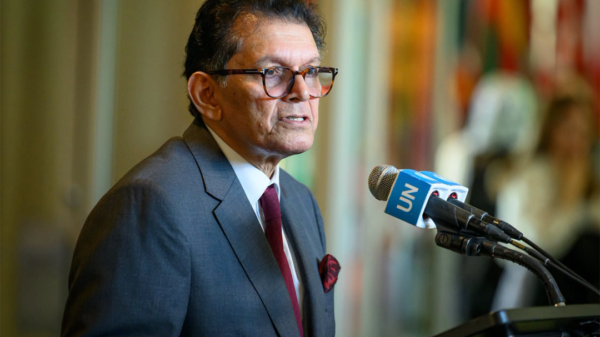
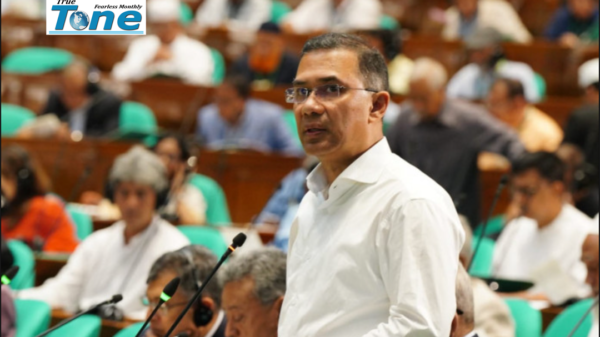
Bangladesh’s Foreign Minister Khalilur Rahman has urged coordinated international efforts to address the ongoing global energy crisis, cautioning that its effects will extend far beyond any temporary ceasefire and continue to strain economies and global cooperation frameworks.
Speaking at the Indian Ocean Conference 2026 in Mauritius on April 10, Khalilur Rahman emphasized that the current disruptions in global energy markets are not short-term challenges but part of a deeper and more persistent crisis. He warned that even if geopolitical tensions ease, structural problems in the energy sector will continue to create instability.
“There might be a ceasefire, but the energy issue is not going to be resolved within two weeks,” Foreign Minister said, underlining the long-term nature of the crisis. He noted that the ripple effects of current energy disruptions are already being felt worldwide and will likely intensify in the coming years, impacting economic growth, inflation, and development efforts across both advanced and developing economies.
The foreign minister highlighted that the crisis is not only about supply shortages or price volatility but also about the weakening of multilateral systems designed to manage such global challenges. According to Khalilur Rahman, declining trust among nations and the rise of unilateral actions are undermining the effectiveness of international cooperation.
“All of us are in trouble, as the current energy challenges are creating disruptions. That will reverberate through the coming years,” he said, adding that the erosion of confidence in global institutions is compounding the problem.
Khalilur Rahman stressed the importance of strengthening domestic resilience as a buffer against external shocks. He argued that countries with strong internal systems—ranging from energy infrastructure to governance—would be better positioned to navigate the uncertainties ahead. “If we stay strong on our home front, it will be much easier for us to overcome the storms coming from outside,” he noted.
Drawing historical parallels, Khalilur Rahman referenced the oil crises of the 1970s, suggesting that the current situation could prove even more severe. He warned that if the present crisis surpasses those earlier shocks in scale and impact, the global economy could face significant long-term risks, including prolonged instability and reduced cooperation among nations.
He also pointed to increasing fragmentation within global governance frameworks, where countries are prioritizing national interests over collective solutions. This trend, he said, is weakening the ability of multilateral institutions to effectively respond to complex global issues such as energy security.
The conference, held under the theme “Collective Stewardship for Indian Ocean Governance,” brought together policymakers, diplomats, and experts to deliberate on key regional and global challenges. Among the prominent speakers was Subrahmanyam Jaishankar, who also addressed the gathering.
Focusing on the Indian Ocean region, Khalilur Rahman described it as entering a period of heightened uncertainty, where energy disruptions could significantly affect economic stability and social cohesion. He called for stronger regional cooperation to address shared challenges.
“In these overwhelming times, our blue waters must unite, sustain, and inspire us far more than before,” he said, reinforcing the need for collective stewardship and coordinated policy responses.
Khalilur Rahman concluded by reiterating that no single country can tackle the energy crisis alone, urging renewed commitment to multilateralism and global solidarity to ensure sustainable and equitable solutions.










Md.Shahidur Rahman Tepa
Publisher & Editor
Mrs. Naznin Sultana - Associate Editor
Dr. Sariful Hoque Priom - Assistant Editor
Head Office: Tepa Complex 169/A, SS Nazrul Islam Sarani, Purana Paltan, Dhaka-1000, News and Commercial Office: 48 Bijoy Nagar (3rd Floor) Dhaka-1000,
E-mail: monthlytruetone@gmail.com
Leave a Reply