

India’s Education Minister resigns after youth-led protest movement forces government concessions
- Update Time : Sunday, July 26, 2026
- 82 Time View
Dr. Shariful Hhaque Priom
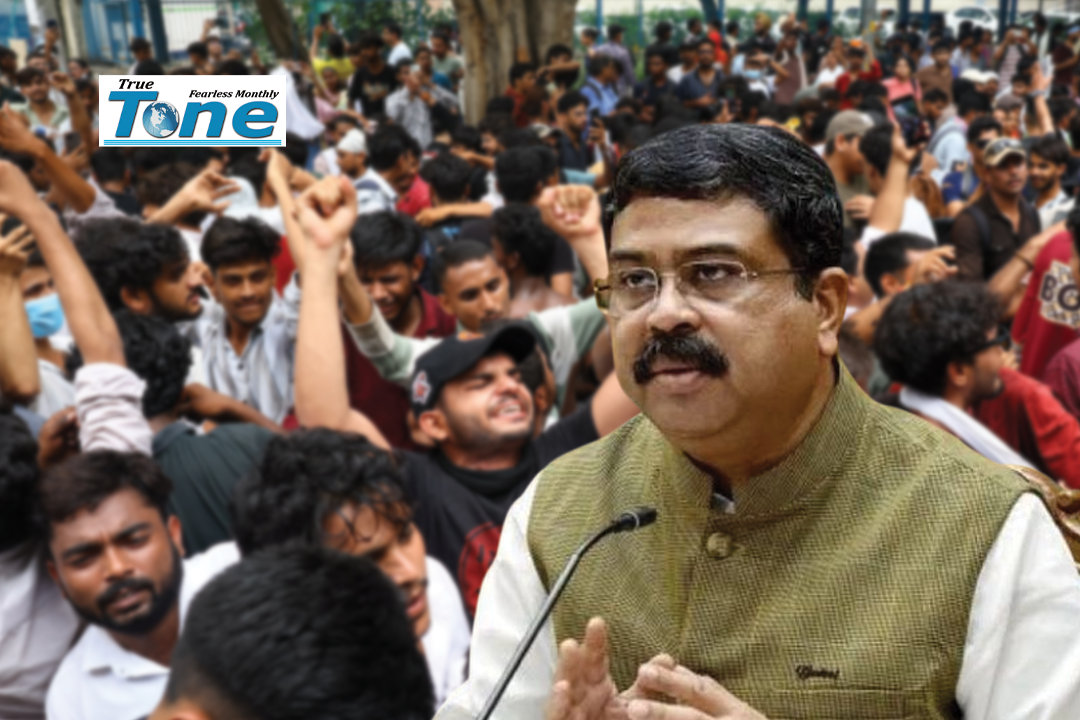
India’s Education Minister Dharmendra Pradhan resigned on Saturday following days of widespread youth-led demonstrations that placed mounting pressure on the government over alleged irregularities in high-stakes examinations. The resignation marked a significant political victory for thousands of students and young activists who had demanded sweeping reforms to the country’s education system and greater accountability from officials responsible for examination administration.
The protests, organized under the banner of the social media-driven Cockroach Janta Party (CJP), gained momentum across New Delhi and several other cities after allegations of repeated examination irregularities sparked frustration among students. For many participants, the issue extended beyond a single exam, reflecting years of growing dissatisfaction with the fairness, transparency, and reliability of India’s competitive testing system.
Thousands of demonstrators gathered throughout the week, with the largest rallies centered at Jantar Mantar in central New Delhi. Protesters demanded not only the resignation of the education minister but also comprehensive reforms aimed at preventing future examination scandals. Their campaign quickly evolved into a broader youth movement addressing concerns about unemployment, limited career opportunities, and what critics described as an increasingly centralized style of governance under Prime Minister Narendra Modi.
In a statement posted on the social media platform X, Pradhan announced that he had submitted his resignation to the prime minister. He said he was deeply saddened by the developments of the previous ten days and emphasized that the controversy was “not a matter of personal prestige.” The outgoing minister also expressed concern for India’s younger generation, stating that the nation’s greatest strength lies in its youth and pledging that they should not become trapped in a cycle of uncertainty and confusion.
The resignation came shortly before a planned third round of negotiations between government representatives and CJP leaders. Earlier talks held on Monday and Friday had produced little progress, with protest organizers refusing to compromise on their core demands. However, following Pradhan’s resignation, senior government minister JP Nadda met movement representatives and announced that the government had accepted their demands, effectively ending the standoff.
Soon afterward, the Cockroach Janta Party declared that its objectives had been achieved and officially called off the demonstrations. Founder Abhijeet Dipke addressed cheering supporters, proclaiming, “We have done it,” as hundreds of protesters celebrated what they viewed as a landmark victory for student activism.
The demonstrations had not been without confrontation. Earlier in the week, police used tear gas and baton charges to disperse crowds attempting to march from Jantar Mantar toward Parliament. The clashes drew criticism from opposition leaders and human rights advocates, who questioned the government’s handling of peaceful demonstrations.
Beyond demanding ministerial accountability, protesters also called for compensation for students affected by examination irregularities and the withdrawal of legal cases filed against demonstrators during the protests. Movement spokesperson Ashutosh Ranka said these measures were essential to restoring public confidence in the education system and ensuring justice for students whose academic and professional futures had been disrupted.
India’s opposition leader Rahul Gandhi welcomed Pradhan’s resignation, describing it as a significant achievement for the country’s students. Gandhi argued that the prime minister should apologize to the nation’s youth and take meaningful steps to protect the interests of future generations. He also called for action against those responsible for using force against student protesters during the demonstrations.
For many participants, the movement represented more than a protest against examination failures. It became a symbol of growing dissatisfaction among young Indians who face intense competition for educational opportunities and employment in one of the world’s largest youth populations. The movement highlighted broader concerns about governance, transparency, and the need for institutions capable of maintaining public trust.
Twenty-seven-year-old Sunil, who attended the protest site for the first time on Saturday, described the atmosphere as “truly electrifying,” particularly after news of the minister’s resignation spread through the crowd. He praised the determination of the young protesters, saying their collective action demonstrated the power of organized civic participation.
The protests have emerged as one of the most significant public challenges to Prime Minister Modi’s administration since his re-election in 2024. While the immediate crisis appears to have been resolved with the government’s acceptance of the protesters’ demands, the episode has underscored the growing influence of youth-led movements in shaping India’s political landscape.
The government’s next challenge will be translating its commitments into concrete reforms. Students and education experts are expected to closely monitor whether promised changes strengthen examination integrity, improve transparency, and restore confidence in a system that plays a decisive role in determining the futures of millions of young Indians. The outcome of those reforms could have lasting implications not only for India’s education sector but also for public trust in the country’s institutions.







Md.Shahidur Rahman Tepa
Publisher & Editor
Mrs. Naznin Sultana - Associate Editor
Dr. Sariful Hoque Priom - Assistant Editor
Head Office: Tepa Complex 169/A, SS Nazrul Islam Sarani, Purana Paltan, Dhaka-1000, News and Commercial Office: 48 Bijoy Nagar (3rd Floor) Dhaka-1000,
E-mail: monthlytruetone@gmail.com
Leave a Reply