

Trump claims Iran sought Doha meeting as Tehran denies direct nuclear talks
- Update Time : Tuesday, June 30, 2026
- 105 Time View
Dr. Shariful Haque Priom
Iran and the United States are sending officials to Doha this week amid renewed diplomatic activity surrounding their recently signed framework agreement, but conflicting statements from both sides have cast uncertainty over whether direct negotiations will actually take place.
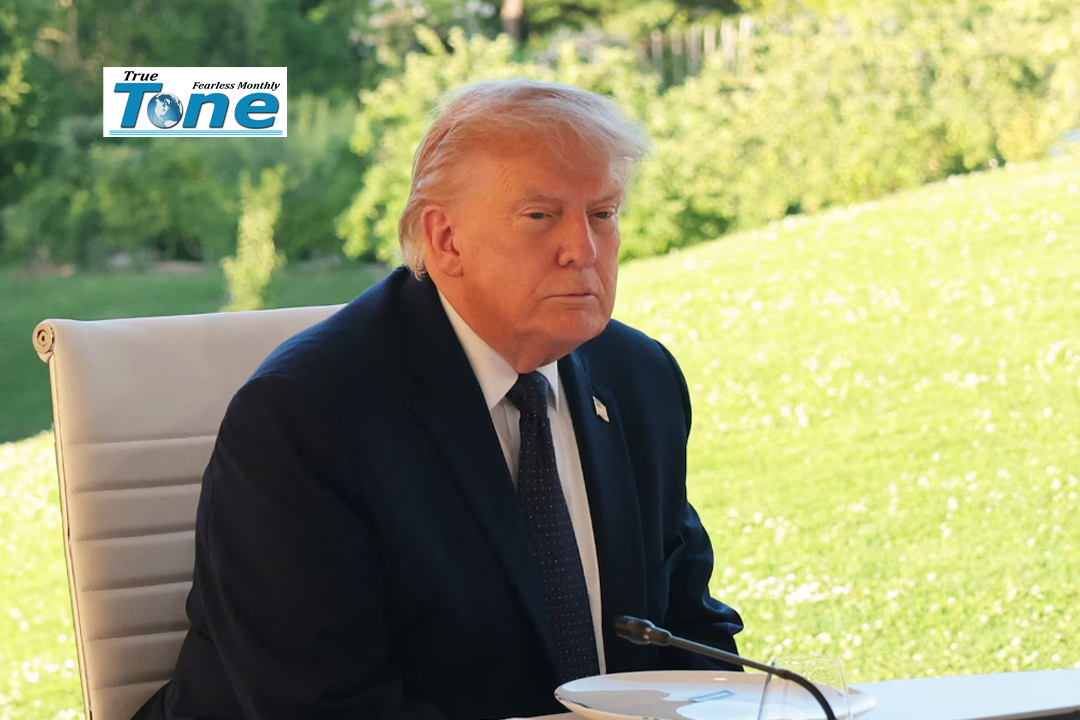
US President Donald Trump announced that Iran had requested a meeting in Qatar, declaring on his Truth Social platform that discussions would take place in Doha on Tuesday. However, Iranian officials quickly rejected that assertion, insisting that no direct negotiations with Washington had been scheduled.
The differing accounts emerged as both countries seek to preserve a fragile understanding reached earlier this month following weeks of heightened regional tensions. While military exchanges between the United States and Iran have paused under the agreement, several contentious issues remain unresolved, including the future administration of the strategically vital Strait of Hormuz.
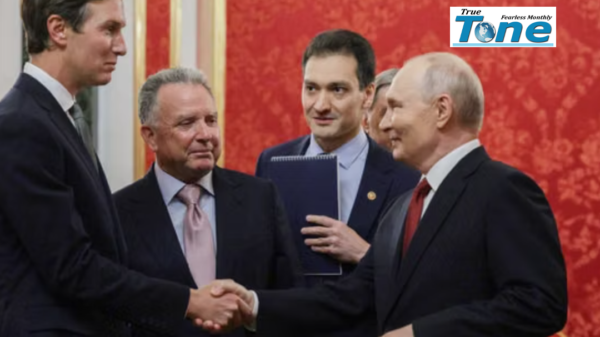
Speaking after Trump’s announcement, White House press secretary Karoline Leavitt confirmed that US special envoy Steve Witkoff and Trump’s adviser and son-in-law Jared Kushner would travel to Doha for high-level meetings during the week. The White House did not disclose whether Iranian representatives would participate directly or identify the agenda for the discussions.
Tehran, however, maintained that no face-to-face negotiations with American officials were planned.
Iranian Foreign Ministry spokesman Esmaeil Baqaei said a delegation of Iranian experts would indeed visit Doha, but emphasized that the visit should not be interpreted as a new round of direct negotiations with Washington.
“We have not yet entered the stage of negotiating a final agreement,” Baqaei said, adding that there would be no negotiation meetings with US officials “at any level” during the upcoming visit.
The diplomatic uncertainty comes only days after Iran and Oman convened their first official discussions on managing the Strait of Hormuz since the US-Iran memorandum of understanding was announced. The talks underscore the growing importance of the narrow waterway, which remains one of the world’s most critical energy transit routes.
Iranian Deputy Foreign Minister Kazem Gharibabadi announced that the inaugural meeting of the Joint Hormuz Committee was held during a visit to Muscat. The committee is expected to play a central role in implementing provisions related to navigation, maritime security and administration of the strategic passage.
The Strait of Hormuz carries roughly one-fifth of global oil and liquefied natural gas shipments, making any disruption a matter of international concern. Although the strait passes through both Iranian and Omani territorial waters, international maritime law generally guarantees freedom of navigation and prevents either country from unilaterally blocking commercial traffic or imposing transit fees.
Despite those legal protections, tensions around the waterway have intensified.
The latest escalation began when US Central Command announced that American forces had struck ten Iranian military targets following what Washington described as continued Iranian aggression against commercial shipping. Iran responded by launching missile strikes against US military facilities in Kuwait and Bahrain, marking one of the most serious regional confrontations before the current ceasefire arrangement took hold.
Although both sides have since suspended active military operations, disagreements over shipping procedures remain unresolved.
Iran has warned that vessels attempting to bypass its preferred shipping corridor near the Iranian coastline could further destabilize the region. Iranian authorities continue to insist that commercial vessels should follow designated routes that pass close to Iranian territorial waters, a position that has drawn concern from international shipping companies and energy markets.
Implementation of the maritime provisions has also become a source of disagreement.
Following talks between French President Emmanuel Macron and Omani Sultan Haitham bin Tariq, France and Oman announced plans to cooperate on de-mining operations in the Strait of Hormuz.
Iran immediately objected to that proposal.
Gharibabadi argued that, under the recently negotiated memorandum, responsibility for de-mining operations belongs exclusively to Iran. He warned that outside involvement could complicate an already delicate security environment and criticized France for what he described as unnecessary provocations.
Maritime traffic has already shown signs of disruption.
According to commercial vessel tracking data, shipping activity slowed significantly over the weekend after a vessel was reportedly struck while transiting the strait. Commodity tracking firms indicated that vessel movements declined sharply, while dozens of ships temporarily stopped broadcasting their public tracking signals, a measure often taken during periods of heightened security risk.
Notably, ships largely avoided using an alternative southern corridor through Omani waters despite ongoing tensions, highlighting the continued dependence of global shipping on traditional navigation routes through the strait.
The published memorandum between Washington and Tehran states that Iran will determine the future administration of the Strait of Hormuz through consultations with Oman and other Gulf states while operating in accordance with international law. However, many practical aspects of implementing the agreement remain undefined.
Iran’s Islamic Revolutionary Guard Corps has announced enhanced measures to regulate maritime traffic through the waterway and warned that vessels violating its directives would face stronger enforcement than in the past.
Meanwhile, Iranian official Mohammad Mokhber declared that continued Iranian oversight of the strait would prevent what he described as Washington’s “hegemonic dreams” from being realized in the region.
Security analysts believe further incidents remain likely despite the current pause in hostilities.
Regional experts argue that Iran could seek to maintain calibrated pressure in the Strait of Hormuz while negotiations continue, using controlled maritime tensions to strengthen its bargaining position without triggering a broader military confrontation.
The regional security situation remains complicated by developments beyond the Gulf.
In Lebanon, state media reported that Israeli forces carried out strikes in the country’s south, an area considered a stronghold of the Iran-backed group Hezbollah. The attacks occurred despite a recently announced framework agreement aimed at advancing a broader peace arrangement between Israel and Lebanon.
Under the US-backed understanding, Hezbollah is expected to surrender its weapons, with responsibility for implementing the disarmament process assigned to the Lebanese Armed Forces. Israeli officials have stated that their forces will continue operating in southern Lebanon until they are satisfied that the agreement is being fully enforced, while Hezbollah has publicly rejected the disarmament provisions.
With diplomatic contacts continuing in Doha, maritime tensions persisting in the Strait of Hormuz, and security challenges extending across the wider Middle East, the coming days are expected to test whether the fragile US-Iran understanding can evolve into a more comprehensive and lasting agreement.












Md.Shahidur Rahman Tepa
Publisher & Editor
Mrs. Naznin Sultana - Associate Editor
Dr. Sariful Hoque Priom - Assistant Editor
Head Office: Tepa Complex 169/A, SS Nazrul Islam Sarani, Purana Paltan, Dhaka-1000, News and Commercial Office: 48 Bijoy Nagar (3rd Floor) Dhaka-1000,
E-mail: monthlytruetone@gmail.com
Leave a Reply