

Trump revives public feud with Italy’s Meloni over viral ‘restraining order’ meme
- Update Time : Tuesday, July 7, 2026
- 97 Time View
Dr. Shariful Haque Priom
A fresh exchange between US President Donald Trump and Italian Prime Minister Giorgia Meloni has reignited tensions between two leaders who were once viewed as natural political allies. What began as a social media joke has evolved into another chapter in a growing diplomatic spat that has drawn attention across both sides of the Atlantic.
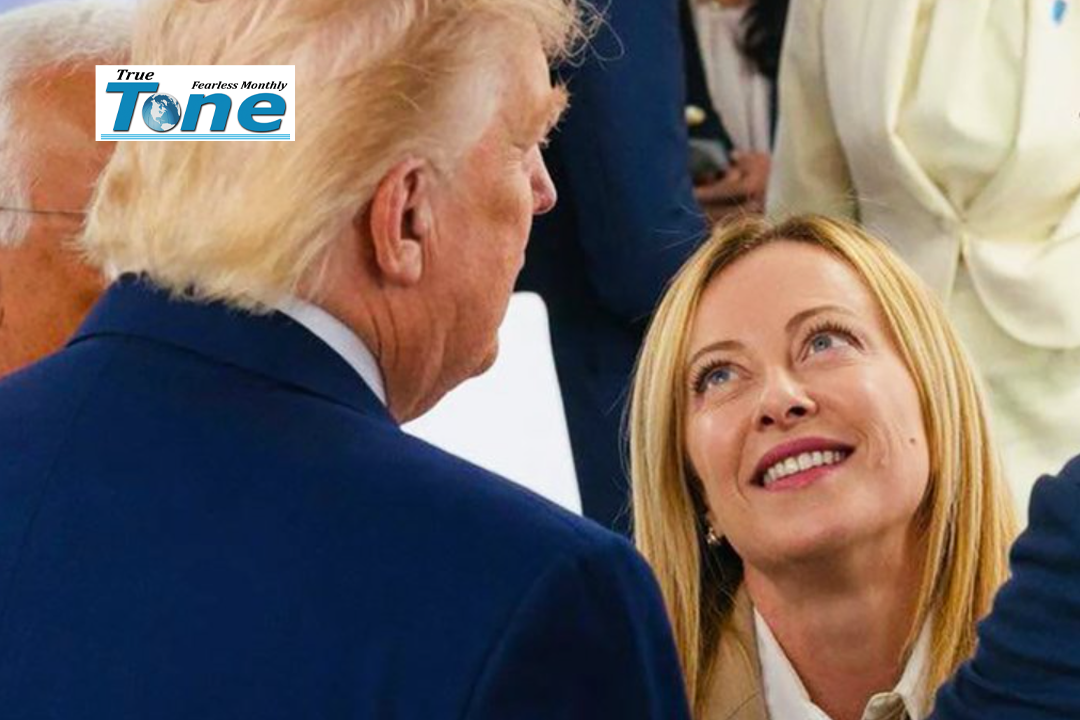
The latest controversy erupted after Trump shared an image on his social media platform depicting Meloni looking toward him with what appeared to be an admiring expression. Accompanying the image was a short caption suggesting that he might need a “restraining order.” While the post was intended as humor, it immediately sparked debate in Italy, where many politicians and commentators interpreted it as an unnecessary personal jab at the country’s prime minister.
The social media post follows an earlier disagreement between the two leaders stemming from last month’s G7 summit in France. During that gathering, Trump had publicly suggested that Meloni had been eager to secure a photo opportunity with him. Meloni firmly rejected the claim, arguing that being perceived as overly close to the American president would not necessarily enhance a European leader’s political standing. Instead, she suggested that such an association could even become politically costly in certain circumstances.
The renewed exchange comes just ahead of another international meeting where both leaders are expected to attend a NATO summit in Ankara. Although diplomatic observers expect both governments to maintain professional relations during the gathering, Trump’s latest online post has once again placed their personal relationship under the spotlight.
Relations between Washington and Rome have faced increasing strain in recent months over several sensitive international issues. One significant point of disagreement emerged after Italy chose not to fully endorse the US-Israeli military campaign involving Iran. While Rome maintained its support for regional stability and diplomatic engagement, it avoided offering the level of backing that Washington had sought.
Another source of friction involved comments made by Trump regarding Pope Leo XIV. Trump criticized the American-born pope by describing him as “weak on crime” and “ungrateful,” remarks that Meloni publicly questioned. Given Italy’s close relationship with the Vatican and the significance of the papacy within Italian public life, the comments added another layer of tension between the two governments.
The diplomatic fallout extended beyond rhetoric. A planned visit by Italian Foreign Minister Antonio Tajani to the United States was disrupted after the disagreements surrounding the G7 meeting. Tajani had been scheduled to participate in a US-Italy business forum in Miami, an event expected to strengthen commercial ties between the two countries.
Despite these setbacks, officials from both governments have worked quietly to prevent the relationship from deteriorating further. Italian ministers, including Tajani, recently attended celebrations marking the 250th anniversary of American independence hosted by the US Embassy in Rome. During the event, Tajani emphasized that the longstanding friendship between Italy and the United States remains stronger than temporary political disagreements.
A similarly conciliatory message came from Tilman Fertitta, who praised Meloni’s leadership during a recent interview. Fertitta described the Italian prime minister as having done an excellent job leading the country and credited her with helping elevate Italy’s international profile.
Nevertheless, Trump’s meme has generated sharp criticism within Italy’s political landscape. Carlo Calenda, leader of the liberal Azione party and a former economic development minister, strongly condemned the American president’s remarks. Calenda characterized Trump as an irresponsible bully and expressed solidarity with Meloni, arguing that personal insults have no place in international diplomacy.
The incident illustrates how social media continues to influence modern diplomacy, where a single online post can quickly overshadow formal diplomatic efforts. While both governments continue cooperating on issues including NATO, trade, and transatlantic security, personal exchanges between national leaders increasingly shape public perceptions of bilateral relationships.
As Trump and Meloni prepare to meet again on the international stage, attention will focus not only on policy discussions but also on whether both leaders can move beyond their increasingly public war of words. Although officials on both sides continue to stress the enduring strength of US-Italy relations, the latest episode demonstrates how political messaging and personal rivalries can complicate even long-standing alliances.









Md.Shahidur Rahman Tepa
Publisher & Editor
Mrs. Naznin Sultana - Associate Editor
Dr. Sariful Hoque Priom - Assistant Editor
Head Office: Tepa Complex 169/A, SS Nazrul Islam Sarani, Purana Paltan, Dhaka-1000, News and Commercial Office: 48 Bijoy Nagar (3rd Floor) Dhaka-1000,
E-mail: monthlytruetone@gmail.com
Leave a Reply