

Trump signals opposition to Taiwan independence after high-stakes China visit
- Update Time : Saturday, May 16, 2026
- 104 Time View
Dr. Shariful Haque Priom
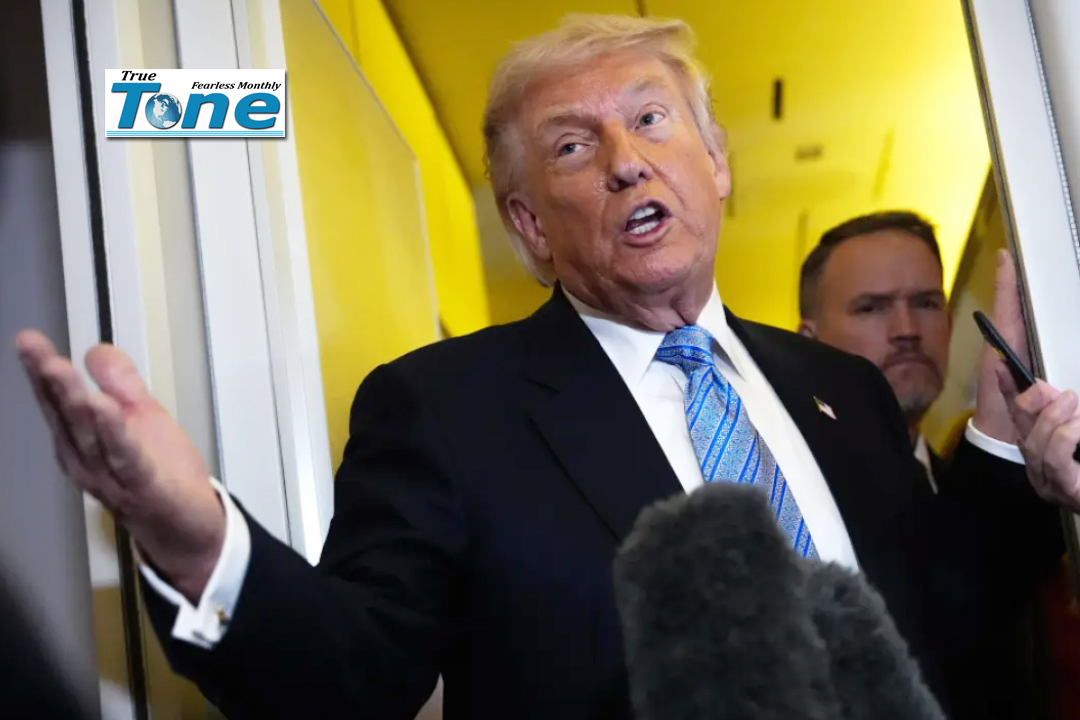
US President Donald Trump has publicly warned against any formal declaration of independence by Taiwan following the conclusion of his closely watched state visit to China, where tensions over Taiwan emerged as a central issue in discussions with Chinese President Xi Jinping.
Trump’s remarks came after several days of meetings in Beijing that focused on trade, regional security, and the ongoing crisis involving Iran. While the US president described the trip as a success and claimed to have secured “fantastic trade deals,” few concrete details were released, leaving analysts divided over the true outcome of the summit.
Speaking in an interview with Fox News after departing Beijing, Trump made it clear that he did not support moves toward formal Taiwanese independence, a position likely to be welcomed by Beijing.
“I’m not looking to have somebody go independent,” Trump said. “We’re not looking to have wars, and if you kept it the way it is, I think China’s going to be OK with that.”
The comments represented one of Trump’s strongest public statements yet on the Taiwan issue and appeared to reinforce Washington’s long-standing but strategically ambiguous “One China” policy. The United States officially recognizes Beijing as the sole legal government of China while maintaining unofficial relations with Taiwan and supplying the island with defensive weapons under US law.
Trump also appeared to question the willingness of the United States to become militarily involved in a conflict over Taiwan, emphasizing the geographic distance between the two countries.
“We’re supposed to travel 9,500 miles to fight a war. I’m not looking for that,” he said.
The remarks came after Xi reportedly warned Trump during their summit that any mishandling of the Taiwan issue could trigger serious confrontation between the two powers. Beijing considers Taiwan a breakaway province and has repeatedly vowed to reunify the island with the mainland, by force if necessary.
Taiwanese President Lai Ching-te has maintained that Taiwan is already effectively independent, making any formal declaration unnecessary. However, Beijing has accused Lai of promoting separatism and increasing tensions across the Taiwan Strait.
Despite Trump’s comments, Taiwan’s foreign ministry attempted to downplay concerns, pointing to recent statements from US Secretary of State Marco Rubio affirming that Washington’s overall policy toward Taipei remains unchanged.
In a statement, Taiwan thanked the United States for continuing to support “peace and stability” in the Taiwan Strait.
Throughout the visit, Trump repeatedly emphasized what he described as major trade achievements with China. However, aside from a new aviation agreement involving Boeing, few specifics were disclosed publicly.
Boeing confirmed that Chinese authorities had made an “initial commitment” to purchase 200 aircraft, potentially marking one of the largest commercial aviation agreements between the two countries in recent years. Trump also claimed China had agreed to increase purchases of American oil and soybeans, though no official figures or timelines were released.
“We’ve made some fantastic trade deals, great for both countries,” Trump said after a symbolic walk with Xi through the gardens of Zhongnanhai, the leadership compound adjacent to Beijing’s Forbidden City.
“We’ve settled a lot of different problems that other people wouldn’t have been able to solve,” he added.
Xi described Trump’s visit as a “milestone” in bilateral relations and reportedly presented the US president with rose seeds intended for the White House Rose Garden, a gesture viewed as symbolic diplomacy aimed at improving the tone of relations between the two global powers.
Still, Chinese officials refrained from publicly celebrating any broad trade breakthroughs, and no joint communique outlining major economic agreements was issued after the summit.
Analysts suggested the absence of concrete announcements indicated that both sides may still be far apart on key economic issues despite the positive rhetoric.
“Trump got the optics he was looking for and the Chinese were happy to give them to him,” said Jacob Stokes, a senior fellow at the Center for a New American Security.
The summit had been expected to address the extension of a temporary tariff truce reached during the leaders’ previous meeting in October 2025, which paused an escalating trade conflict between Washington and Beijing. However, Trump later acknowledged that the tariff issue “wasn’t brought up” during the talks.
The ongoing conflict involving Iran also cast a shadow over the Beijing meetings. Trump had previously postponed the trip because of the worsening regional crisis and concerns over global energy markets.
Iran’s recent moves to tighten control over the strategically important Strait of Hormuz have disrupted shipping routes and contributed to rising global oil prices.
Trump said Xi assured him that China was not preparing military assistance for Iran, despite longstanding accusations from Israel that Beijing has helped Tehran develop missile-related technology.
China’s foreign ministry later issued a statement calling for international shipping lanes to be reopened “as soon as possible,” signaling Beijing’s concern over prolonged disruptions to global trade and energy supplies.
The Iran crisis has emerged as one of the most pressing foreign policy challenges facing Trump’s administration, particularly as diplomatic efforts to secure a broader regional peace agreement remain stalled.
The summit also highlighted divisions over human rights issues, particularly regarding imprisoned Hong Kong media tycoon and pro-democracy activist Jimmy Lai.
Trump revealed that he had personally raised Lai’s case with Xi during the meetings but acknowledged he was unable to secure any commitment regarding his release.
“He told me Jimmy Lai is a tough one for him to do,” Trump told reporters aboard Air Force One.
Observers noted that Trump’s comments on the issue appeared restrained compared to previous criticism by American officials over Beijing’s crackdown on political dissent in Hong Kong.
Bonnie Glaser, managing director of the Indo-Pacific program at the German Marshall Fund, said the Chinese leadership likely concluded that human rights concerns were not among Trump’s top priorities.
“My sense is that the Chinese see that this is not a top priority for the United States,” Glaser said.
She added that Trump appeared more focused on securing commercial agreements and economic cooperation with Beijing than confronting China over democratic freedoms or political prisoners.
Despite lingering disagreements over Taiwan, trade, Iran, and human rights, both leaders signaled a desire to maintain stable relations between the world’s two largest economies.
Trump invited Xi to visit Washington in September for a reciprocal summit, suggesting both governments are attempting to avoid a deeper deterioration in ties even as strategic competition intensifies across Asia and beyond.
The Beijing visit ultimately produced warm public imagery and conciliatory rhetoric, but many of the underlying disputes between Washington and Beijing remain unresolved. For now, Trump’s comments on Taiwan may offer temporary reassurance to China, but they are also likely to generate debate in Washington and Taipei about the future direction of US policy in the Indo-Pacific region.








Md.Shahidur Rahman Tepa
Publisher & Editor
Mrs. Naznin Sultana - Associate Editor
Dr. Sariful Hoque Priom - Assistant Editor
Head Office: Tepa Complex 169/A, SS Nazrul Islam Sarani, Purana Paltan, Dhaka-1000, News and Commercial Office: 48 Bijoy Nagar (3rd Floor) Dhaka-1000,
E-mail: monthlytruetone@gmail.com
Leave a Reply