

US ends sanctions waivers on Russian and Iranian oil, raising global supply concerns
- Update Time : Friday, April 17, 2026
- 153 Time View

Desk News
The United States has decided not to renew key sanctions waivers that had temporarily allowed countries including India to continue purchasing oil from Russia and Iran, a move that is expected to ripple across global energy markets and heighten supply anxieties in major importing nations.
The announcement came from Scott Bessent, who confirmed on April 15 that the Trump administration would let the existing exemptions expire. The waivers, initially introduced to stabilize energy markets during a period of geopolitical turbulence, will no longer be extended, signaling a return to stricter enforcement of US sanctions on both Moscow and Tehran.
“We will not be renewing the general license on Russian oil, and we will not be renewing the general license on Iranian oil,” Bessent told reporters during a briefing at the White House. He clarified that the exemptions applied only to shipments that were already in transit prior to March 11 and that those volumes had largely been exhausted.
The decision marks a significant shift in Washington’s recent approach to managing global oil flows. Earlier this year, the US had issued limited waivers to ease pressure on energy markets amid heightened tensions linked to the Iran conflict. Those exemptions allowed countries like India to temporarily ramp up imports from sanctioned producers without facing penalties, thereby cushioning the impact of supply disruptions and rising prices.
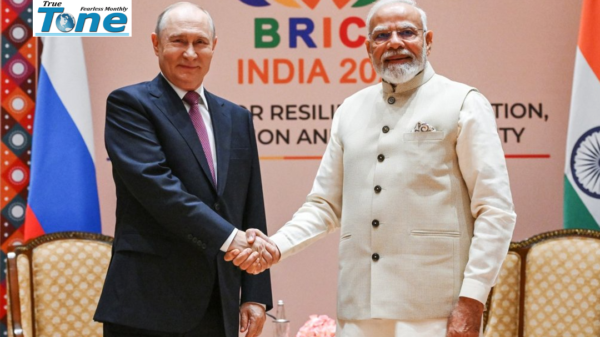
India, the world’s third-largest oil importer and consumer, was among the primary beneficiaries of the waiver. Facing persistent energy demand and price volatility, New Delhi had taken advantage of the temporary relief to secure additional crude supplies. In March alone, India more than tripled its purchases of Russian oil, importing an estimated $5.8 billion worth of crude compared to $1.54 billion in February.
Reports indicated that Indian refiners placed orders for approximately 30 million barrels of Russian oil during the waiver period. This surge underscored India’s continued reliance on discounted Russian crude, which has remained an attractive option since Western sanctions reshaped global trade flows following the escalation of the Russia-Ukraine conflict.
Since 2022, India has emerged as a crucial market for Russian oil exports. With European buyers reducing their dependence on Moscow, Russian producers redirected shipments toward Asia, offering competitive pricing to secure long-term customers. As a result, India’s imports of Russian crude climbed sharply, reaching nearly two million barrels per day in 2024 and totaling close to $44 billion over the year.
The now-expired waiver had temporarily reinforced this trend, allowing Indian refiners to increase purchases without the risk of secondary sanctions. However, with Washington tightening its stance once again, Indian buyers may face renewed constraints in sourcing Russian oil, potentially forcing a recalibration of procurement strategies.
The US Treasury Department had also extended a similar waiver for Iranian oil on March 20, enabling a significant volume-estimated at around 140 million barrels-to reach global markets. This move provided short-term relief at a time when concerns over supply disruptions were intensifying due to instability in the Middle East.
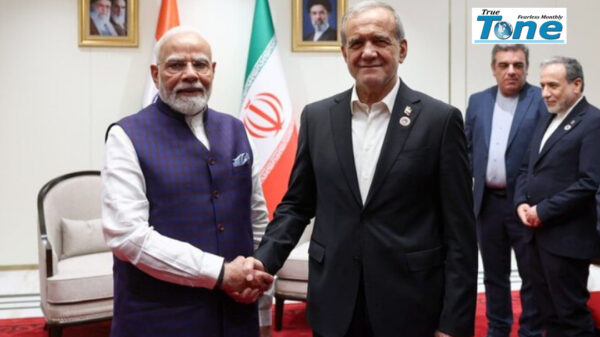
India, which had largely halted imports of Iranian crude in 2019 following stricter US sanctions, resumed limited purchases under the waiver. This marked the first such transactions in seven years and highlighted New Delhi’s pragmatic approach to energy security, balancing geopolitical considerations with economic necessity.
Before sanctions curtailed trade, Iranian oil accounted for approximately 11.5 percent of India’s total imports. The brief resumption of purchases suggested a willingness among Indian refiners to diversify supply sources when conditions permit. However, the expiration of the waiver is likely to once again close that avenue, reinforcing reliance on other suppliers.
The broader implications of Washington’s decision extend beyond India. By removing the waivers, the US is effectively tightening the availability of sanctioned crude in the global market, which could contribute to upward pressure on prices. This comes at a time when supply chains are already under strain due to ongoing geopolitical uncertainties, including concerns surrounding the strategic Strait of Hormuz, a critical artery for global oil shipments.
Any disruption in the Strait of Hormuz would have far-reaching consequences, particularly for countries heavily dependent on Middle Eastern oil. India, for instance, sources roughly 90 percent of its crude requirements from abroad, with the Middle East accounting for more than half of its imports as of February. The combination of restricted access to Russian and Iranian oil and potential instability in traditional supply routes could intensify vulnerability to price shocks.
Analysts suggest that Indian refiners may now pivot more decisively toward suppliers in the Middle East, Africa, and the United States. However, such adjustments are unlikely to be seamless. Russian crude has often been sold at a discount, making it economically advantageous compared to alternative sources. Replacing those volumes could increase import costs and widen India’s trade deficit.
Moreover, the decision underscores the enduring influence of US sanctions policy on global energy dynamics. Even countries that are not directly aligned with Washington must navigate the risks associated with secondary sanctions, which can limit access to financial systems and international markets. As a result, compliance considerations often shape procurement decisions as much as price and availability.
The move has also drawn attention to domestic political pressures within the United States. According to officials, several US senators had expressed opposition to extending the waivers, arguing that continued exemptions would undermine the effectiveness of sanctions designed to constrain the revenues of Russia and Iran. By allowing the waivers to lapse, the administration appears to be responding to those concerns while reaffirming its commitment to economic pressure as a foreign policy tool.
Looking ahead, the global oil market faces a period of heightened uncertainty. The withdrawal of sanctions relief removes a key stabilizing mechanism that had helped offset supply disruptions in recent months. For major importers like India, the challenge will be to secure reliable and affordable energy supplies in an increasingly complex geopolitical landscape.
While it remains to be seen how markets will ultimately respond, the immediate outlook points to tighter supply conditions and potentially higher prices. In this environment, strategic decisions by both producers and consumers will play a critical role in shaping the trajectory of global energy flows.
The end of the waivers thus marks more than a procedural policy shift-it represents a recalibration of the balance between geopolitical strategy and market stability, with consequences that are likely to be felt far beyond Washington, Moscow, and Tehran.














Md.Shahidur Rahman Tepa
Publisher & Editor
Mrs. Naznin Sultana - Associate Editor
Dr. Sariful Hoque Priom - Assistant Editor
Head Office: Tepa Complex 169/A, SS Nazrul Islam Sarani, Purana Paltan, Dhaka-1000, News and Commercial Office: 48 Bijoy Nagar (3rd Floor) Dhaka-1000,
E-mail: monthlytruetone@gmail.com
Leave a Reply