

US-Saudi civil nuclear deal marks strategic shift amid regional tensions
- Update Time : Thursday, July 23, 2026
- 111 Time View
Tajul Islam
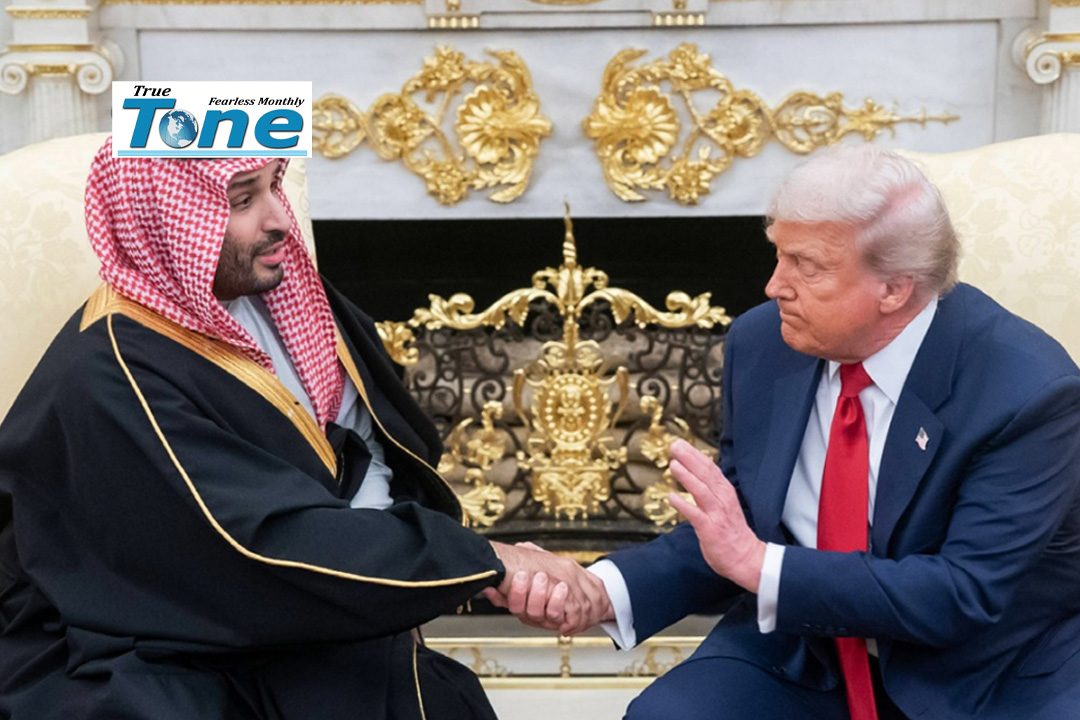
The United States and Saudi Arabia have signed a landmark civilian nuclear cooperation agreement, establishing the legal framework for a long-term partnership that Washington says will support peaceful nuclear development while maintaining strict non-proliferation standards. Announced on July 22, the agreement represents one of the most significant developments in US-Saudi relations in recent years and comes at a time of heightened tensions in the Middle East over Iran’s nuclear ambitions.
The accords, signed in Washington by US Energy Secretary Chris Wright and Saudi Energy Minister Prince Abdulaziz bin Salman, include a “peaceful nuclear cooperation” agreement and a separate “bilateral safeguards” pact. Together, the agreements create the foundation for what the US Department of Energy described as a decades-long, multi-billion-dollar partnership that serves both economic and strategic interests.
According to the department, the agreements are designed to strengthen civilian nuclear cooperation while adhering to the highest international standards for nuclear safety and preventing the spread of nuclear weapons technology. Although the full text of the agreements has not yet been released, US officials emphasized that the framework incorporates robust non-proliferation safeguards.
The announcement comes against the backdrop of ongoing geopolitical uncertainty in the Middle East. The United States remains engaged in a confrontation with Iran that has been driven largely by concerns over Tehran’s nuclear program. Negotiations aimed at resolving the dispute have stalled, leaving regional security under continued strain. Against this backdrop, the new US-Saudi nuclear partnership is likely to carry implications far beyond energy cooperation.
One aspect of the agreement has already attracted considerable attention. According to a report by The Wall Street Journal, the deal could allow US companies to construct a uranium enrichment facility in Saudi Arabia. While the US Department of Energy neither confirmed nor denied the report, the possibility has sparked renewed debate among lawmakers and nuclear policy experts.
Historically, uranium enrichment has been among the most sensitive elements of civilian nuclear programs because the technology can potentially be adapted to produce weapons-grade material if safeguards fail. Previous US nuclear agreements have often required partner nations to forgo domestic enrichment in exchange for access to American nuclear technology.
The agreement will now be submitted to the US Congress for review. However, with Republicans holding a majority in both chambers, analysts believe there is little likelihood that lawmakers will block its implementation. Nevertheless, the proposal is expected to face scrutiny from members of both political parties who have previously expressed reservations about allowing Saudi Arabia to develop uranium enrichment capabilities.
Israeli officials have also voiced concerns over the possibility of Saudi enrichment. Although Riyadh maintains that its nuclear ambitions are entirely peaceful, critics argue that developing sensitive nuclear technologies could alter the regional security balance and potentially encourage other countries to pursue similar capabilities.
Saudi Arabia has consistently maintained that it has the sovereign right to develop a civilian nuclear energy program to diversify its energy sources and meet growing domestic electricity demand. The kingdom has sought to reduce its dependence on oil for power generation as part of its broader Vision 2030 economic transformation strategy.
The country has also strengthened its strategic relationships in recent years. Last year, Saudi Arabia signed a mutual defense agreement with Pakistan, one of the world’s recognized nuclear-armed states. While the pact does not involve nuclear cooperation, it has added another dimension to international discussions about Saudi Arabia’s long-term strategic ambitions.
Washington has long viewed civilian nuclear cooperation with Saudi Arabia as part of a broader regional strategy. Previous US administrations sought to integrate nuclear cooperation into negotiations that would also include a formal defense agreement and the normalization of diplomatic relations between Saudi Arabia and Israel. While progress toward Saudi-Israeli normalization has slowed amid regional conflicts, the new nuclear agreement suggests that bilateral cooperation between Washington and Riyadh continues to deepen.
The agreement also reflects growing competition among major powers for influence in the Middle East. Russia and China have both expanded their presence in the region through infrastructure projects, energy investments, and offers of civilian nuclear technology. By securing Saudi Arabia as a nuclear partner, the United States aims to maintain its leadership in advanced nuclear technology while reinforcing strategic ties with one of its closest regional allies.
Jennifer T. Gordon, director of the Atlantic Council’s Nuclear Energy Policy Initiative, described the agreement as an important geopolitical victory for Washington. She argued that Saudi Arabia had already made clear its intention to develop civilian nuclear power, meaning the primary question was whether it would partner with the United States and its allies or instead turn to Russia or China for technology and expertise.
Not all experts share that optimism. Matthew Kroenig of the Atlantic Council cautioned that permitting uranium enrichment within Saudi Arabia could weaken long-standing US non-proliferation standards. He argued that while strengthening relations with Riyadh is strategically important, it should not come at the cost of increasing proliferation risks.
US Energy Secretary Chris Wright rejected such concerns, insisting that the agreements uphold the world’s highest standards of nuclear safety and security. He emphasized that American technology, scientific expertise, and regulatory oversight would ensure that the partnership remains focused exclusively on peaceful civilian purposes.
The United States currently maintains civilian nuclear cooperation agreements with more than 50 countries under Section 123 of the US Atomic Energy Act. These so-called “123 Agreements” establish the legal conditions under which American nuclear technology, fuel, and expertise can be shared internationally. However, the specific terms differ significantly from one country to another, reflecting varying strategic and non-proliferation considerations.
The agreement also follows growing concerns about the vulnerability of nuclear infrastructure in the Gulf. Earlier this year, a drone strike caused a fire near the United Arab Emirates’ Barakah Nuclear Power Plant, the Arab world’s only operational commercial nuclear facility. Although the incident did not result in radioactive contamination, it highlighted the security challenges facing civilian nuclear facilities in an increasingly volatile region.
As the agreement moves through congressional review, it is expected to generate vigorous debate over the balance between strategic partnerships, economic opportunities, and nuclear security. Supporters view the deal as an opportunity to strengthen America’s influence in the Middle East, expand opportunities for US industry, and ensure that Saudi Arabia’s nuclear future develops under American oversight rather than that of rival powers.
Critics, however, warn that any arrangement involving domestic uranium enrichment requires careful oversight to avoid setting precedents that could complicate global non-proliferation efforts. The ultimate impact of the agreement will depend not only on its final implementation but also on how effectively both countries uphold the safeguards intended to keep Saudi Arabia’s nuclear program exclusively peaceful.
Tajul Islam, senior journalist and writes on a broad-range of issues in local and international media.








Md.Shahidur Rahman Tepa
Publisher & Editor
Mrs. Naznin Sultana - Associate Editor
Dr. Sariful Hoque Priom - Assistant Editor
Head Office: Tepa Complex 169/A, SS Nazrul Islam Sarani, Purana Paltan, Dhaka-1000, News and Commercial Office: 48 Bijoy Nagar (3rd Floor) Dhaka-1000,
E-mail: monthlytruetone@gmail.com
Leave a Reply