

UN climate resolution faces pushback despite ICJ momentum
- Update Time : Tuesday, May 19, 2026
- 116 Time View
Naznin Sultana
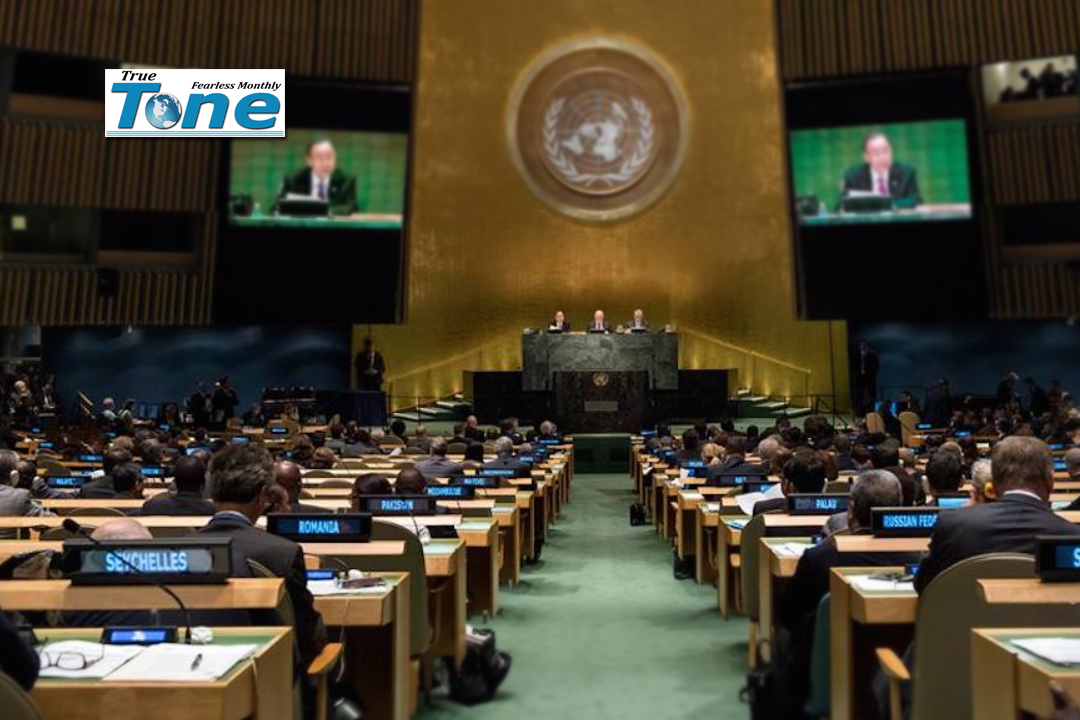
The United Nations General Assembly is preparing to debate a landmark draft resolution on May 20 that seeks to reinforce countries’ legal obligations to combat climate change. The initiative, driven by the Pacific island nation of Vanuatu, represents one of the most ambitious attempts yet to translate international climate law into concrete political action. However, after months of negotiations, the proposal has been significantly weakened under pressure from some of the world’s largest greenhouse gas emitters.
The resolution follows a historic advisory opinion issued last year by the International Court of Justice (ICJ), which concluded that states have binding responsibilities under international law to address climate change. The court further stated that governments failing to meet these obligations could potentially face demands for reparations from countries suffering severe climate-related damage.
The ruling was hailed by climate-vulnerable nations and environmental advocates as a major breakthrough in the global fight against climate change. Although the ICJ opinion is not legally binding, it carries substantial political and legal weight and may influence future court rulings and international negotiations worldwide.
Building on that momentum, Vanuatu introduced a draft resolution earlier this year aimed at encouraging governments to implement the court’s findings. The initiative was viewed as a test of whether the international community was willing to transform legal recognition of climate responsibility into meaningful collective action.
Vanuatu’s climate minister, Ralph Regenvanu, described the effort as more than a diplomatic exercise. According to him, the proposal is fundamentally tied to the survival of climate-vulnerable nations facing rising sea levels, extreme weather events, and economic devastation caused by global warming.
“For Vanuatu and many other vulnerable countries, this is about survival,” Regenvanu said, emphasizing that the resolution also represents a broader question about whether multilateral institutions remain capable of responding effectively to the realities of climate change.
The current draft resolution acknowledges the ICJ advisory opinion as an important clarification of existing international law and calls on all states to comply with their obligations to protect the climate system. It also reiterates international commitments to limit global warming to 1.5 degrees Celsius above pre-industrial levels, a target considered essential by scientists to avoid catastrophic climate impacts.
Additionally, the text references the global agreement reached during the 2023 climate summit in Dubai, where nearly 200 countries agreed to transition away from fossil fuels in energy systems. That agreement marked one of the strongest international acknowledgments yet that reducing dependence on coal, oil, and gas is necessary to address the climate crisis.
Despite these provisions, several of the proposal’s strongest elements were removed during negotiations. One of the most controversial ideas eliminated from the draft was the establishment of an “International Register of Damage,” which would have documented evidence of climate-related loss and destruction experienced by vulnerable countries.
The registry was intended to compile data on damages linked to climate change, potentially strengthening future claims for compensation or legal accountability. However, the proposal triggered strong opposition from major economies and fossil fuel producers, including the United States, China, European Union, Japan, and several oil-exporting nations.
Diplomatic sources indicated that these governments argued the damage registry exceeded the scope of the ICJ opinion and risked creating mechanisms that could eventually expose wealthy, high-emitting countries to compensation claims from vulnerable nations.
For decades, climate negotiations have been marked by disputes over “loss and damage” – the concept that countries historically responsible for the majority of greenhouse gas emissions should help compensate nations suffering the worst climate impacts. Industrialized nations have frequently resisted frameworks that could imply legal liability or mandatory reparations.
Vanuatu has rejected accusations that the draft resolution attempts to create new legal duties or assign blame to individual states. Regenvanu stressed that the proposal does not establish new obligations, resolve disputes, or directly attribute responsibility for climate damages. Instead, he characterized the text as a balanced and measured response designed to reinforce existing international commitments.
Even in its diluted form, the resolution is expected to face resistance at the General Assembly. Diplomats believe at least one country may call for a formal vote rather than allowing the resolution to pass through consensus, highlighting the persistent divisions surrounding climate accountability.
Environmental organizations nevertheless view the initiative as a critical step forward. Joie Chowdhury, a senior attorney at the Center for International Environmental Law, argued that the resolution remains significant despite the compromises made during negotiations.
She described the proposal as evidence of continued determination by climate-vulnerable nations to pursue justice in the face of intense political opposition from powerful states and industries.
Climate advocates also hope that some of the discarded ideas, including the climate damage registry, could re-emerge in future discussions. The draft resolution requests that the United Nations secretary-general prepare a report outlining ways to strengthen compliance with obligations identified in the ICJ ruling.
For many small island states and developing countries, the debate represents a defining moment in the evolution of international climate governance. As climate disasters intensify worldwide, pressure is mounting on major economies not only to reduce emissions but also to acknowledge their responsibilities toward countries already bearing the consequences of a warming planet.














Md.Shahidur Rahman Tepa
Publisher & Editor
Mrs. Naznin Sultana - Associate Editor
Dr. Sariful Hoque Priom - Assistant Editor
Head Office: Tepa Complex 169/A, SS Nazrul Islam Sarani, Purana Paltan, Dhaka-1000, News and Commercial Office: 48 Bijoy Nagar (3rd Floor) Dhaka-1000,
E-mail: monthlytruetone@gmail.com
Leave a Reply