

Bangladesh adopts zero-tolerance policy against human trafficking and online scam networks
- Update Time : Thursday, July 30, 2026
- 63 Time View
Staff Reporter
The Bangladesh government has announced a tougher nationwide campaign against human trafficking and technology-enabled transnational scam networks, declaring a “zero tolerance” policy to combat increasingly sophisticated criminal syndicates that exploit vulnerable people through fraudulent online recruitment and cyber-enabled deception.
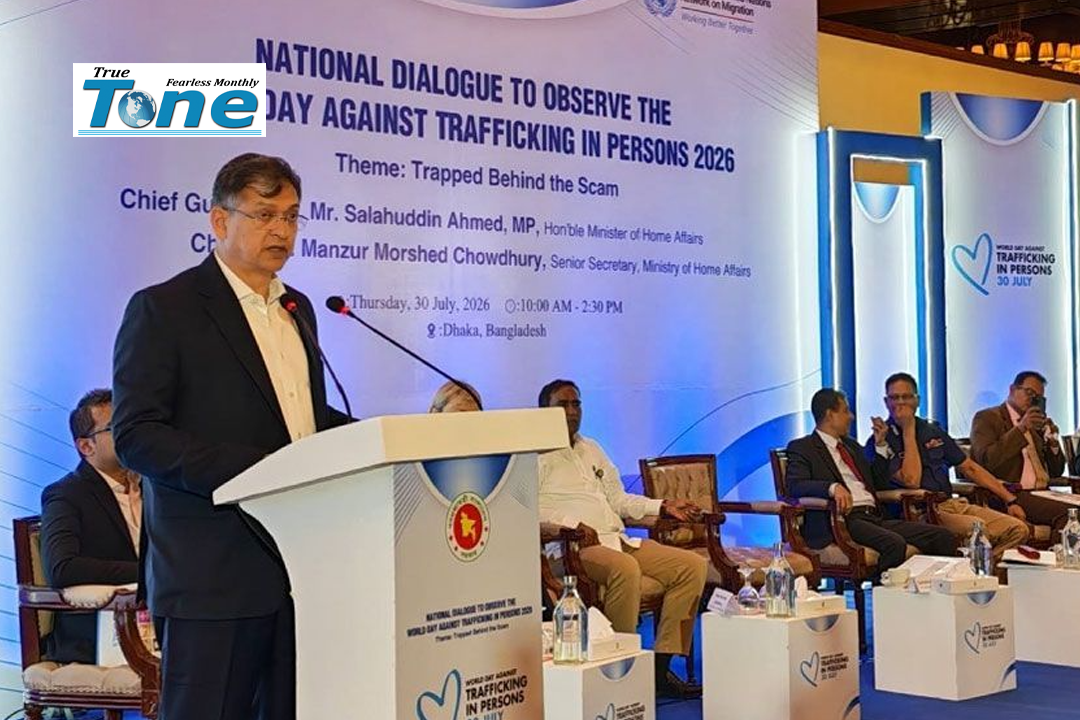
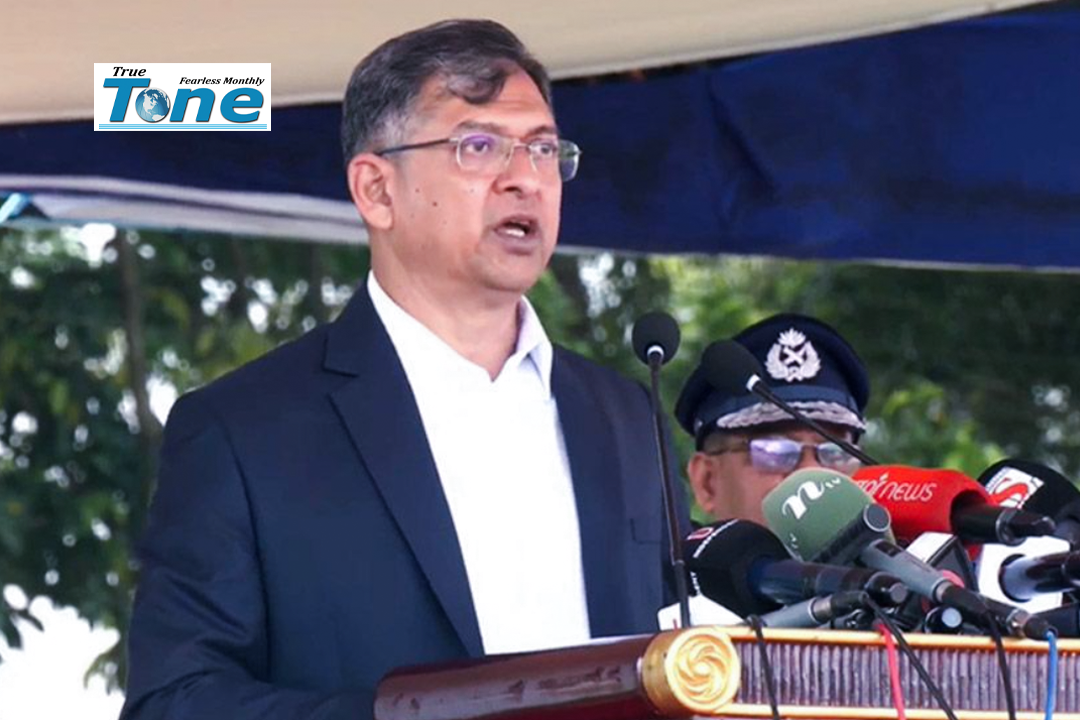
Speaking at a high-level national dialogue marking the World Day Against Trafficking in Persons 2026, Home Minister Salahuddin Ahmed said protecting citizens from trafficking, forced criminality and cyber-enabled exploitation has become one of the government’s highest priorities as trafficking networks continue to evolve and expand across borders.
The event, titled “Trapped Behind the Scam: Ending Human Trafficking for Forced Criminality,” was held at the Pan Pacific Sonargaon Hotel in Dhaka and brought together senior government officials, diplomats, law enforcement agencies and international development partners to discuss emerging forms of human trafficking and strategies for prevention.
Addressing the gathering as chief guest, the minister warned that trafficking syndicates are increasingly shifting away from traditional methods and are now using fake online recruitment agencies, fraudulent social media advertisements and deceptive digital platforms to lure job seekers—particularly young people—with promises of lucrative overseas employment.
Instead of legitimate jobs, many victims are transported abroad and confined inside cyber scam compounds where they are subjected to intimidation, physical abuse and psychological torture before being forced to participate in online fraud, financial scams and other criminal activities.
Salahuddin Ahmed said these rapidly changing trafficking patterns require a broader and more coordinated response than conventional policing alone.
“Protecting citizens from trafficking and cyber-enabled exploitation remains a top priority,” he said, stressing that governments, technology companies, financial institutions, the private sector and civil society organizations must work together to dismantle transnational trafficking networks.
The home minister highlighted a series of legal and institutional reforms undertaken by the government to strengthen Bangladesh’s response to human trafficking.
Among the most significant measures is the enactment of the Human Trafficking and Migrant Smuggling (Prevention and Suppression) Act, 2026, which aligns Bangladesh’s legal framework with the United Nations Convention against Transnational Organized Crime (UNTOC) and its related protocols.
According to the minister, the new legislation explicitly addresses technology-enabled trafficking, deceptive online recruitment, scam-related exploitation and forced criminality, introducing tougher legal penalties against offenders involved in these emerging forms of organized crime.
He also announced that the government is revising the Human Trafficking Prevention and Suppression Rules, 2017, while finalizing a comprehensive National Action Plan (2026–2030) that will focus on four key pillars: prevention, protection, prosecution and partnership.
The strategy aims to improve coordination among government agencies while strengthening international cooperation to combat cross-border trafficking operations.
To enhance support for survivors, the government is upgrading the National Referral Mechanism (NRM) to ensure that victims receive timely rescue, legal assistance, medical treatment, psychological counselling and long-term rehabilitation services.
In addition, authorities are developing a digital trafficking information management platform designed to improve case tracking, facilitate information sharing among agencies and support evidence-based policymaking.
The minister also called on the media and civil society organizations to play a greater role in raising public awareness, particularly among young people, women and prospective migrant workers who are often targeted by fraudulent recruitment networks.
He emphasized that safe migration awareness campaigns and public education are essential tools in preventing trafficking before individuals fall victim to organized criminal groups.
The dialogue was chaired by Senior Secretary of the Ministry of Home Affairs Manzur Morshed Chowdhury and attended by senior government officials, diplomats, representatives of law enforcement agencies and international partners, including the European Union, the International Organization for Migration (IOM) and the United Nations Office on Drugs and Crime (UNODC).
Among the special guests were Law and Justice Division Secretary Liaquet Ali Molla, Inspector General of Police Md. Ali Hossain Fakir, European Union Chargé d’Affaires Baiba Zarina and Dr. Laura Tomm-Bonde, IOM’s newly appointed Chief of Mission in Bangladesh and Coordinator of the UN Migration Network.
Senior representatives from the Bangladesh Coast Guard and Border Guard Bangladesh also participated in the programme, underscoring the importance of coordinated border management in combating trafficking networks.
The welcome address was delivered by Additional Secretary of the Ministry of Home Affairs Dr. Ziauddin Ahmed, while Shah Mohammad Naheeaan, Head of the UNODC Programme Office in Bangladesh, presented this year’s World Day Against Trafficking in Persons theme, highlighting the growing global threat posed by trafficking for forced criminality and online exploitation.
The event concluded with a panel discussion examining deceptive recruitment practices, trafficking for forced criminality and the expanding role of digital technology in facilitating transnational organized crime, reinforcing calls for stronger domestic enforcement and international cooperation to protect vulnerable populations from modern forms of exploitation.







Md.Shahidur Rahman Tepa
Publisher & Editor
Mrs. Naznin Sultana - Associate Editor
Dr. Sariful Hoque Priom - Assistant Editor
Head Office: Tepa Complex 169/A, SS Nazrul Islam Sarani, Purana Paltan, Dhaka-1000, News and Commercial Office: 48 Bijoy Nagar (3rd Floor) Dhaka-1000,
E-mail: monthlytruetone@gmail.com
Leave a Reply