

Home Minister claims militancy “no longer exists” in Bangladesh amid Coast Guard anniversary event
- Update Time : Tuesday, April 28, 2026
- 139 Time View

News Desk
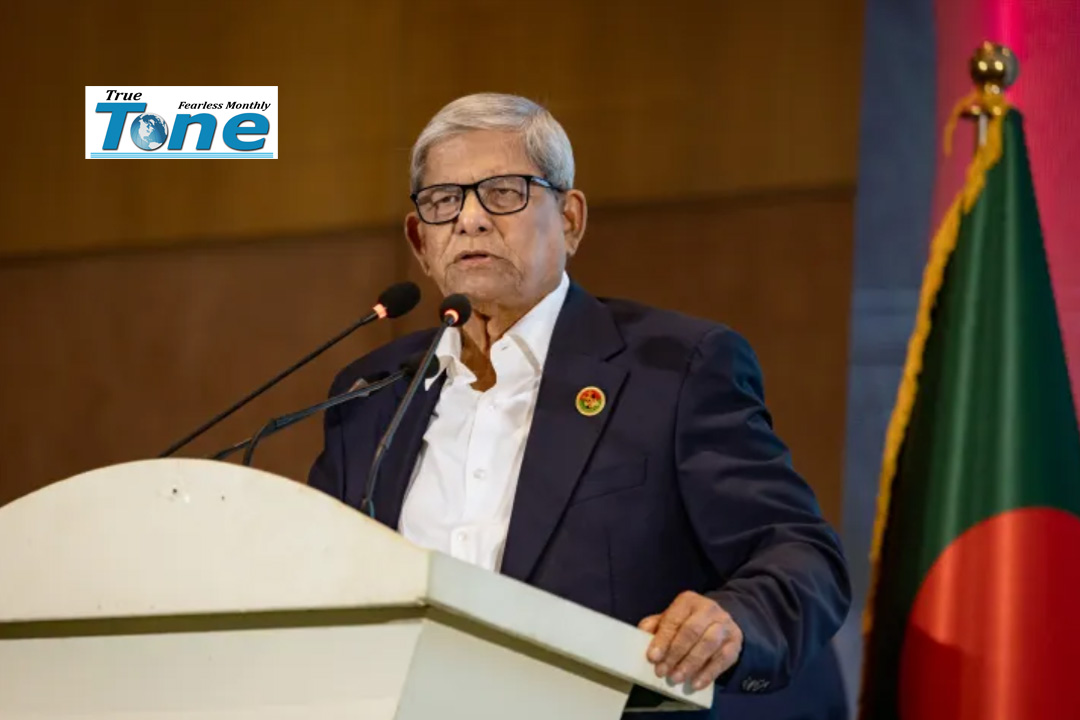
Home Minister Salahuddin Ahmed has declared that militancy no longer exists in Bangladesh, asserting that the term has historically been misused for political purposes. He made the remarks on Thursday while addressing journalists following a medal-awarding ceremony marking the 31st founding anniversary of the Bangladesh Coast Guard at its headquarters in Agargaon, Dhaka.
Speaking to reporters after the event, the minister stated that the concept of militancy, as previously understood in national discourse, is no longer relevant in the current security context of the country. According to him, the label had been widely applied during what he described as a “fascist era” to serve political objectives.
“The term ‘militancy’ is no longer recognised by us-there is no such activity in our country at present,” he said firmly, emphasizing the government’s position that Bangladesh is currently free from organized militant activity.
He added that while isolated extremist ideologies or radical political tendencies may exist in various forms, such phenomena are not unique to Bangladesh. “Some extremist groups exist in every country, and there may be some radical or fundamental political forces as well-these are normal,” he said, suggesting that such elements should not be conflated with organized militancy.
The minister reiterated that, in the present situation, Bangladesh does not face any operational militant threat. He argued that the term had been previously used in a politically motivated manner to shape public perception and gain advantage during earlier regimes.
Addressing concerns regarding internal monitoring within security forces, Salahuddin Ahmed noted that intelligence operations are a standard feature of military organizations worldwide. He explained that defence forces routinely maintain intelligence units to monitor internal discipline and identify any involvement in unlawful or anti-state activity.
“Military intelligence works to determine whether any member is involved in anti-state or criminal activities. Appropriate action is taken under existing military law in such cases, which is nothing new,” he said.
His comments appeared aimed at reinforcing the legitimacy of ongoing surveillance and internal accountability mechanisms within law enforcement and defence structures.
Responding to questions about the continued presence of army personnel in civilian areas, the minister said that the government is already in the process of a phased withdrawal. He clarified that such deployments cannot be terminated abruptly due to operational requirements.
“You may not be updated. We are in the process of gradual withdrawal. It is not possible to withdraw the entire force at once. A significant portion has already been reduced, and it will soon be scaled down further,” he stated.
However, he also noted that military support may still be required in certain circumstances, particularly when requested by district administrations or the government. This, he said, ensures flexibility in maintaining law and order when necessary.
Addressing media reports suggesting that a special security alert had been issued by police headquarters, the Home Minister denied any such directive from the government. He clarified that routine security enhancements are standard practice around national events or sensitive installations.
“However, around national days or key installations, security measures are always strengthened following standard operating procedures, and support from different forces is taken. This was the case in the past, remains so now, and will continue in the future,” he said.
A significant portion of the minister’s remarks focused on the future expansion and modernization of the Bangladesh Coast Guard. He outlined government plans to strengthen the force’s operational capacity and extend its reach beyond coastal areas.
He noted that the Coast Guard is expected to expand its operations into inland waterways and potentially into haor regions, which are ecologically sensitive wetland areas in the northeastern part of the country.
Highlighting institutional history, the minister recalled that the Bangladesh Coast Guard Act was enacted in 1995 under the initiative of former Prime Minister Khaleda Zia. Since its establishment, the force has grown in capacity, but he emphasized that further expansion is necessary to meet emerging security challenges.
“There is a policy decision to gradually increase the Coast Guard’s personnel from around 5,000 to 10,000,” he said. He added that alongside manpower expansion, the government is also focusing on improving logistics, modern equipment, training facilities, housing, and air support capabilities, including helicopters.
The minister stressed the importance of modernization in the face of evolving security threats. “As criminals are becoming more capable with the use of technology, law enforcement agencies must also remain modern and well-prepared,” he said.
Salahuddin Ahmed also highlighted ongoing efforts to modernize maritime security infrastructure. He mentioned the introduction of surveillance drones, rescue drones, and advanced monitoring systems as part of a broader technological upgrade plan.
He further stated that new vessels are being constructed with support from the Japan International Cooperation Agency, alongside the development of high-speed boats at local shipyards. A modern dockyard is also planned in Munshiganj as part of infrastructure expansion.
In addition, a project is underway to replace ageing vessels currently in operation, ensuring that the Coast Guard maintains an efficient and capable maritime presence.
During the anniversary ceremony, the minister praised the Bangladesh Coast Guard for its contributions to maritime security and national safety. As part of the event, medals were awarded to 14 personnel in recognition of their bravery and service.
Senior Secretary of the Ministry of Home Affairs Manzur Morshed Chowdhury attended the ceremony as special guest, while Director General of the Bangladesh Coast Guard Rear Admiral Md Ziaul Hoque delivered the welcome address. Senior military and civil officials from both domestic and international agencies were also present.
The event underscored the government’s dual focus on strengthening maritime security and reshaping the national security narrative, particularly regarding the absence of organized militancy in the country, as asserted by the Home Minister.













Md.Shahidur Rahman Tepa
Publisher & Editor
Mrs. Naznin Sultana - Associate Editor
Dr. Sariful Hoque Priom - Assistant Editor
Head Office: Tepa Complex 169/A, SS Nazrul Islam Sarani, Purana Paltan, Dhaka-1000, News and Commercial Office: 48 Bijoy Nagar (3rd Floor) Dhaka-1000,
E-mail: monthlytruetone@gmail.com
Leave a Reply